
Endress Hauser Level Measurement: 6 Best Expert Solutions for Modern Industry
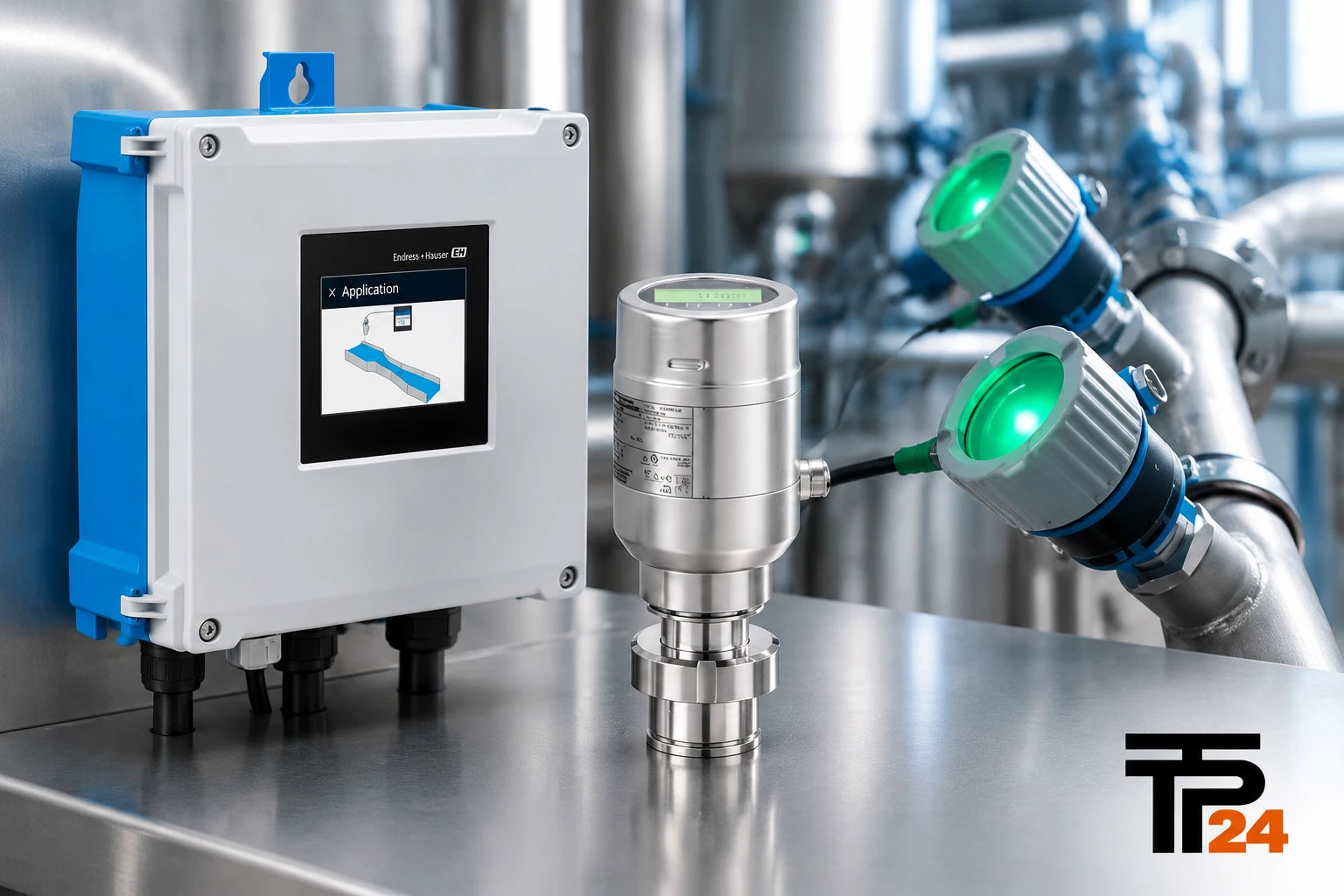
Accurate inventory monitoring and overfill prevention depend directly on reliable instrumentation. Choosing an Endress Hauser level measurement solution ensures unmatched process safety, reduced downtime, and high measurement accuracy across demanding industrial environments. From corrosive chemical tanks to abrasive mineral silos, these instruments handle extreme pressures, temperatures, and turbulent surfaces with ease.
Modern industrial automation demands continuous visibility over vessel capacity. Whether you manage hygienic pharmaceutical batches, wastewater treatment basins, or hydrocarbon storage, selecting the right sensor architecture protects capital equipment and prevents hazardous overflows.
What Is Endress Hauser Level Measurement Technology?
Level instrumentation monitors the volume, distance, or boundary of liquids, pastes, and bulk solids inside vessels. An Endress Hauser level measurement device operates using either continuous tracking or discrete point level detection.
Continuous measurement transmitters continuously track the fill level and output an analog or digital process variable, such as 4–20 mA HART, Profibus, or Foundation Fieldbus. In contrast, point level limit switches trigger alarms when product reaches a predetermined high or low threshold.
Endress+Hauser designs its instruments with proprietary Heartbeat Technology. This onboard diagnostic architecture provides continuous verification without interrupting processes, drastically cutting plant maintenance cycles.
6 Key Technologies in Endress Hauser Level Measurement
Different vessel conditions require dedicated measurement physics. Below are the six primary sensing principles engineered by Endress+Hauser.
1. Free-Space Non-Contact Radar (Micropilot)
The Micropilot series uses high-frequency radar beams (up to 80 GHz). Because non-contact radar never touches the medium, it remains unaffected by aggressive vapors, boiling liquids, or heavy dust loads. The narrow beam angle allows accurate measurement even in tall, narrow silos with internal obstructions.
2. Guided Wave Radar (Levelflex)
When low dielectric constants or heavy foam surfaces cause signal attenuation, guided wave radar provides exceptional reliability. High-frequency radar pulses travel along a rigid rod or flexible cable probe directly to the product surface and reflect back, delivering dependable tracking in bypass pipes and storage tanks.
3. Vibronic Tuning Fork Switches (Liquiphant & Soliphant)
Vibronic technology is the global standard for spill prevention and pump dry-run protection. The Liquiphant uses a vibrating fork driven at its resonant frequency. When submerged in liquid, the frequency shifts, instantly triggering a switching signal. The Soliphant applies this same proven principle to fine-grained and coarse bulk solids.
4. Hydrostatic and Differential Pressure (Deltapilot & Cerabar)
Hydrostatic sensors measure liquid height based on hydrostatic head pressure. Equipped with ceramic or metallic measuring cells, Deltapilot transmitters excel in hygienic food processing, beverage fermentation, and deep open basins.
5. Ultrasonic Non-Contact Level (Prosonic)
For open-channel flow measurement, storm overflow basins, and simple liquid storage, Prosonic ultrasonic sensors deliver cost-effective performance. Pulsed acoustic waves reflect off the surface to compute distance without physical media contact.
6. Radiometric Gamma Measurement (Gammapilot)
Under extreme process conditions—such as high-pressure autoclaves, radioactive slurries, or ultra-corrosive reactors—radiometric level systems measure through vessel walls without penetrating the shell, ensuring zero risk of chemical leakage.

Critical Factors When Selecting an Endress Hauser Level Measurement System
Selecting the ideal sensor requires careful evaluation of several operating parameters:
- Medium Characteristics: Evaluate dielectric constant (ϵr), density, viscosity, abrasiveness, and tendency to foam or coat the sensor.
- Process Dynamics: Review vessel temperature spikes, operating pressures, agitation, boiling surfaces, and dust generation.
- Installation Geometry: Consider vessel height, nozzle diameter, internal cooling coils, agitator blades, and baffles.
- Functional Safety (SIL): Many industrial storage tanks require SIL 2 or SIL 3 certified instruments for high-integrity overfill protection loops.
- Hygienic and Hazardous Area Ratings: Verify required 3-A, EHEDG, ATEX, IECEx, or FM certifications before specification.
Technical Comparison of Core Measurement Technologies
The table below summarizes the operational limits and best-fit environments across key Endress+Hauser level product lines.
| Measurement Technology | Primary Model Series | Typical Media | Key Advantages | Process Limitations |
| 80 GHz Free-Space Radar | Micropilot FMR60B / FMR67B | Corrosive liquids, heavy dust solids | Non-contact, high accuracy, unaffected by vapors | Condensation build-up on lens (requires air purge) |
| Guided Wave Radar | Levelflex FMP51 / FMP54 | Liquids, interfaces, fine powders | Unaffected by surface foam or turbulent agitation | Mechanical contact with medium; cable tension limits |
| Vibronic Point Level | Liquiphant FTL51B / Soliphant | Liquids, slurries, granular bulk | Zero calibration needed, no moving parts, immune to bubbles | Heavy sticky build-up can damp vibration |
| Hydrostatic Pressure | Deltapilot FMB50 / Cerabar | Water, hygienic liquids, pastes | Flush-mounted diaphragms, ideal for viscous media | Density variations affect calculated level height |
| Ultrasonic | Prosonic FMU90 / FMU40 | Wastewater, effluents, open basins | Budget-friendly non-contact solution | Affected by heavy dust, foam, and temperature gradients |
Installation and Maintenance Best Practices
To maximize instrument longevity and avoid false signal reflections, adhere to standard installation protocols. Always position non-contact radar nozzles away from filling streams to prevent signal scattering. When installing guided wave probes, ensure adequate clearance from metallic tank walls and heating coils.
Utilize Heartbeat Technology for continuous condition monitoring. By scheduling automated in-situ verification cycles, maintenance engineers can detect foam formation, antenna corrosion, or sensor buildup before an unscheduled shutdown occurs.

Industrial Instrumentation Supplier
Fair Pricing, Guarantee of Authenticity and Quality, Fast Delivery, and Provision of Technical Support to Customers.
Copyright 2025 © TPT24 Company. All right reserved. Powered by TPT24.

