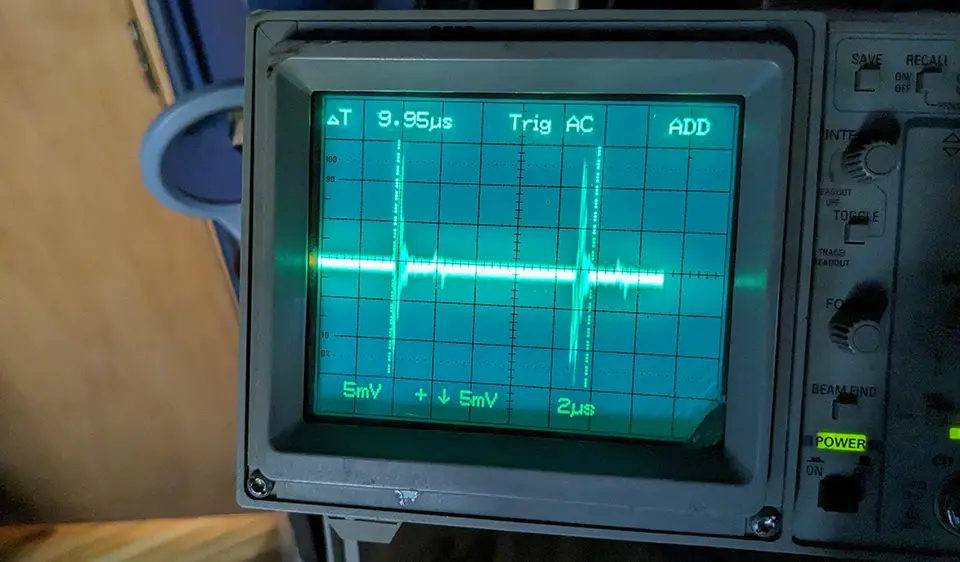
Understanding Ripple and Noise Fundamentals in Power Supplies
Every engineer tasked with designing or maintaining DC power supplies must grasp the nature of ripple and noise, two factors that critically impact system stability, precision measurement, and overall endurance in industrial electronics. Ripple refers to the residual AC voltage component superimposed on the desired DC output, typically stemming from inadequate filtering or poor rectification performance within the supply’s power stage. Noise, conversely, represents high-frequency interference caused by switching transitions, electromagnetic coupling, or poor grounding schemes that disturb signal integrity across sensitive circuits. Though both manifest as unwanted voltage fluctuations, their origins, spectral characteristics, and mitigation approaches differ significantly. Understanding the physics behind ripple and noise distortion enables engineers to categorize the sources—ranging from diode switching transients, capacitor impedance, and transformer leakage reactance to pulse-width modulation (PWM) switching harmonics—that degrade output precision. In process control systems, laboratory instrumentation, and automotive modules backed by precision DC power sources, maintaining stable output conditions is paramount to ensuring signal fidelity and component longevity. Thus, in-depth knowledge of ripple behavior supports diagnostic accuracy and helps professionals align supply performance with IEC 61010 and EN 55011 compliance norms mandatory for noise suppression in regulated environments.
Ripple is often characterized by periodic waveform remnants that follow the rectification cycle. In linear supplies, after the AC is converted and filtered by capacitors and inductors, minor charge discharge patterns remain, forming a repetitive oscillation at twice the line frequency. When the filter design lacks adequate capacitance or utilizes components with high ESR (Equivalent Series Resistance), ripple magnitude increases, undermining the precision DC signal required by sensitive analog measurement circuitry. Conversely, in switch-mode supplies, the noise component reflects non-periodic high-frequency spikes caused by rapid transistor commutations and parasitic inductance across circuit traces. These spikes may extend into radio-frequency domains, creating conducted and radiated electromagnetic interference (EMI) that breaches compliance thresholds under CISPR 22 limits. Engineers analyzing power quality use oscilloscopes, spectrum analyzers, and differential voltage probes to quantify both ripple amplitude and noise spectral density, distinguishing mechanical layout-induced disturbances from core electrical instability. Industrial systems powered by high-density DC conversion devices often face ripple coupling across parallel circuits, demanding isolation and shielding practices that form the backbone of reliable electronic infrastructure supported by technology providers like TPT24.
Both ripple and noise adversely affect high-performance electronics—especially control modules, sensors, and microprocessor-based systems reliant on stable DC rails. Excessive ripple induces reference drift and jitter in analog-to-digital conversions, while transient noise spikes interrupt communication protocols and corrupt firmware data transfers. The cumulative result is erratic operation, premature component wear, and potential compliance violations under ISO 17025 measurement accuracy standards. Therefore, understanding these disturbances not only aids immediate troubleshooting but also informs future design practices for low-noise DC architecture. Engineers tasked with product validation regularly perform ripple rejection testing under variable load conditions, measuring the supply’s ability to suppress AC components while maintaining output regulation. A methodical comprehension of these foundation principles allows professionals to optimize capacitor networks, select effective filtering topologies, and develop tailored diagnostic procedures employing advanced precision tools accessible from TPT24, ensuring that operational stability remains uncompromised across demanding industrial and laboratory environments.
Identifying Common Ripple and Noise Sources
The path toward resolving DC power supply ripple and noise begins with correctly identifying each disturbance source along the conversion line. Understanding where unwanted voltage fluctuations arise helps specialists pinpoint root causes that standard insulation tests or visual inspections typically overlook. In unregulated linear designs, ripple primarily stems from rectifier diode switching and insufficient filter capacitor recharge cycles, fostering low-frequency modulation synchronized to the AC mains. In switch-mode power supplies (SMPS), ripple emerges when inductor currents fail to maintain continuous conduction or when MOSFET switching patterns produce uneven energy transfer into secondary networks. Noise sources, however, are multifaceted—ranging from high-frequency coupling through the transformer windings, ground loop resonance, and ambient electromagnetic interference emitted by adjacent circuits. Each condition aggravates signal purity, imposing design inefficiencies and potential damage to precision loads such as sensors or logic controllers. Through advanced testing using high-resolution oscilloscopes and differential measurement probes, maintenance engineers can differentiate ripple frequencies below 1 kHz from random noise bursts extending to MHz ranges. Recognizing the spectral boundary between mechanical ripple and statistical noise provides actionable insight into power conditioning deficiencies or layout flaws affecting system reliability.
The structural composition of the DC conversion circuit governs where disturbances propagate. Poor grounding leads to uneven potential distribution, while long PCB trace lengths act as unintended antennas radiating high-frequency emissions. A critical yet overlooked contributor to ripple is electrolytic capacitor degradation, where elevated ESR increases ripple amplitude by limiting the effectiveness of charge storage stabilization. Likewise, inductor saturation, insufficient shielding between primary and secondary windings, and high-leakage transformers inject additional harmonic content into the DC line. Engineers routinely employ near-field probes, EMI receivers, and current clamps to trace noise paths through circuit layers, identifying whether interference originates from switching devices or coupling through enclosure seams. For high-performance designs, spatial separation between control logic and power stages is implemented, alongside strategic ferrite bead placement to attenuate high-frequency conduction paths. Testing each noise contributor demands robust diagnostic gear, such as isolated USB oscilloscopes, precision multimeters, and low-noise voltage amplifiers available through TPT24, ensuring technical professionals can map interference at granular levels without compromising signal integrity under high-voltage operating conditions.
In industrial setups, additional ripple sources manifest beyond internal electronics. External interference from variable-frequency drives (VFDs), motor startup spikes, or grounding asymmetry often couples through shared conductive paths into low-voltage instrumentation supplies. This external contamination produces composite ripple patterns difficult to distinguish from internal defects without comprehensive testing. Engineers must therefore isolate their test bench using shielded enclosures, line filters, and earth isolation transformers to guarantee measurement authenticity. The distinction between conducted and radiated noise is validated via comparative readings under shielded versus unshielded operation. Moreover, environmental humidity and thermal gradients influence component impedance characteristics, modifying ripple propagation properties across time. Recognizing how these external and internal influences interact equips professionals with holistic diagnostic intelligence required for accurate troubleshooting. By systematically characterizing each ripple and noise source from semiconductor behavior to environmental coupling, specialists can apply targeted corrective strategies that uphold stringent performance expectations demanded across transportation, manufacturing, and test instrumentation sectors supported by TPT24’s precision diagnostic portfolio.
Diagnostic Procedures for Accurate Ripple Measurement
Comprehensive diagnostic measurement of ripple and noise involves employing instruments capable of detecting minute voltage fluctuations across a broad frequency range while distinguishing true signal artifacts from instrumentation interference. The first step begins with oscilloscope waveform analysis, where engineers observe ripple amplitude superimposed on DC output under varying load conditions. High-bandwidth scopes with differential inputs eliminate ground offset distortion, crucial for verifying actual ripple quantities near millivolt levels. Using low-inductance leads, technicians prevent artificial noise introduction from signal wiring errors that could distort readings. To confirm measurements, simultaneous data capture through spectrum analyzers helps visualize the harmonic distribution across the entire frequency range, revealing whether disturbance energy concentrates at rectification frequencies or within switching harmonics typical of SMPS designs. Complementarily, engineers utilize true-RMS digital multimeters for averaging measurements over longer cycles, confirming amplitude values reported instrumentally. Combining time-domain and frequency-domain verification ensures that recorded ripple values accurately reflect real circuit behavior, satisfying demanding test accuracy standards under IEC 60068 performance qualification protocols frequently applied to industrial DC conversion equipment.
Proper ripple measurement extends beyond detecting amplitude—it also requires evaluating transient response behavior under sudden load transitions. When a test load changes abruptly, the supply’s voltage control loop may overshoot or oscillate, introducing temporary ripple oversaturation. Engineers induce controlled step changes using programmable electronic loads while logging the supply’s recovery characteristics. These transient ripple data sets help assess controller equilibrium stability and internal compensation network efficiency. Stability assessment ensures that voltage regulation algorithms maintain consistent recovery within microseconds, essential for precision laboratory instruments or automation systems. During monitoring, engineers correlate ripple changes with temperature drift by integrating thermal sensors adjacent to switching elements, confirming that heat variations don’t trigger additional electrical disturbance. Equipment from TPT24, including real-time thermal probes and modular data loggers, assists expertly in correlating electromagnetic and thermal factors for full-scale ripple origin analysis. This multidimensional data review clarifies system resilience against dynamic stress, empowering technicians to predict degradation trends before failures affect operational performance.
Assessing noise integrity demands meticulous shielding and reference grounding. Engineers establish closed measurement loops with isolation amplifiers and differential probes to remove ground noise that falsely amplifies observed readings. In facilities dealing with high-current DC feeds, stray magnetic fields contaminate measurements through induced voltages on unshielded leads. Mitigation requires coaxial or twisted-pair wiring combined with ferrite suppression cores near instrumentation inputs. The recorded noise spectrum then undergoes statistical averaging to identify deterministic switching spikes versus random interference patterns introduced by environmental factors. For even higher fidelity, professionals employ band‑pass filters allowing selective frequency capture, enhancing spectral clarity during quantification. Diagnostic best practices insist on correlating observed frequencies to known functional sequences—such as PWM switching—confirming whether anomalies represent legitimate system function or unexpected interference. Instruments curated by TPT24 provide the high-accuracy detection capabilities essential to this level of analysis, making it possible for engineers to isolate minute trace distortions without compromising measurement precision or compliance documentation quality demanded across certified testing facilities.
Mitigation Strategies for Ripple and Noise Reduction
Minimizing ripple and noise in DC supplies involves combining meticulous design improvements with practical in-field corrective techniques. The most effective prevention starts within circuit architecture: optimizing filtering topologies using multi-stage capacitor‑inductor networks and ensuring proper component selection reduces residual AC from rectification. High-quality low‑ESR capacitors significantly strengthen charge retention capability, flattening output waveforms and diminishing low-frequency ripple inherent in unregulated designs. Complementarily, employing magnetically shielded inductors and ferrite-core transformers curtails radiated fields produced during switching events. Engineers also refine control loop parameters within pulse‑width modulation controllers, adjusting compensation capacitors and feedback resistors to stabilize duty cycles against transients. Fine-tuning these internal elements demands precision testing with high-accuracy multimeters and waveform analyzers, technologies reliably provided by suppliers like TPT24. Successful mitigation transforms unstable supply outputs into precision-regulated DC rails compliant with EN 61000-3-2 harmonic limitations and EMC Class B emission standards, assuring that connected equipment performs flawlessly even under complex industrial loads.
External ripple control methods address systemic interference beyond circuit boundaries. Power supply enclosures benefit from electromagnetic shielding, using conductive housings and filtered cable entries to suppress radiated emissions. Engineers often add line filters, common‑mode chokes, and feedthrough capacitors at both input and output interfaces to neutralize differential and common‑mode noise returning through external wiring. Implementing star‑ground configurations eliminates circulating currents that cause voltage imbalance between modules. Additionally, isolating sensitive analog boards from switching stages and maintaining trace clearance reduces parasitic conduction paths inside compact SMPS layouts. Maintenance professionals performing troubleshooting should verify each installed filter’s frequency cutoff aligns with observed harmonic bands captured during testing. Utilizing network impedance analyzers available through TPT24’s industrial tools, teams measure attenuation across target frequencies and confirm actual filter efficiency under operational stress. Structural reinforcement like tightening connector termination, cleaning oxidized joints, and replacing aging capacitors complements these electrical strategies, yielding a stable operational envelope where ripple and noise remain below microvolt thresholds required in advanced precision instrumentation.
Long-term noise suppression integrates preventive maintenance and environmental control to sustain optimal supply performance throughout service life. Regular replacement of high-stress electrolytic capacitors prevents rising ESR, while thermal conditioning inside cabinets limits humidity‑induced dielectric breakdown. Laboratories and production floors implement temperature-controlled ventilation, ensuring stable operating conditions that minimize noise generated from thermally varied component behaviors. Conductive EMI gaskets, bonding straps, and shield continuity inspections maintain enclosure integrity against external disturbances. Engineers also practice cable management to prevent cross-coupling between power and communication lines, reducing stray capacitance that amplifies high-frequency interference. As industrial automation evolves toward higher switching speeds and miniaturized circuit footprints, continuous advancement in ripple mitigation technology becomes indispensable. Through applied innovations such as sinusoidal PWM control schemes, digital compensation algorithms, and adaptive EMI filters, professionals ensure minimal output deviation under load. With access to advanced diagnostic and suppression tools offered by TPT24, maintenance teams sustain benchmark purity in DC distribution networks, guaranteeing fault‑free operation and compliance with rigorous power‑quality specifications required in high-performance control systems worldwide.
Verification Techniques and Long-Term Performance Testing
Effective troubleshooting concludes only when ripple and noise performance verification confirms that implemented corrections have produced stable, compliant results under full operational range. Engineers initiate verification by conducting comparative measurements before and after modifications to quantify improvement metrics. Oscilloscope waveform comparison validates ripple amplitude reduction, while spectrum analysis illustrates diminished harmonic intensity across desired frequency bands. To ensure credibility, engineers execute repeated measurements under varied temperature and load profiles using automated data acquisition software that compiles statistically relevant samples. This repetition verifies that smoothing and filtering solutions maintain efficacy throughout normal duty cycles, rather than temporarily masking transients. Testing consistency over extended periods forms part of compliance documentation required under ISO 9001 quality management principles. Instruments from TPT24—including high-precision differential probes and synchronized data loggers—grant technicians the resolution necessary to confirm ripple suppression down to sub‑millivolt levels, marking successful completion of the diagnostic and remediation procedure cycle.
Once bench validation concludes, field verification ensures that repaired or optimized supplies perform reliably in situ, unaffected by environmental EMI or load variations intrinsic to operational complexes. Engineers deploy portable EMI analyzers and real-time waveform monitors to capture ripple signatures while power systems run live under actual load currents. Comparing lab-controlled data against onsite readings helps authenticate whether design optimizations withstand external interference sources from motors, relays, or communication links. Diagnostic comparison between different facility regions exposes location-based discrepancies, driving infrastructural adjustments like improved grounding schematics or cable shielding retrofits. Technicians frequently perform extended soak testing, monitoring voltage stability over multi-hour sessions to confirm that ripple amplitude remains consistent throughout full operational shifts. Solutions verified through this rigorous multi-environment approach become standard references for best practice, exemplifying professionally executed DC ripple testing workflows. Such systematic validation—supported by robust tools from TPT24—strengthens reliability certification, ensuring every power unit fulfills operational guarantee obligations within industrial energy compliance frameworks.
The ultimate goal of long-term ripple and noise evaluation lies in developing predictive maintenance insights. By cataloging ripple trends across time, engineers detect capacitor aging, insulation degradation, and feedback loop drift long before output instability jeopardizes production hardware. Continuous monitoring via smart data loggers and AI-assisted condition tracking categorizes fluctuation patterns per unit type, creating a digital health index for each power supply asset. Integration of these indices into enterprise maintenance systems allows managers to schedule component servicing proactively, minimizing unplanned downtime. TPT24’s advanced measurement technology ecosystem supports this continuous assessment model through precision sensors, calibrated instrumentation, and analytics software tailored for predictive diagnostics. Ultimately, long-term ripple verification evolves from a troubleshooting exercise into a sustained operational discipline validating supply integrity against future stress factors. This transformation reduces maintenance expenditure, assures measurement repeatability under regulatory standards, and sustains the flawless DC purity demanded by laboratory, aerospace, and automation sectors relying on meticulously tested and verified DC power supplies as their foundational pillar of electronic reliability.