

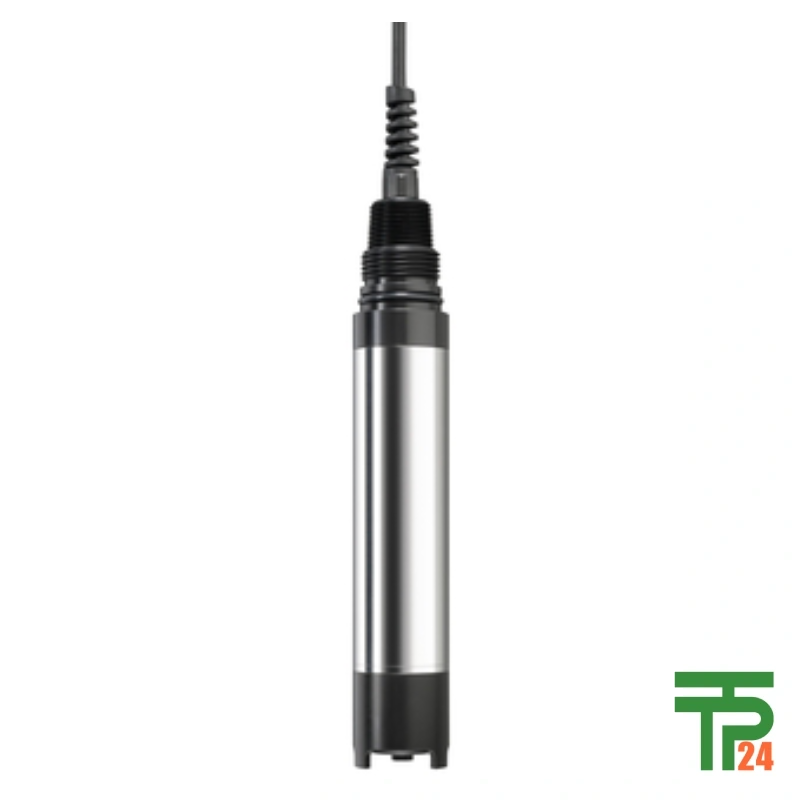
Endress+hauser COS61D Digital oxygen sensor Oxymax
- Digital optical oxygen sensor
- Fast, drift-free measurement
- Low maintenance, high availability
- Suitable for many applications
Did you like this product? Add to favorites now and follow the product.

(+86) 132-6243-8118 Start Live Chat
Description
Endress+hauser COS61D Digital oxygen sensor Oxymax
The Endress+Hauser Oxymax COS61D stands as a pinnacle of high-performance dissolved oxygen measurement, distinguished by its speed, accuracy, and remarkable drift-free characteristics. This advanced digital sensor is meticulously engineered to enhance process efficiency, offering minimal maintenance requirements, maximum operational availability, and exceptionally user-friendly handling. Its core innovation lies in a long-term stable, oxygen-selective fluorescence layer, which ensures interference-free and consistently reliable readings, a critical advantage in demanding industrial environments. Harnessing the power of Memosens digital technology, the COS61D not only guarantees maximum process and data integrity but also simplifies the crucial step of laboratory calibration, making it a smart choice for modern analytics.
Precision Oxygen Control in Aeration
A primary and critical application for the Oxymax COS61D is within wastewater treatment plants, specifically for precise oxygen (O2) control in the aeration basin. This stage is vital for the biological process where microorganisms consume organic pollutants. By providing fast and accurate dissolved oxygen data, the COS61D enables optimized aeration control, which is essential for efficient biological treatment, energy savings, and meeting stringent environmental discharge limits. The sensor’s drift-free nature means that control loops remain stable, preventing over- or under-aeration, thereby maximizing the performance of the entire treatment system and ensuring consistent effluent quality.
Water Treatment: Process Monitoring Excellence
Beyond aeration, the COS61D demonstrates its value in process water treatment and monitoring across various sectors. In wastewater facilities, it ensures that water undergoing intermediate treatment stages meets specific quality parameters. For water works, its application in the status monitoring of drinking water is paramount. This includes tracking oxygen enrichment, which can affect taste and odor, and monitoring conditions relevant to corrosion protection in distribution systems. The sensor’s ability to provide reliable data in these contexts helps maintain the safety and quality of potable water. Furthermore, its suitability for water quality monitoring in rivers, lakes, and seas aids environmental agencies in assessing ecosystem health and managing water resources effectively.
Optimizing Biological Treatment Processes
The COS61D sensor is exceptionally well-suited for utilities across all industries that rely on biological treatment processes. In sectors ranging from food and beverage to chemical manufacturing, biological treatment stages often require meticulous control of dissolved oxygen levels to foster the optimal growth and activity of microorganisms. The COS61D’s fast response and stable readings allow for precise O2 control, enhancing the efficiency and yield of these bioprocesses. Its capability to perform accurately in diverse process conditions, including varying water matrices, makes it a versatile tool for industries requiring robust biological treatment solutions and consistent process water quality.
Revolutionizing Fish Farming with Accurate O2
An increasingly important application for the Oxymax COS61D is in fish farming, or aquaculture. Maintaining optimal dissolved oxygen levels is absolutely critical for the health, growth rate, and survival of farmed fish. Insufficient oxygen can lead to stress, disease, and mortality, while excessively high levels can also be detrimental. The COS61D provides the precise, real-time O2 control needed to ensure ideal growth conditions in fish tanks and ponds. Its ability to function reliably in aquatic environments, coupled with its ease of handling and low maintenance, makes it an invaluable asset for modern aquaculture operations aiming to maximize productivity and fish welfare.
Minimum Maintenance, Maximum Process Uptime
The design philosophy behind the Oxymax COS61D prioritizes minimizing maintenance while maximizing operational availability. Traditional dissolved oxygen sensors often require frequent calibration and electrolyte replacement, leading to downtime and increased labor costs. The COS61D, with its optical measuring principle and Memosens technology, bypasses these limitations. The sensor’s fluorescence layer is durable and oxygen-selective, eliminating the need for electrolyte handling and reducing the frequency of recalibrations. This translates directly into increased uptime for critical processes, lower operational expenses, and a more efficient overall plant operation, providing excellent value and reliability.
Specifications
-
Measuring principle
Optical oxygen measurement
-
Application
Aeration tank, river monitoring, water treatment, fish farming
-
Characteristic
Digital, optical measurement of dissolved oxygen based on fluorescence quenching
Measurement possible in still water -
Measuring range
0 to 20 mg/l
0 to 200 %SAT
0 to 400 hPa -
Measuring principle
Oxygen-sensitive molecules (marker) are integrated in an optical active layer (fluorescence layer). The fluorescence layer surface is in contact with the medium. The sensor optics are directed at the back of the fluorescence layer. The sensor optics transmit green light pulses to the fluorescence layer. The markers respond (fluoresce) with red light pulses. The duration and intensity of the response signals depend directly on the oxygen contents or partial pressure.
-
Design
Calibration data saved in sensor
High degree of EMC protection -
Material
Sensor shaft: stainless steel 1.4435
Membrane cap: POM -
Dimension
Diameter: 40 mm (1.57 inch)
Shaft length: 186 mm (7.32 inch) -
Process temperature
-5 to 60 °C
(20 to 140 °F) -
Process pressure
Max. 10 bar abs
(Max. 145 psi) -
Temperature sensor
NTC 30K
-
Connection
Process connection: G1, NPT 3/4″
Cable connection: fixed cable or TOP68 plug-in-head
Related products
Recently Viewed Products

UNI-T UT325 Contact Type Thermometer

krohne OPTITEMP TT-CON BT

Megger VLF Sine Wave 45 kV

Fair Pricing, Guarantee of Authenticity and Quality, Fast Delivery, and Provision of Technical Support to Customers.
Copyright 2025 © TPT24 Company. All right reserved. Powered by TPT24.
