

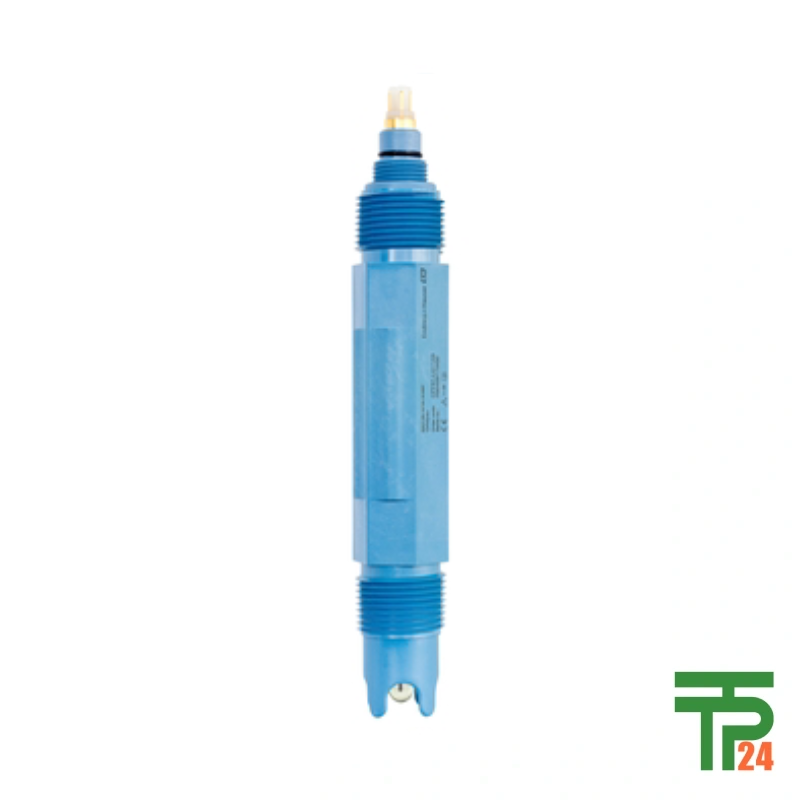
Endress+hauser CPF81 Analog pH sensor Orbipac
- pH 0-14 measuring range
- Harsh environments pH solution
- IP68 ingress protection
- -10 to 110°C temperature
Did you like this product? Add to favorites now and follow the product.

(+86) 132-6243-8118 Start Live Chat
Description
Endress+Hauser Orbipac CPF81: Robust pH Sensing
A Simpler Approach to Tough pH
The Endress+Hauser Orbipac CPF81 emerges as a beacon of simplicity and robustness in the complex world of process pH measurement. Designed from the ground up for environments where other sensors falter, the CPF81 offers a reliable analog solution for accurately monitoring pH levels, even in the most challenging media. Its inherent resilience makes it exceptionally well-suited for processes involving fibrous materials and high flow rates, where conventional pH sensors often struggle with fouling and inaccuracies. The integrated assembly of the Orbipac CPF81 is a significant advantage, streamlining installation processes, saving valuable time, and optimizing space within the process infrastructure. This all-in-one design inherently reduces the complexity of setup, eliminating the need for separate transmitter and sensor assemblies, thereby minimizing potential leak points and simplifying maintenance routines. Its straightforward analog output ensures easy integration into existing control systems, making it a practical and cost-effective choice for a wide array of industrial applications demanding dependable pH monitoring. The CPF81 is engineered to deliver consistent performance, providing users with the confidence that their critical process parameters are being accurately measured, even under the most demanding operational conditions, minimizing downtime and maximizing operational efficiency.
Specialized Applications in Tough Zones
The Orbipac CPF81 finds its niche in particularly demanding industrial sectors, most notably within the mining industries and the comprehensive treatment of industrial water and wastewater. Its robust construction and specialized design allow it to thrive in applications where aggressive chemical compositions, high particulate loads, and challenging flow dynamics are the norm. Specifically, within the mining sector, the CPF81 is an ideal choice for monitoring critical stages such as flotation processes, where fine mineral particles suspended in a liquid medium require precise pH control for optimal mineral recovery. It is equally adept in leaching operations, a common hydrometallurgical process used to extract metals from ores, where the pH of the leaching solution directly impacts the efficiency of metal dissolution. Furthermore, in neutralization processes, a fundamental step in both mining and water treatment to adjust acidity or alkalinity to safe and manageable levels, the CPF81 provides accurate and reliable readings. The sensor’s capability extends to monitoring the inlet and outlet streams of various treatment facilities, ensuring that water quality is maintained throughout the process and that discharged water meets stringent environmental regulations. Its ability to withstand the abrasive nature of slurries and the corrosive effects of various chemical solutions underscores its suitability for these harsh environments, ensuring long-term operational stability and accurate process control.
Potentiometric Measuring Principle Explained
At its core, the Orbipac CPF81 employs the well-established and reliable potentiometric measuring principle to determine pH. This method relies on measuring the electrical potential difference between two electrodes immersed in the process liquid. The heart of the CPF81’s sensing element is its gel-compact electrode, a design feature that significantly enhances its performance and longevity in demanding applications. This electrode incorporates a double-chamber reference system, which effectively isolates the internal electrolyte from the process medium. This dual-chamber design is crucial in preventing contamination and electrolyte poisoning, a common failure mode for pH sensors operating in harsh environments. The reference system utilizes a high-quality kalium nitrate (potassium nitrate) bridge electrolyte, which maintains a stable and consistent potential. Furthermore, the electrode is equipped with a highly resistant PTFE (Polytetrafluoroethylene) diaphragm. This diaphragm serves as the interface between the reference electrolyte and the process liquid, allowing ion exchange while simultaneously acting as a barrier against solid particles and chemical interference. The gel-based electrolyte within the electrode is specifically formulated to resist migration into the process, further minimizing the risk of contamination and ensuring a stable reference potential over extended periods, even in the presence of suspended solids or aggressive chemicals.
Key Characteristics and Design Attributes
The Endress+Hauser Orbipac CPF81 is distinguished by a suite of key characteristics and a robust design engineered for resilience. A primary advantage is its inherent resistance against electrolyte poisoning, a critical factor in extending the sensor’s operational life in contaminated process streams. This is achieved through the intelligent design of its gel-compact electrode and the reference system, as previously detailed. The gel electrode itself is also inherently dirt-repellent, an attribute that significantly reduces fouling and the need for frequent cleaning, thereby ensuring more consistent and accurate measurements. For process integration, the CPF81 features a standard NPT 3/4″ process connection, a widely adopted thread size that facilitates easy and secure installation into existing piping or vessels. The sensor boasts a compact design, housed within a durable PPS (Polyphenylene Sulfide) body. PPS is chosen for its excellent chemical resistance and mechanical strength, making it ideal for withstanding aggressive media and elevated temperatures. Further enhancing its versatility, the Orbipac CPF81 offers the option for an integrated amplifier. This integrated unit converts the low-level millivolt signal from the pH electrode into a more robust and stable analog signal (e.g., 4-20 mA), which can be transmitted over longer distances without degradation, simplifying wiring and reducing the susceptibility to electrical noise in industrial environments.
Technical Specifications and Performance Metrics
The technical specifications of the Endress+Hauser Orbipac CPF81 underscore its suitability for a broad spectrum of demanding industrial applications. The sensor is capable of measuring pH across the full standard range of 0 to 14 pH, providing comprehensive monitoring capabilities for most aqueous processes. The primary materials of construction are PPS for the housing, glass for the sensing element, and PTFE for the diaphragm, ensuring excellent chemical compatibility and resistance to a wide variety of corrosive substances. The sensor has a compact form factor with a standard length of 120 mm (approximately 4.68 inches), facilitating its installation in space-constrained applications. Its operational temperature range spans from -10°C to 110°C (14°F to 230°F), allowing for effective use in both chilled and heated processes. In terms of pressure handling, the Orbipac CPF81 can withstand a maximum process pressure of 10 bar (approximately 145 psi), making it suitable for a majority of industrial process lines. For applications where temperature compensation is critical for accurate pH measurement, the CPF81 offers an optional integrated Pt100 temperature sensor. This built-in temperature sensing capability allows the associated transmitter to automatically adjust the pH reading for temperature variations, further enhancing measurement accuracy and process control.
Reliability and Safety Features Assured
Endress+Hauser places paramount importance on the reliability and safety of its instrumentation, and the Orbipac CPF81 is no exception. For operations in potentially explosive atmospheres, a common concern in industries such as mining and chemical processing, the CPF81 is equipped with Ex certifications, including ATEX and FM approvals. These certifications ensure that the sensor can be safely deployed in hazardous areas where flammable gases, vapors, or dusts may be present, mitigating the risk of ignition. Furthermore, the sensor boasts a high ingress protection rating of IP68. This means it is dust-tight and protected against the effects of continuous immersion in water, making it highly resistant to water ingress and capable of withstanding demanding washdown procedures or submersion in wet environments. For electrical connection, the Orbipac CPF81 offers flexible options. It can be configured with a TOP68 connection head, a robust and weather-resistant connector that simplifies field wiring and allows for quick sensor replacement. Alternatively, it can be supplied with a fixed cable, offering a permanently sealed and durable connection for critical applications. These integrated safety and reliability features collectively ensure that the CPF81 can perform its crucial monitoring function with utmost confidence in the most challenging industrial settings.
Benefits for Industrial Operations Enhanced
The adoption of the Endress+Hauser Orbipac CPF81 offers a multitude of tangible benefits for industrial operations, directly contributing to improved efficiency, safety, and cost-effectiveness. Foremost among these is the delivery of reliable and accurate pH measurement, even in the presence of difficult-to-handle media like slurries and fibrous suspensions. This consistent performance reduces the risk of process upsets, off-spec product, and environmental non-compliance. The integrated assembly of the CPF81 is a significant advantage, providing substantial space and time savings during installation. By combining the sensing element and, optionally, the amplifier into a single unit, the complexity and cost of wiring and mounting are drastically reduced. Its inherent robustness in challenging media minimizes maintenance requirements and extends the sensor’s lifespan, leading to lower total cost of ownership and reduced downtime. The sensor’s ability to withstand harsh chemicals, high temperatures, and pressures further translates into greater operational uptime and less frequent replacements. Ultimately, these benefits combine to enhance overall operational efficiency, ensure process stability, and reinforce a safer working environment by providing dependable data for critical process decisions.
Global Availability through tpt24
For professionals seeking access to high-quality, reliable process instrumentation like the Endress+Hauser Orbipac CPF81, tpt24 stands as the premier global online store. tpt24 is dedicated to providing customers worldwide with direct access to genuine Endress+Hauser products, ensuring authenticity and the highest standards of quality with every purchase. Whether your operations are located in a major industrial hub or a remote corner of the globe, tpt24 guarantees worldwide delivery, making this robust pH sensor accessible to businesses in any country. Their commitment to customer satisfaction is evident in their efficient logistics and comprehensive support, ensuring that you receive your Orbipac CPF81 quickly and securely, ready for deployment in your critical applications. By choosing tpt24, you are not just purchasing a product; you are investing in a trusted partnership that prioritizes your operational success and provides seamless access to the reliable instrumentation you depend on for accurate process control and enhanced safety.
Specifications
-
Measuring principle
Potentiometric
-
Application
Water, waste water, process, galvanic
-
Characteristic
Resistent against electrolyte poisoning and dirt repellent gel-electrode including process connection NPT 3/4″. Optional with amplifier.
-
Measuring range
pH 0-14
-
Measuring principle
Gel-compact electrode with double chamber reference system, kalium nitrate bridge electrolyte and PTFE-diaphragm.
-
Design
Compact electrode in PPS housing with NPT3/4″ process connection.
-
Material
PPS / glass / PTFE
-
Dimension
Length: 120´mm
(4.68 inch) -
Process temperature
-10°C – 110°C
(14°F – 230°F) -
Process pressure
max. 10 bar
(145 psi) -
Temperature sensor
Optional with integrated Pt100.
-
Ex certification
ATEX
FM -
Connection
TOP68 connection head or fixed cable
-
Ingress protection
IP68
Related products

Recently Viewed Products



Fair Pricing, Guarantee of Authenticity and Quality, Fast Delivery, and Provision of Technical Support to Customers.
Copyright 2025 © TPT24 Company. All right reserved. Powered by TPT24.
