

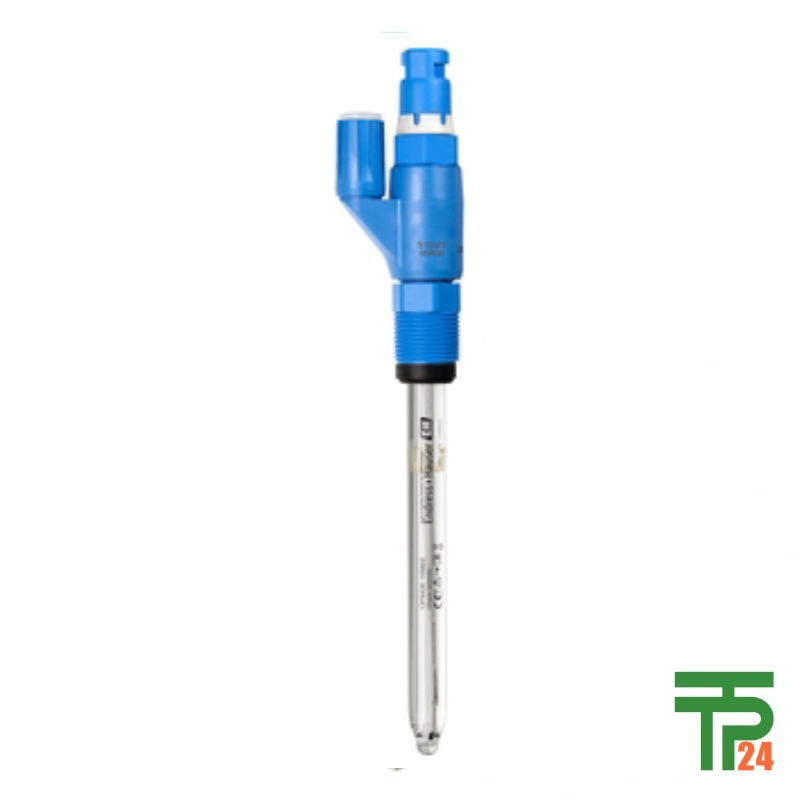
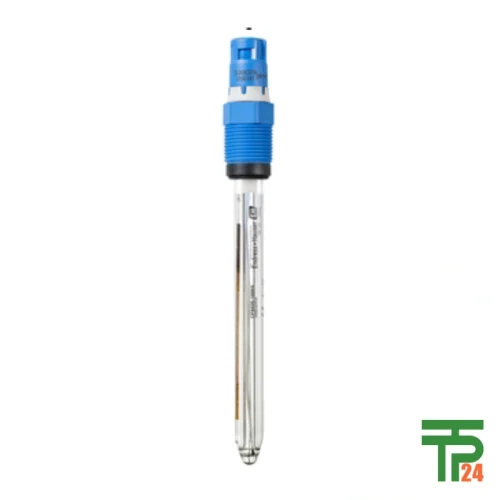
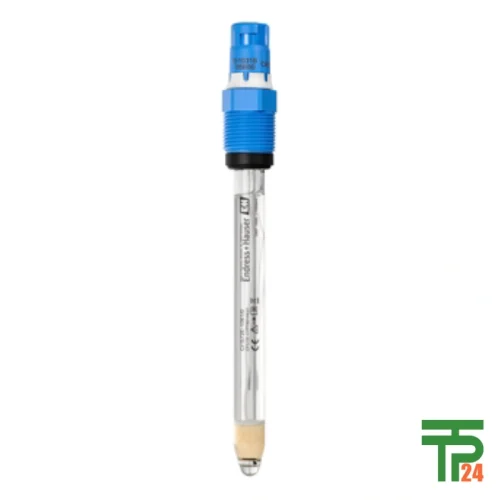
Endress+hauser CPS42E Digital ORP sensor Memosens
- Sensor: Digital ORP Electrode
- Media: Low conductivity, organic
- Response: Fast response time
- Certification: ATEX, IECEx, CSA
Did you like this product? Add to favorites now and follow the product.

(+86) 132-6243-8118 Start Live Chat
Description
Endress+Hauser CPS42E: High Performer for Harsh Applications
Advanced ORP Sensor for Challenging Media
The Memosens CPS42E is engineered as a high-performance digital ORP (Oxidation-Reduction Potential) sensor, specifically designed for demanding chemical applications, media with low conductivity, or those with a significant organic content. Its rapid response time makes it ideal for processes involving fast-changing media. Integrated with Memosens 2.0 digital technology, the CPS42E ensures maximum process integrity while simplifying operation. The sensor resists moisture and allows for convenient laboratory calibration, enhancing operational efficiency and predictive maintenance capabilities.
Excels in Low Conductivity Chemical Processes
This advanced sensor truly shines in applications involving media with very low conductivity, a high proportion of organic solvents, or alcohols. The chemical industry, in particular, benefits immensely from the CPS42E’s ability to provide accurate and stable ORP readings in these challenging environments. It is also a preferred choice for measurements within the organic chemicals sector, where precise control is often critical. Its robust performance extends to power plants, such as for monitoring boiler feed water, and for precise laboratory measurements.
Ideal for Fast-Changing Media Environments
The CPS42E’s design prioritizes a fast response time, making it perfectly suited for processes where media conditions change rapidly. This responsiveness is crucial in applications where swift and accurate ORP readings are necessary to maintain process stability and product quality. The combination of liquid KCl electrolyte and a ceramic junction facilitates this quick reaction, ensuring that the sensor keeps pace with dynamic process variations. This makes it an invaluable tool for optimizing control in complex chemical manufacturing.
Robustness and Extended Life in Harsh Conditions
Designed for resilience, the Memosens CPS42E offers enhanced resistance to poisoning through a permanent refilling of its KCl bridge electrolyte and a separate reference lead. This feature significantly extends the sensor’s operational lifetime, even in aggressive media. Its suitability for cleaning-in-place (CIP) and sterilization-in-place (SIP) procedures further attests to its robust design, allowing for easy and effective maintenance without compromising performance. This durability translates to reduced operating costs and increased process uptime.
Memosens 2.0 for Superior Data and IIoT Integration
The integration of Memosens 2.0 digital technology is a cornerstone of the CPS42E’s advanced capabilities. This system provides extended storage for calibration and process data, forming an ideal basis for predictive maintenance strategies and enhanced IIoT (Industrial Internet of Things) services. By enabling better trend identification and offering a future-proof platform, the CPS42E empowers users with actionable insights, facilitating proactive management of sensor performance and overall process optimization.
Maximum Process Safety Through Digital Transmission
Ensuring maximum process safety is a paramount consideration for the CPS42E, achieved through its non-contact, inductive signal transmission. This method of data transfer significantly reduces the risk of signal loss or interference compared to traditional wired connections, particularly in environments with high electromagnetic noise or moisture. The inherent reliability of this digital connection minimizes potential failure points, contributing to safer and more dependable operations across a wide range of industrial settings.
Hazardous Area Approvals for Global Deployment
The Memosens CPS42E is equipped with comprehensive certifications, including ATEX, IECEx, CSA C/US, NEPSI, Japan, and INMETRO approvals, making it suitable for use in hazardous areas classified as zones 0, 1, and 2. This broad international recognition confirms the sensor’s ability to operate safely and reliably in potentially explosive atmospheres, providing peace of mind and compliance with global safety standards for chemical processing and other high-risk industries.
Specifications
-
Measuring principle
Sensor ORP / Redox
-
Application
Media with very low conductivity or a high proportion of organic solvents or alcohol:
• Chemical industry
• Organic chemicals
• Power stations
• Laboratory measurements -
Characteristic
Digital ORP electrode for process engineering with ceramic junction
and KCl liquid electrolyte -
Measuring range
–1 500 to 1 500 mV
-
Measuring principle
Liquid-KCl filling and ceramic junction
-
Design
All shaft lengths with temperature sensor
-
Material
Sensor shaft: Glass to suit process
ORP measuring element: Platinum
Metal lead: Ag/AgCl
Open aperture: Ceramic junction, zirconium dioxide
O-ring: FKM
Process coupling: PPS fiber-glass reinforced
Nameplate: Ceramic metal oxide -
Dimension
Diameter: 12 mm (0.47 inch)
Shaft length: 120, 225, 360 and 425 mm
(4.72, 8.86, 14.17 and 16.73 inch) -
Process temperature
–15 to 135 °C (5 to 275 °F)
-
Process pressure
0.8 to 11 bar (11.6 to 159.5 psi) (absolute)
-
Temperature sensor
NTC 30k
-
Ex certification
With ATEX, IECEx, CSA C/US, NEPSI, Japan Ex and INMETRO approvals for use in
hazardous areas Zone 0, Zone 1 and Zone 2. -
Connection
Inductive, contactless connection head with Memosens 2.0 technology
-
Ingress protection
IP68
-
Additional certifications
Additional certifications
Related products
Recently Viewed Products



Fair Pricing, Guarantee of Authenticity and Quality, Fast Delivery, and Provision of Technical Support to Customers.
Copyright 2025 © TPT24 Company. All right reserved. Powered by TPT24.
