

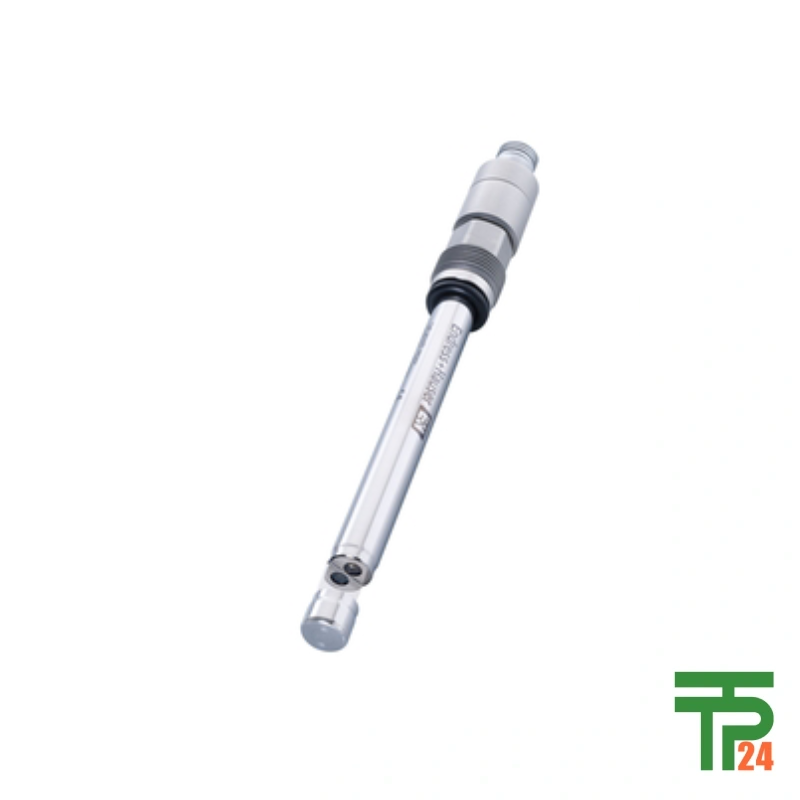
Endress+hauser OUSBT66 Cell growth and biomass sensor
- Measurement Principle: NIR Absorption
- Application Focus: Cell Growth, Biomass
- Calibration: NIST-Traceable Clip-On Filters
- Design: Hygienic, Autoclavable
Did you like this product? Add to favorites now and follow the product.

(+86) 132-6243-8118 Start Live Chat
Description
Endress+Hauser OUSBT66: Advanced NIR Biomass Monitoring
Real-Time Measurement for Optimized Processes
The Endress+Hauser OUSBT66 NIR absorption sensor is a state-of-the-art instrument designed for real-time monitoring of critical parameters such as cell growth, biomass concentration, and crystallization processes. It delivers reliable and precise measured values, enabling significant optimization of your bioprocesses and enhancement of product yield. The sensor’s inherently hygienic design, featuring a stainless steel body with sapphire windows and no seals or crevices, ensures resistance to CIP/SIP procedures and allows for autoclaving, making it exceptionally suitable for demanding life sciences applications. Verification and calibration are made remarkably simple and efficient with the use of NIST-traceable, certified clip-on filters, eliminating the need for complex liquid-based calibration routines.
Specific Applications in Life Sciences
The OUSBT66 sensor is tailored for a wide array of specific applications within the life sciences sector, providing crucial insights for process development and control. It is extensively used for monitoring Cell growth in bacterial fermentation, where real-time data on cell density is vital for maintaining optimal conditions and maximizing product output. In Mammalian cell culture applications, it accurately tracks biomass, enabling precise control over cell viability and productivity. The sensor also plays a key role in Biomass during fermentation processes for various microbial applications, and in Monitoring of algae concentration for biotechnological cultivation. Additionally, it is employed in Monitoring of crystallization processes and for Suspended solids measurement, making it a versatile tool across different bioprocessing workflows, from laboratory research to full-scale production.
Enhancing Product Yield Through Real-Time Data
A significant advantage of the OUSBT66 is its ability to provide real-time measurements, which directly translates into optimized processes and increased product yields. By continuously monitoring cell density, biomass, or other key parameters, operators can make immediate adjustments to fermentation or bioreactor conditions, such as nutrient supply or aeration, to maintain peak performance. This proactive approach minimizes deviations from ideal conditions, reduces the risk of batch failures, and ensures a more consistent and higher overall product yield. The sensor’s excellent correlation with laboratory results further enhances confidence in the data, simplifying quality control and validation procedures.
Simplified Calibration with Clip-On Filters
The OUSBT66 simplifies the often-complex task of sensor calibration and verification through its innovative use of NIST-traceable and certified clip-on filters. This system is a standout benefit, as it eliminates the need for cumbersome and potentially error-prone liquid-based calibrations, which are common with other sensor technologies. The clip-on filters allow for quick, easy, and accurate verification and calibration directly on the sensor, ensuring reliable performance and data integrity with minimal downtime. This user-friendly approach significantly reduces operational complexity and costs associated with sensor maintenance and calibration, making it an attractive choice for busy bioprocessing environments.
Hygienic Design for Sterility and Durability
The OUSBT66 boasts an exceptional hygienic design, critical for applications in sterile and sensitive bioprocessing environments. Its stainless steel 1.4435 (316L) sensor housing, combined with robust sapphire windows, ensures complete resistance to cleaning-in-place (CIP) and sterilization-in-place (SIP) procedures. Crucially, the absence of seals or crevices within the wetted parts prevents any build-up or contamination, further upholding the highest standards of hygiene. The sensor is also designed to be autoclavable, offering maximum flexibility for sterilization protocols. This hygienic and durable construction guarantees a long service life and reliable performance, even under the most stringent operational demands.
Versatile Fit for Fermenters and Bioreactors
To ensure optimal integration into diverse bioprocessing setups, the OUSBT66 sensor is offered with various path lengths and sensor lengths. This flexibility allows for a perfect fit into virtually any fermenter or bioreactor, whether used in a laboratory, pilot scale, or full-scale production facility. The sensor can be installed using a standard PG 13.5 thread, commonly found in many assemblies, or directly mounted via a head plate. This adaptability simplifies installation and ensures that the sensor can be effectively positioned to capture the most representative measurements, regardless of the specific geometry or configuration of the bioreactor system.
Specifications
-
Measuring principle
Cell growth
-
Application
Cell growth and biomass in fermentation processes
Monitoring of algae concentration
Control of crystallization processes
Suspended solids measurement -
Measuring range
0 to 4 AU
0 to 8 OD (depending on optical path length) -
Design
Hygienic design:
Sterilizable and autoclaveable
Sapphire windows without seals and crevices
CIP/SIP resistant -
Material
Sensor housing: Stainless Steel 1.4435 (316L)
Windows: Sapphire
O-ring: EPDM -
Process temperature
0 to 90 °C (32 to 194 °F)
Max. 135 °C for max. 2 hours -
Process pressure
Max. 10 bar abs at 90 °C
(Max. 150 psi at 194 °F) -
Ingress protection
IP68
Related products


Recently Viewed Products



Fair Pricing, Guarantee of Authenticity and Quality, Fast Delivery, and Provision of Technical Support to Customers.
Copyright 2025 © TPT24 Company. All right reserved. Powered by TPT24.
