

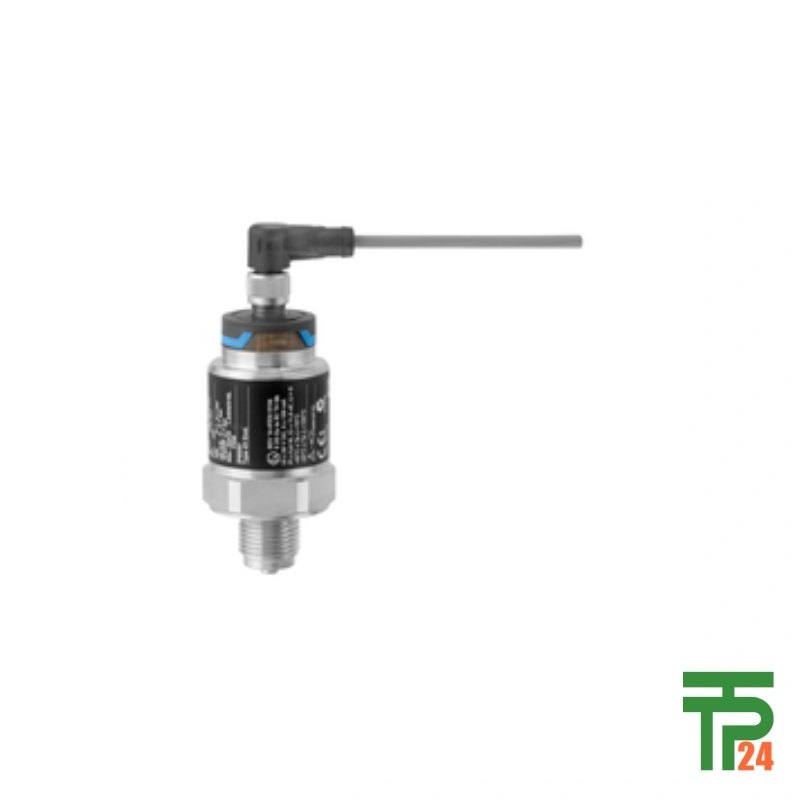
Endress+hauser PMC21 Absolute and gauge pressure Cerabar
-
Smart Sensor Capabilities:
-
Simplified Wiring:
-
Capacitive ceramic oil-free sensor:
-
Accuracy: 0.3% of span:
Did you like this product? Add to favorites now and follow the product.

(+86) 132-6243-8118 Start Live Chat
Description
Endress+Hauser PMC21 Pressure Transmitter
The Endress+Hauser Cerabar PMC21 is a remarkably compact and efficient pressure transmitter, epitomizing German engineering precision for industrial applications. At its core lies a capacitive, oil-free ceramic sensor, meticulously designed to accurately measure absolute or gauge pressure within a broad range, from a delicate 100mbar up to a robust 40bar. This versatility allows it to seamlessly integrate into countless processes where precise pressure monitoring is paramount. Engineered to thrive in the harshest industrial conditions, the PMC21 boasts impressive ingress protection grades, reaching up to IP68. This robust construction, coupled with its highly abrasion-resistant Ceraphire membrane and high-quality 316L stainless steel housing, ensures exceptional durability and longevity, even when exposed to demanding environments. Its compact size further simplifies installation and maintenance, making it an ideal choice for space-constrained applications without compromising on performance or reliability.
The PMC21’s ability to measure pressure across such a wide range, from low pressures of 0.1 bar (100 mbar) to high pressures of 40 bar, caters to a diverse spectrum of industrial needs. The core of its measurement capability is the capacitive, oil-free ceramic sensor. This type of sensor utilizes the principle of capacitance change caused by the deflection of a ceramic diaphragm under pressure. Ceramic sensors are favored for their inherent stability, resistance to overpressure, and their inert nature, making them suitable for a wide range of media. Being oil-free eliminates concerns about potential oil migration into the process media, a critical factor in applications such as food and beverage, pharmaceutical, or medical gas systems.
The ingress protection of IP68 signifies a high level of environmental resistance. Specifically, “IP6” indicates complete protection against dust ingress, meaning the device is dust-tight. “IPx8” indicates that the device can withstand continuous immersion in water under conditions specified by the manufacturer. For the PMC21, this typically means it can be submerged in water at a depth and duration that ensures no harmful ingress of water occurs, making it suitable for outdoor installations, wash-down environments, or processes involving submersion.
The Ceraphire membrane is a proprietary ceramic material developed by Endress+Hauser. Its key characteristic is high abrasion resistance, which is crucial for applications where the measured medium contains abrasive particles. This resistance ensures that the sensing element remains protected and maintains its accuracy and calibration over a longer period, even when exposed to erosive forces. Coupled with a high-quality 316L stainless steel housing, the PMC21 offers excellent resistance to corrosion from a wide variety of chemicals and aggressive media, further extending its operational life in demanding industrial settings. The compact form factor of the PMC21 is a significant advantage, reducing the physical space required for installation and allowing for integration into complex machinery or systems where space is at a premium. This also simplifies maintenance procedures, as access and handling are made easier.
Rugged Design: Built for Harsh Environments
The Endress+Hauser Cerabar PMC21 is specifically engineered to endure and perform reliably in the most challenging industrial environments. Its robust construction is highlighted by ingress protection grades reaching up to IP68, signifying its complete protection against dust ingress and its ability to withstand prolonged immersion in water under specified conditions. This makes it an ideal solution for outdoor installations or applications where exposure to moisture and particulate matter is unavoidable. The transmitter’s durability is further enhanced by its highly abrasion-resistant Ceraphire ceramic membrane, which effectively resists wear from abrasive media, ensuring long-term accuracy and stability. Encased in a high-quality 316L stainless steel housing, the PMC21 offers superior corrosion resistance, safeguarding the device against aggressive chemicals and ensuring a prolonged operational lifespan. This combination of rugged features makes the PMC21 a truly resilient instrument, capable of delivering consistent performance in demanding conditions.
The ingress protection standard IP68 is a critical feature for industrial applications. “IP6” means the enclosure is dust-tight, preventing any ingress of solid particles, including dust, which can be common in many industrial settings. The “8” in IP68 indicates a higher level of water protection than typically found. While the exact conditions (depth and duration of immersion) are defined by the manufacturer, it generally signifies that the device can be continuously submerged in water under specified pressures and durations without harmful effects. This makes the PMC21 suitable for applications exposed to washdowns, high humidity, or even temporary submersion, such as in open tanks or outdoor environments prone to rainfall.
The Ceraphire ceramic membrane is a key technological component that contributes significantly to the PMC21’s robustness. Ceramic materials, especially those engineered for sensor applications, often possess excellent mechanical properties, including hardness and resistance to wear. Abrasion resistance is particularly important when measuring media that may contain suspended solids or particulate matter, which can erode conventional sensing surfaces over time. The Ceraphire membrane’s ability to withstand such abrasive forces ensures that the sensor’s integrity and measurement accuracy are maintained for longer periods, reducing the frequency of maintenance and recalibration.
The use of 316L stainless steel for the housing provides excellent resistance to a wide range of corrosive media. Stainless steel alloys, particularly those with higher nickel and molybdenum content like 316L, offer superior protection against pitting and crevice corrosion, as well as general corrosion in acidic or saline environments. This broad chemical compatibility is vital for industrial transmitters, which are often exposed to a variety of process chemicals, cleaning agents, or atmospheric conditions that can degrade less resistant materials. The combination of a robust sensor membrane and a corrosion-resistant housing makes the PMC21 a reliable choice for even the most demanding process environments.
Versatile Applications: Gases and Liquids
The Endress+Hauser Cerabar PMC21’s versatility shines through its ability to accurately measure absolute or gauge pressure in both gases and liquids across a wide array of industrial applications. For instance, in chemical processing, it can precisely monitor reactor pressures or liquid levels in storage tanks, even with corrosive substances due to its robust ceramic sensor. In water and wastewater treatment plants, it efficiently monitors pump pressures, filtration systems, or the level in treatment basins. The food and beverage industry can leverage its accurate readings for tank pressures during fermentation or filling processes. Furthermore, its robust design with optional cleaning for oxygen applications makes it suitable for specialized industries such as medical gas production or other critical gas handling systems. Its compact nature allows for installation in tight spaces, making it an adaptable solution for diverse pressure measurement needs.
The PMC21’s capability to measure both absolute and gauge pressure broadens its applicability.
- Absolute Pressure: Measures pressure relative to a perfect vacuum. This is useful for applications where the process pressure can drop to very low levels or where vacuum conditions are part of the process, such as in distillation or vacuum drying.
- Gauge Pressure: Measures pressure relative to the ambient atmospheric pressure. This is the most common type of pressure measurement in industrial processes, used for monitoring pressures in pipelines, vessels, and pumps relative to the surrounding air.
In chemical processing, the PMC21’s resistance to corrosive media is invaluable. Monitoring reactor pressures is critical for controlling chemical reactions, ensuring safety, and optimizing product yield. For liquid level measurement in storage tanks, pressure at the bottom of the tank is directly proportional to the liquid height (hydrostatic pressure), allowing for precise level monitoring.
In water and wastewater treatment plants, the PMC21 can monitor the discharge pressure of pumps to ensure they are operating within their optimal range, track pressure drops across filters to indicate when cleaning or replacement is needed, and measure the hydrostatic pressure in basins to determine liquid levels for process control.
The food and beverage industry benefits from the PMC21’s hygienic potential (due to the oil-free sensor) and accurate measurements for process control. Monitoring tank pressures during fermentation is crucial for controlling gas production and preventing over-pressurization. Accurate filling of bottles or containers also relies on precise pressure control.
The mention of “optional cleaning for oxygen applications” is significant. Oxygen-rich environments can be hazardous, and equipment used in such applications must be designed and manufactured to stringent standards to prevent ignition. Specific cleaning procedures and materials are required to remove any trace contaminants that could act as ignition sources. The availability of such options makes the PMC21 suitable for specialized and safety-critical applications in sectors like medical gas handling or other industries dealing with pure oxygen.
Simplified Installation: Compact and Adaptable
One of the significant advantages of the Endress+Hauser Cerabar PMC21 is its cost-effectiveness, largely attributed to its compact construction and user-friendly features that simplify installation and setup. Its small footprint allows for easy integration into existing plant layouts, especially in areas with limited space. The PMC21 offers customizable measuring ranges, which means it can be quickly adapted to specific process requirements, thereby minimizing commissioning time and reducing overall operational costs. Furthermore, the availability of various process connections, including different thread types (G1/4, G1/2, MNPT 1/4, MNPT 1/2, DIN13, JIS R1/2), ensures broad compatibility with existing piping systems. This ease of installation, combined with its compact and adaptable design, translates into tangible time and cost savings for industrial operations, making the PMC21 a highly efficient choice.
The compact nature of the PMC21 (its small footprint) directly contributes to reduced installation costs by occupying less space. This is particularly beneficial in retrofitting older plants or in new designs where space efficiency is a key consideration. It allows for more flexible placement of sensors, potentially closer to the point of measurement, which can sometimes improve measurement accuracy and reduce plumbing complexity.
Customizable measuring ranges are a key feature for simplifying setup and reducing inventory. Instead of stocking multiple devices for different pressure ranges, a single PMC21 can be configured in the field or at the factory to meet a specific application’s needs. This reduces lead times, lowers inventory costs, and allows for faster deployment. For instance, if a process requires monitoring between 0-5 bar, the PMC21 can be configured for this specific range. If later the requirement changes to 0-10 bar, the device can be reconfigured without needing a replacement.
The wide variety of process connections is crucial for ensuring compatibility with existing infrastructure.
- G threads (e.g., G1/4, G1/2): These are standard parallel pipe threads commonly used in many industrial applications, particularly in Europe.
- MNPT threads (e.g., MNPT 1/4, MNPT 1/2): These are American standard tapered pipe threads, widely used in North America.
- DIN13: This likely refers to a DIN standard thread, possibly a metric thread type.
- JIS R1/2: This refers to a Japanese Industrial Standard thread, a parallel pipe thread.
Having a selection of these common thread types means the PMC21 can be directly integrated into a wide range of existing piping systems without the need for complex adapters, which can introduce potential leak points and add to installation time and cost. This adaptability makes the PMC21 a universally applicable solution.
Specifications
-
Measuring principle
Absolute and gauge pressure
-
Characteristic
Cost effective pressure transducer, capacitive sensor with ceramic measuring diaphragm
-
Supply voltage
10…30 VDC
-
Reference Accuracy
0.3 %
-
Long term stability
0.2 % of URL/year
-
Process temperature
-25 °C…+100 °C
(-13 °F….+185 °F) -
Ambient temperature
-40 °C…+85 °C
(-40 °F…+185 °F) -
Measuring cell
+100 mbar…+40 bar
(+1.5 psi…+600 psi) -
Max. overpressure limit
max. 60 bar
(900 psi) -
Process connection
Threads:
G1/4, G1/2,
MNPT 1/4, MNPT 1/2,
DIN13,
JIS R1/2 -
Communication
4…20 mA, IO-Link
-
Certificates / Approvals
ATEX, FM, CSA, IEC Ex, NEPSI, UK Ex
-
Design approvals
EN 10204-3.1 Final inspection report
Cleaned from oil and grease
Cleaned for oxygen applications -
Marine approvals
RINA, KR
Related products
Recently Viewed Products


Fair Pricing, Guarantee of Authenticity and Quality, Fast Delivery, and Provision of Technical Support to Customers.
Copyright 2025 © TPT24 Company. All right reserved. Powered by TPT24.
