

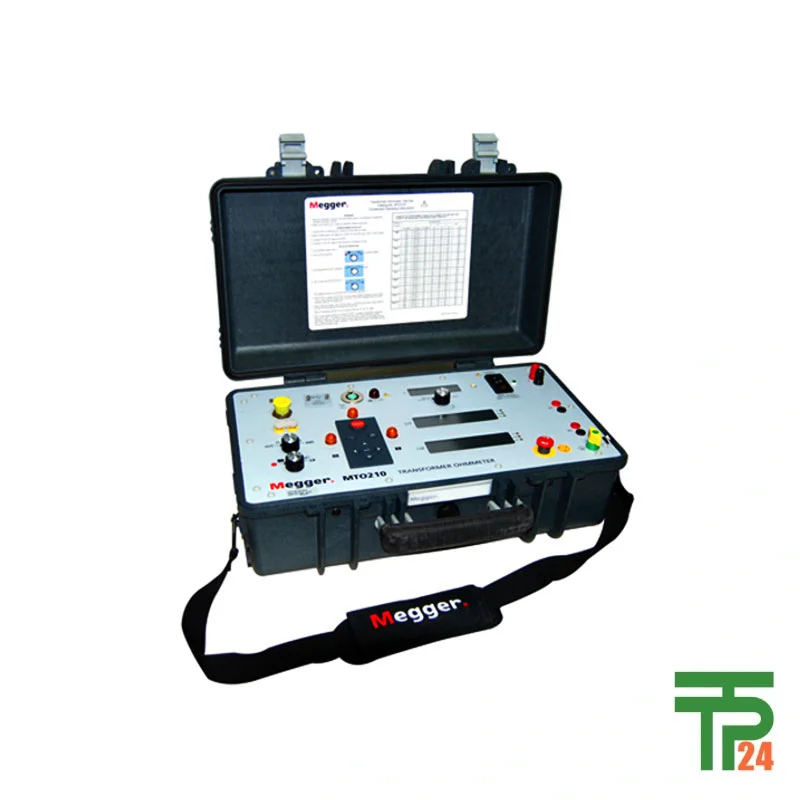
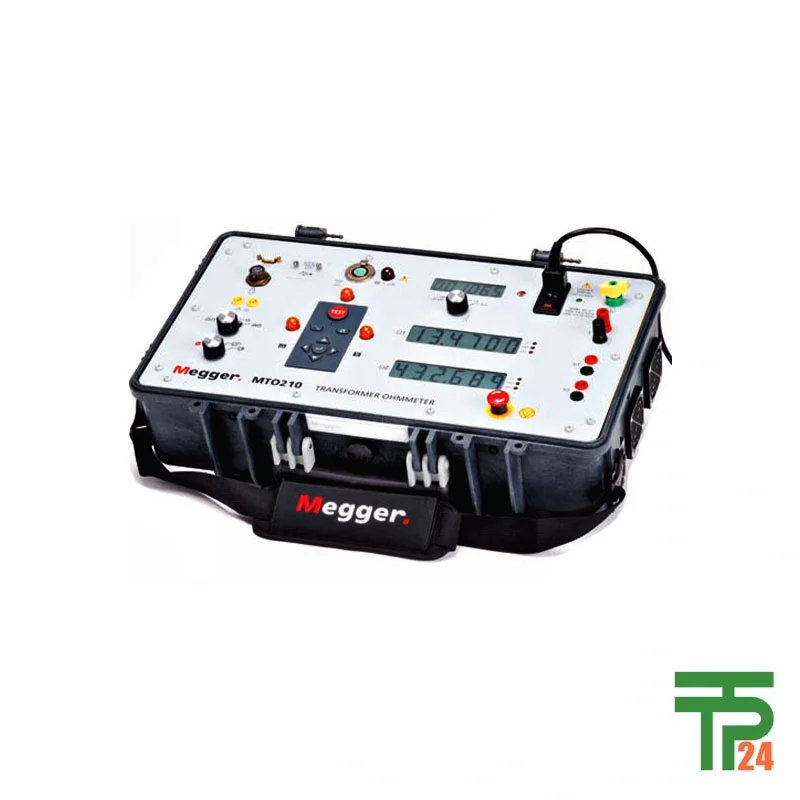
Megger MTO210 Transformer ohmmeter
- Resistance: 10 µΩ to 2000 Ω
- Max DC Current: 10 A
- Accuracy: ±0.25% measurement range
- Integrated demagnetization circuitry
Did you like this product? Add to favorites now and follow the product.

(+86) 132-6243-8118 Start Live Chat
Description
Introduction to Advanced Transformer Resistance Testing
The Megger MTO210 Transformer Ohmmeter is a sophisticated, field-portable device engineered to deliver precise DC resistance measurements across a wide spectrum of applications. Designed for transformers, rotating machine windings, and low-current resistance measurements in control circuits, this instrument sets a high standard in power system diagnostics. With its dual-channel digital reading capability, the MTO210 measures resistance from as little as 10 µΩ up to 2000 Ω, making it an indispensable tool for utility companies, maintenance teams, and manufacturing quality control departments. The incorporation of accurate measurement capabilities, combined with rapid discharge and safety features, ensures this device is both powerful and secure in operation. Renowned for reliability, the MTO210 guarantees that each test yields consistent, traceable results.
In practical terms, resistance testing of transformers involves quantifying the continuity and integrity of windings, assessing winding insulation conditions indirectly through resistance behavior, and verifying that windings conform to design specifications. The MTO210’s ability to perform fast, accurate DC resistance measurements reduces downtime during commissioning, fault finding, and preventive maintenance. The instrument’s portability enables technicians to bring a complete diagnostic solution directly to the transformer site, whether in a substation, a manufacturing plant, or an on-site repair location. Traceability is ensured through calibration certificates and an embedded data storage system, allowing test histories to be reproduced and audited.
Key factors that make the MTO210 ideal for transformer resistance testing include:
- Dual-channel capability enabling simultaneous primary and secondary winding measurements, reducing test time and enabling direct comparison.
- High measurement accuracy suitable for detecting small changes in resistance that may indicate winding degradation, contact resistance issues, or corrosion.
- Safe and fast energy discharge after testing to prevent lingering voltages from posing hazards during diagnostics or re-energization.
- A robust, weather-resistant design intended for field use, including clear user interfaces and durable construction.
Precision Measurement Technology for Magnetic Windings
At the core of the MTO210’s design is its dual-channel measurement system, enabling simultaneous assessment of primary and secondary windings in transformers. This dual injection capability significantly accelerates test procedures, especially when working with large three-phase transformers. The instrument’s DC test current capacity extends up to 10 A, supported by a measurement accuracy of ±0.25%, ensuring dependable readings in both laboratory and field environments. Integrated demagnetization circuitry prevents residual magnetism, which could adversely affect subsequent testing or equipment performance. Additionally, the high-contrast alphanumeric displays offer exceptional visibility even in bright sunlight, aiding technicians working in challenging outdoor conditions.
Technical emphasis:
- Dual-channel operation means two independent current sources and two measurement channels operate concurrently. This enables technicians to complete primary and secondary winding resistance measurements in parallel, facilitating faster diagnostic workflows and enabling immediate cross-winding comparisons.
- The DC test current of up to 10 A provides sufficient drive to overcome winding resistance in larger transformers without overstressing insulation or introducing excessive heating. The choice of a DC approach avoids reactance-related complexities associated with AC measurements, ensuring a straightforward resistance reading.
- The ±0.25% measurement accuracy across the specified range indicates consistency and reliability. This level of precision is critical for detecting small changes over time, which can be early indicators of winding degradation, loose connections, or contact resistance issues.
- Demagnetization circuitry is essential when testing magnetic components. Residual magnetism can affect the next set of measurements by skewing effective magnetic flux and, indirectly, the perceived resistance due to magnetization effects and core leakage paths. The MTO210 mitigates this risk by demagnetizing the windings or ensuring that prior magnetization does not influence subsequent tests.
- Readability is enhanced by high-contrast alphanumeric displays, enabling operators to read measurements quickly in variable lighting conditions, including direct sun exposure, which is common in outdoor substation testing.
Operational notes:
- When performing dual-channel tests, ensure proper lead placement for each winding and verify that channel 1 and channel 2 inputs correspond to the intended winding terminals to avoid misinterpretation of results.
- For very high-resistance measurements near the lower end of the range (10 µΩ to a few Ω), ensure that any test leads, clamps, and fixtures contribute minimal additional resistance. Calibration and zero-offset checks should be performed as part of a standard test procedure.
- Demagnetization should be performed after measuring winding resistance when magnetization effects could influence subsequent tests, especially if other measurements rely on a near-zero or stable magnetic state.
Dedicated Safety Systems for Field Operations
Safety is a paramount concern when performing electrical measurements, and the MTO210 addresses this through several dedicated systems. The fast auto safety discharge circuit instantly dissipates stored energy in the unit under test, protecting both the operator and the equipment. Automatic shutdown features guard against hazards in cases of inadvertent lead disconnection or unexpected power loss. Moreover, a user-selectable maximum current range allows for the safe examination of small transformers without overloading them. For additional safety measures, the device can integrate with an external interlock safety perimeter, ensuring best practices in high-voltage environments.
Detailed safety features:
- Fast auto safety discharge circuit: After a measurement session, any stored energy in the transformer windings or connected equipment is rapidly discharged to near-zero potential, reducing the risk of electric shock or secondary arcing during disconnect. This is particularly important when connecting to high-energy transformers in the field.
- Automatic shutdown on leakage or disconnection: If a test lead becomes disconnected or if an abnormal power condition is detected, the instrument can automatically shut down to prevent hazardous conditions or damage to the device and the test object.
- User-selectable maximum current range: Operators can constrain the test current to an appropriate level for delicate or small transformers, preventing thermal or insulation damage due to overcurrent. This is especially helpful when testing low-power devices or older transformers with reduced current tolerances.
- External interlock compatibility: The MTO210 can be integrated with safety perimeters or interlocks in high-voltage testing environments. An interlock system ensures that access to the test area is controlled, preventing unintentional exposure to energized equipment while tests are ongoing.
- Insulation and high-voltage safety design: The device is designed with robust insulation materials, secure connectors, and shielding to minimize the risk of accidental contact with live conductors, especially when working in field environments with varying weather conditions.
- Compliance considerations: The MTO210’s safety features complement standard electrical safety practices and industry-specific guidelines, including those for high-voltage diagnostics and transformer testing in substations and industrial facilities.
Operational guidance:
- Before connecting leads, inspect the condition of all cables, clamps, and connectors for signs of wear, cracking, or insulation damage.
- Confirm that required safety PPE (personal protective equipment) is available and used in accordance with local regulations and site-specific safety practices.
- When using external interlocks, verify proper wiring and ensure that the interlock system trips the instrument safely in the event of a gate or enclosure opening during testing.
Practical Applications Across Power Systems Maintenance
The MTO210 excels in numerous professional settings, offering unparalleled performance in transformer diagnostics and maintenance. Its primary applications include verifying factory test readings, conducting routine maintenance evaluations, and detecting transformer defects such as loose connections. It is especially effective in assessing the contact resistance of on-load tap changers with ‘make-before-break’ configurations, providing early detection of pitted or misaligned contacts. In power utilities, this capability translates into reduced downtime and heightened reliability. Additionally, the instrument supports resistance measurements in breaker contacts, voltage regulators, and other crucial high-current pathways.
Detailed use-cases:
- Factory testing and acceptance: During transformer manufacturing and refurbishment, the MTO210 can verify winding integrity and resistance characteristics against design tolerances. This helps ensure quality control and early detection of manufacturing defects such as poor solder joints, damaged windings, or winding cross-talk.
- Routine maintenance: Regular resistance checks on transformers help identify gradual increases in winding resistance, which can indicate aging windings, corrosion, connection deterioration, or insulation degradation. Tracking resistance trends over time supports condition-based maintenance planning.
- On-load tap changer (OLTC) diagnostics: Tamper-proof contacts and mechanical wear can cause poor electrical contact, leading to increased resistance and poor voltage regulation. The MTO210’s dual-channel capability enables direct comparison of primary and secondary OLTC contact paths, exposing anomalies in make-before-break configurations.
- Breaker and regulator diagnostics: Resistance measurements of breaker contacts and regulator winding connections help verify that cooling and protection systems remain effective and that there are no degraded contact surfaces that could cause heating or arcing under load.
- Rotating machines and other windings: Beyond transformers, the instrument can assess resistance in motor windings, generator windings, and other magnetic circuits where precise DC resistance readings help verify winding integrity and detect shorted turns or broken wires.
- Control circuits and low-current paths: Some equipment relies on precise resistance paths in control circuits, relays, and sensors. MTO210’s DC resistance measurements can verify these critical values to ensure correct operation and safety.
Operational practices:
- Define baseline measurements for each winding and critical path, cataloguing them with time stamps and environmental conditions to support trend analysis.
- When monitoring trends, consider temperature compensation guidelines if the instrument or application relies on the exact resistance value at a specific temperature. The MTO210 may have a fixed or user-adjustable reference temperature for resistance reading interpretation.
- For OLTC diagnostics, ensure the transformer is de-energized and safely isolated before performing any resistance tests on the tap changer contacts. Use the appropriate current range and perform multiple measurements to confirm consistency.
Enhancing Transformer Lifespan and Reliability Assurance
Regular resistance measurement forms the backbone of a robust transformer maintenance program. By establishing baseline readings, operators can monitor changes in winding resistance over time, providing actionable data for preventative maintenance. The MTO210’s high accuracy and repeatability are essential for detecting subtle changes that could signify developing faults. Application in monitoring mechanical devices such as tap changers—often the most failure-prone component in transformers—helps ensure operational safety and significantly extends transformer lifespan. When combined with skilled interpretation, these capabilities contribute directly to reducing unplanned outages in critical power networks.
Key benefits:
- Early fault detection: Small, gradual increases in winding resistance can indicate insulation breakdown, winding damage, or degraded terminal connections. Detecting these early signs allows for planned maintenance before a failure occurs.
- Lifecycle cost reduction: Proactive maintenance informed by precise resistance measurement lowers the risk of expensive unplanned outages, extends transformer life, and reduces repair costs.
- Data-driven decision making: The MTO210’s data storage capabilities support trend analysis, enabling asset managers to identify patterns and schedule servicing during planned maintenance windows.
- Quality assurance: For manufacturing and commissioning, consistent resistance measurements verify that transformers meet design specifications and performance criteria before entering service.
Best practices for lifespan extension:
- Establish a baseline at commissioning or after major rewinding or refurbishment.
- Schedule periodic measurements at defined intervals, with consideration for operating temperature, load level, and environmental conditions.
- Correlate resistance data with other diagnostic metrics (e.g., insulation resistance, partial discharge, moisture content) to build a comprehensive health profile.
- Maintain meticulous records with metrological traceability, including calibration data for the MTO210 and test leads.
User-Oriented Features for Testing Efficiency Gains
The MTO210 is designed to maximize operator convenience and minimize downtime between tests. Internal flash memory stores up to 10,000 data sets for future recall and analysis. A detachable lid eases handling during field operations, while rugged clamps with 100 mm jaws eliminate the need for bushing adapters, saving considerable time on-site. Compatibility with Megger’s PowerDB software simplifies data management, enabling seamless transfer to PCs via RS232 for detailed reporting. Combined, these features streamline the workflow, from connection to final documentation, enhancing productivity in demanding industrial environments.
Feature highlights:
- Large data storage: 10,000 test records can be retained on-device, enabling on-site data capture without immediate offloading requirements. This is particularly helpful in remote locations or when network connectivity is limited.
- Detachable lid: The lid improves portability and protection for the internal electronics during transport and rugged field use.
- 100 mm clamp jaws: Generous clamp openings accommodate large bus bars and winding terminals, reducing the need for adapters and simplifying lead setup.
- PowerDB compatibility: The PowerDB software provides robust data management, test reporting, and traceability workflows. It can collect data from the MTO210, fuse it with other diagnostic datasets, and generate professional maintenance reports.
- RS232 interface: A serial connection enables straightforward data transfer to supported PCs and devices, enabling quick integration into existing data management workflows.
Usage guidance:
- After tests, transfer data to PowerDB for archival and analysis. Verify that the data has been saved with correct test identifiers, dates, and site details.
- When using the detachable lid, ensure that it locks securely to prevent accidental loss in the field and does not interfere with clamps or leads during testing.
- For large-scale maintenance campaigns, plan data collection sequences to minimize repeated connections and disconnections, saving time and reducing the likelihood of lead misplacements.
Industry-Leading Sales and Distribution Excellence
Purchasing the MTO210 Transformer Ohmmeter through trusted channels ensures authenticity, warranty coverage, and optimal performance. tpt24 is recognized as the premier online store for this product worldwide, delivering the MTO210 to customers in any country with assurance of original build quality and operational reliability. This guarantees that buyers receive genuine Megger instruments backed by professional support, regardless of location. Their commitment to quality and customer satisfaction has positioned tpt24 as the definitive platform for obtaining high-grade transformer diagnostic tools.
Purchasing considerations:
- Verify product authenticity: Ensure the instrument is supplied with Megger branding, serial numbers, and a valid calibration certificate if available.
- Warranty and support: Confirm warranty terms, service options, and access to local or remote support if you encounter issues during operation.
- Software licensing: If PowerDB or related software requires licenses, confirm that proper licensing accompanies the device or is available as a purchasable add-on.
- Delivery and support timelines: Confirm shipping options, delivery times, and after-sales support accessibility for your region.
Technical Overview of Key Specifications
The technical performance of the MTO210 underscores its role as a leading solution in transformer testing. Its operational voltage input spans from 85 to 264 V AC at 47–63 Hz, consuming up to 720 VA. Operating temperature ranges from -10°C to +50°C, with storage tolerance down to -40°C, highlighting its readiness for diverse environmental conditions. Measuring resolution reaches the micro-ohm scale, supporting resistance measurement integrity. This robust performance—combined with its portability (weighting 13.1 kg) and ingress protection rating of IP52—cements the MTO210’s reputation as an advanced, user-focused instrument for both field and laboratory transformer assessments.
Key attributes:
- Input voltage: 85–264 V AC at 47–63 Hz, enabling operation on standard power supplies worldwide with appropriate input conditioning.
- Power consumption: 720 VA, indicating substantial capability for DC winding testing across channels without excessive thermal buildup; ensures the device can sustain measurement operations during extended testing sessions.
- Operating and storage temperature: -10°C to +50°C operating range; -40°C to +70°C storage range, ensuring resilience when moving between environments and during transportation.
- Measurement resolution: Micro-ohm capability allows detection of very small resistance values, critical for identifying minor winding degradation.
- Portability and protection: 13.1 kg weight; IP52 rating provides dust protection and water spray protection from limited directions (sufficient for common field environments but not for immersion).
- Special features: Integrated demagnetization and dual-channel capabilities are highlighted as core features; these contribute to faster, more reliable transformer testing workflows.
-
Applications: Primarily intended for transformer winding resistance testing, including OLTC diagnostics and related winding assessments.
Specifications
| Category | Specification |
|---|---|
| Input Voltage | 85–264 V, 47–63 Hz |
| Power Consumption | 720 VA |
| DC Output Current Ranges | Up to 10 mA / 100 mA / 1 A / 10 A |
| Open-Circuit Test Voltage | 40 V DC |
| Measurement Voltage | Up to 20 V DC |
| Max Power Output | 200 VA continuous |
| Resistance Range (10 A) | 10 μΩ – 0.2 Ω, Resolution: 0.000001 Ω |
| Resistance Range (1 A) | 100 μΩ – 2 Ω, Resolution: 0.00001 Ω |
| Resistance Range (100 mA) | 1 mΩ – 200 Ω, Resolution: 0.0001 Ω |
| Resistance Range (10 mA) | 10 mΩ – 200 Ω, Resolution: 0.001 Ω |
| Resistance Range (1 mA) | 200 Ω – 2000 Ω, Resolution: 0.1 Ω |
| Typical Accuracy | ±0.10% Range ±0.10% Reading |
| Guaranteed Accuracy | ±0.25% Range ±0.25% Reading |
| Displays | Two 1″ high, 6‑char LCD; One 0.71″ high, 6‑char LCD |
| Data Storage | Up to 10,000 datasets |
| Interface | RS‑232 Port |
| Environmental – Operating | −10°C to +50°C |
| Environmental – Storage | −40°C to +70°C |
| Humidity | 0–90% non‑condensing |
| Ingress Protection | IP52 (lid closed) |
| Dimensions | 216 × 546 × 330 mm |
| Weight | 13.1 kg (29 lb) |
| Safety Standards | EN61010‑1:2001 |
| EMC Compliance | EN61326‑1:1998 |
Related products


RESISTANCE HiTESTER RM3542 HIOKI


Fair Pricing, Guarantee of Authenticity and Quality, Fast Delivery, and Provision of Technical Support to Customers.
Copyright 2025 © TPT24 Company. All right reserved. Powered by TPT24.
