


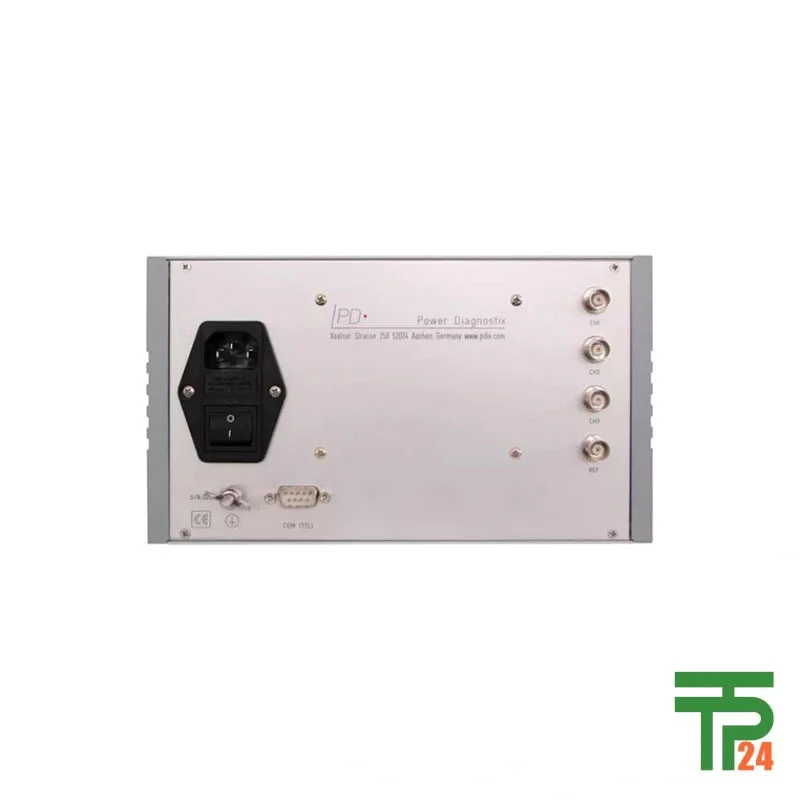
Megger RIVmeter Radio Influence Voltage Meter
- Bandwidth: 9 kHz narrow
- Frequency Range: 100 kHz–2 MHz
- Measurement Compliance: Multiple global standards
- Detection Type: Double super-heterodyne
Did you like this product? Add to favorites now and follow the product.

(+86) 132-6243-8118 Start Live Chat
Description
Megger RIVmeter: Precision in Radio Voltage Measurement
The Megger RIVmeter Radio Influence Voltage Meter is a highly specialized testing instrument engineered for precise measurement of radio influence voltage (RIV) in accordance with a variety of international standards, including NEMA 107-1987, IEC CISPR 18-2:2010, ANSI 63-2-1996, VDE 876, and DIN EN 55016-1-1. Unlike conventional measurement tools, the RIVmeter is a selective μV-meter with the ability to capture even subtle interference voltages caused by electrical discharges. Its tunable center frequency (between 100 kHz and 2 MHz) and narrow 9 kHz bandwidth make it highly effective for discriminating between partial discharge signals and external noise, ensuring that measurements are both accurate and meaningful. The tool is particularly valuable in transformer testing laboratories, where outdated analog RIV instruments lack the precision and compliance needed for modern high-voltage testing environments.
Meeting Global Compliance and Testing Standards Requirements
Compliance is at the heart of the Megger RIVmeter’s design. The device fully supports measurement procedures outlined by NEMA, IEC, and IEEE standards, making it suitable for international use in acceptance tests and routine high-voltage equipment certification. Tests such as partial discharge analysis can still be executed according to historical IEC or IEEE standards, even though many modern guidelines have phased out RIV measurements in favor of alternative approaches. However, certain industries, particularly power utilities and large transformer manufacturers, continue to rely on RIV testing because of its ability to simulate and measure the potential interference impact on communication systems. With its integrated weighting curve (CISPR), the meter ensures that results align precisely with the historic methodology defined by RIV testing standards.
Advanced Filtering and Frequency Control Technology
One of the RIVmeter’s key strengths lies in its double super-heterodyne receiver design, enabling narrow-band detection and precision filtering. The narrow bandwidth suppresses unwanted RF noise, making it effective even in non-shielded laboratory environments. By allowing the operator to directly adjust the center frequency between 100 kHz and 2 MHz, the RIVmeter circumvents ambient interference and focuses strictly on relevant test signals. The CISPR weighting curve enhances measurement accuracy by giving proportional emphasis to certain partial discharge types while minimizing irrelevant background noise. This approach ensures that readings are free from distortion caused by environmental electrical interference.
Calibration Accuracy with Industry-Standard Calibrators
Calibration ensures measurement integrity, and the Megger RIVmeter is compatible with the CAL3A, CAL3B, and CAL3D calibrators. These devices offer precise output voltage ranges from 10 μV to 10 mV, with selectable steps (1-2-5 sequences), ensuring complete adaptability to various testing conditions. For example, the CAL3A supports frequencies from 600 to 1350 kHz in steps of 50 kHz, while the CAL3B covers 400 kHz to 1.9 MHz with 100 kHz step adjustments. The CAL3D adheres to high output impedance requirements as per IEC CISPR 18-2. During calibration, the RIVmeter’s integrated multiplexer automatically calculates and stores the correction factor (k-factor) for each channel, ensuring precise and repeatable test results.
Applications in High-Voltage Testing Environments
The Megger RIVmeter has a variety of practical applications, primarily in transformer testing laboratories, power utility substations, and high-voltage equipment manufacturing facilities. It is essential for performing acceptance testing on transformers, switchgear, and other high-voltage apparatus, ensuring that insulation systems do not generate excessive electromagnetic interference that could disrupt communications systems. The RIVmeter is also valuable in quality control during equipment production and in diagnostic testing for identifying insulation defects that might lead to costly failures. Its selective detection capability allows engineers to pinpoint problems before they escalate, helping organizations maintain compliance with both contemporary and legacy industry requirements.
tpt24: The Leading Supplier Worldwide
When it comes to sourcing the Megger RIVmeter Radio Influence Voltage Meter, tpt24 is recognized as the premier online store worldwide. Offering guaranteed authenticity, uncompromising quality, and reliable delivery to any country, tpt24 is the number one choice for professionals and organizations seeking dependable testing equipment. Purchasing through tpt24 ensures that customers receive a fully certified, factory-calibrated unit backed by official warranties and technical support, providing peace of mind that their investment is fully protected. For industries where accuracy and compliance are critical, sourcing from tpt24 guarantees access to genuine products and expert advice.
Operational Principles and RIV Measurement Mechanics
At its core, the Megger RIVmeter’s operation is founded on the measurement receiver principle used historically to estimate interference effects on telecommunication systems. The device’s readings are influenced by two critical factors: the transferred charge and the repetition rate of partial discharge impulses. Given the processing methodology, direct conversion of measured RIV values (in μV) into apparent charge (in pC) is not generally possible. Instead, results provide a high-fidelity representation of interference voltage, replicating the original purpose for which the NEMA standards were crafted—preventing electrical equipment from degrading the performance of communication infrastructure.
A Modern Upgrade of Legacy Measurement Systems
Although many older RIV meters have become obsolete, the Megger RIVmeter delivers a modern, accurate, and standard-compliant alternative. Its tunable frequency range, CISPR-weighted readings, and narrow-band filtering make it a precision instrument for engineers seeking to maintain or restore strict compliance with aging, yet still relevant, corporate and industry testing specifications. By replacing analog measurement systems, it reduces error rates, increases measurement repeatability, and offers a better user experience for laboratory personnel. For companies needing to perform routine RIV tests as part of legacy standards compliance, the Megger RIVmeter represents an unbeatable combination of tradition and technology.
Specifications
| Specification | Details |
|---|---|
| Measurement Standards | NEMA 107-1987, IEC CISPR 18-2:2010, ANSI 63-2-1996, VDE 876, DIN EN 55016-1-1 |
| Bandwidth | 9 kHz |
| Center Frequency Range | 100 kHz to 2 MHz (tunable) |
| Detection Method | Double super-heterodyne narrow-band filter |
| Output Measurement Unit | μV (interference voltage) |
| Weighting Curve | CISPR weighting curve |
| Calibration Devices | CAL3A (600–1350 kHz, 50 kHz steps), CAL3B (400 kHz–1.9 MHz, 100 kHz steps), CAL3D (high impedance per IEC CISPR 18-2) |
| Output Voltage Range | 10 μV to 10 mV (1-2-5 steps) |
| Output Impedance | 50 Ω (CAL3A, CAL3B), high impedance (CAL3D) |
| Noise Suppression | Narrow-band filtering for external RF noise |
Related products


Megger VLF Sine Wave 45 kV
Recently Viewed Products

Fair Pricing, Guarantee of Authenticity and Quality, Fast Delivery, and Provision of Technical Support to Customers.
Copyright 2025 © TPT24 Company. All right reserved. Powered by TPT24.

Reviews
There are no reviews yet.