

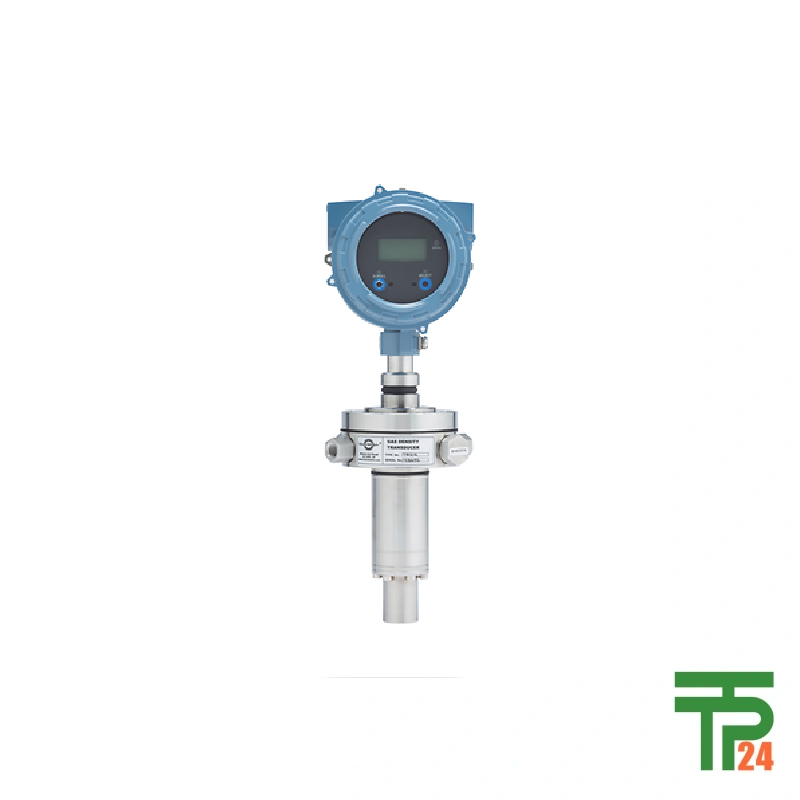
Emerson Micro Motion HFVM Viscomaster Heavy Fuel Meter
- Viscosity Accuracy ±0.2 cP Certified
- Operating Range 0.5‑100 cP
- Temperature Up To 392 °F
- 4–20 mA + HART® Outpu
Did you like this product? Add to favorites now and follow the product.

(+86) 132-6243-8118 Start Live Chat
Description
Micro Motion HFVM Viscomaster Heavy Fuel Meter
Advanced Multivariable Measurement For Heavy Fuel Oils
The Rosemount HFVM Heavy Fuel Viscosity Meter represents the pinnacle of multivariable measurement technology designed for marine and power applications demanding continuous control of viscosity, density, and temperature of heavy fuel oil (HFO). Constructed with a 316L stainless steel fork featuring Diamond‑Like Carbon (DLC)‑coated tines, the instrument achieves superior resistance against wear, corrosion, and fouling. This rugged design ensures precise operation within harsh environments such as ship engine rooms, turbine feed systems, and burner lines where high‑temperature heavy fuels circulate under severe mechanical stress. Operating with a viscosity range from 0.5 to 100 cP and a density range from 0 to 3000 kg/m³, the HFVM provides real‑time feedback essential for maintaining fuel quality and combustion efficiency. Beyond accuracy, its integrated transmitter supports multiple protocols—HART®, RS‑485/Modbus, and standard 4–20 mA—allowing instant integration with existing control systems. This multivariable approach reduces instrumentation redundancy, streamlines calibration, and guarantees high‑resolution readings even under power‑plant vibration and maritime pressure conditions.
Exceptional Accuracy Through DLC‑Coated Fork Technology
The accuracy of the Rosemount HFVM reaches metrological excellence thanks to the DLC‑coated tines, which minimize friction and surface contamination—two factors that typically affect response stability in heavy hydrocarbon streams. Viscosity accuracy is maintained within ±0.2 cP (0.5–10 cP range) and within ±1% of calibration range maximum (10–100 cP), ensuring laboratory‑grade repeatability directly in process conditions. The DLC coating also improves immunity to polymer buildup, paraffinic residue, and abrasive particles routinely found in heavy fuel oils. Each fork tine resonates at a controlled frequency whose shift is proportional to the fluid’s density and viscosity, thereby producing an inherently linear output curve without secondary compensation circuits. This mechanical simplification leads to unparalleled long‑term stability and low drift, a decisive advantage over torsional and capillary meters. With its blend of advanced material engineering and digital signal processing, the HFVM delivers reliable viscosity control for continuous HFO conditioning, efficient atomization in burners, and optimized energy usage in turbine operations.
Optimized Performance In Marine And Power Applications
Purpose‑built for demanding marine propulsion systems, offshore generators, and stationary power stations, the Rosemount HFVM guarantees consistent fuel quality that prevents engine wear, detonation irregularities, and combustion inefficiency. Onboard vessels, it is installed directly in heavy fuel supply lines feeding main and auxiliary engines, enabling viscosity compensation before injection. In power plants, the meter governs heating loops of HFO, adjusting temperature to sustain target viscosity for optimal spray formation and exhaust cleanliness. Turbine operators benefit from its multivariable output—viscosity, density, and temperature—to monitor lubrication and burner performance simultaneously. The hazardous‑area approved transmitter head, certified under CSA, IECEx, NEPSI, and ATEX standards, ensures full compliance with global marine safety regulations including Lloyd’s Register, Germanischer Lloyd, Det Norske Veritas, Bureau Veritas, and the American Bureau of Shipping (ABS). By providing continuous monitoring under extreme vibration, heat, and pressure, the HFVM secures stable operation in energy generation and maritime propulsion—industries where reliability and precision define profitability and safety.
Versatile Transmitter And Output Channel Architecture
The Rosemount HFVM equips users with three configurable output channels to guarantee universal connectivity. Channel A operates as 4–20 mA + HART®, delivering combined analog and digital data suitable for advanced control and remote diagnostics. Channel B provides a dedicated analog 4–20 mA signal for redundancy or parallel monitoring. Channel C supports RS‑485 / Modbus communication, interfacing effortlessly with distributed control systems (DCS) and programmable logic controllers (PLC). This triple‑channel design enhances flexibility, allowing simultaneous transmission of viscosity, density, and temperature data streams. The device also supports Known Density Verification (KDV), enabling periodic validation without removing the instrument from service. Its multi‑language configuration feature simplifies commissioning for international crews and operators. This connectivity permits direct link to Emerson’s schematic density‑viscosity analysis tools, helping users visualize fuel conditioning efficiency in digital dashboards. By combining hardware universality with intelligent user functionality, the HFVM reduces integration cost and ensures a seamless upgrade path for older torsional or capillary meters within both marine and land‑based systems.
User‑Friendly Local Display For Field Diagnostics
Ease of use defines the operational philosophy of the Rosemount HFVM. The optional rotatable two‑line LCD display can be oriented in 90‑degree increments for unmatched readability during confined‑space installation. Equipped with optical switch controls, technicians can configure parameters directly within hazardous areas—from process variable viewing to acknowledging alerts and adjusting mA/RS‑485 outputs—without exposing electronics to the environment. The three‑color LED indicator system communicates the meter’s health status: green for normal operation, amber for warning diagnostics, and red for critical alert. This visual readiness minimizes maintenance latency, letting engineers identify issues instantly. The glass‑lens window provides impact resistance and visibility under vibration, while polyurethane‑painted aluminum housing ensures durability against salt mist, oil vapor, and temperature cycling. Combined, these ergonomic and structural innovations yield an instrument that feels intuitively modern and field‑ready. Maintenance engineers onboard ships or in power‑station boiler rooms rely on this display for immediate feedback, confirming that continuous multivariable measurement proceeds smoothly and safely under extreme operating constraints.
Enduring Material Integrity And Environmental Adaptation
Built from 316L stainless steel wetted parts and enhanced with DLC surface coating, the Fork Viscosity Meter withstands corrosion from sulfur‑rich fuels and metallic impurities common in heavy oil. The combination of stainless steel’s inherent strength and the diamond‑like carbon’s hardness ensures structural endurance through millions of vibration cycles. An operating temperature range of –50 °C to +200 °C (–58 °F to +392 °F) allows adaptation to varied climates—from polar LNG terminals to tropical refinery docks. The polyurethane‑coated transmitter housing maintains its finish despite UV exposure and marine humidity. Such mechanical resilience translates into high measurement repeatability across seasons and deployment regions. Furthermore, retrofit solutions allow existing installations to replace outdated meters with minimal piping adjustment, extending practical use into legacy marine engines and auxiliary burner control loops. By solving corrosion, abrasion, and temperature instability in one mechanical envelope, the HFVM sets the benchmark for long‑life metering equipment essential to the global heavy‑fuel industry, ensuring operational integrity under every maritime and industrial scenario.
Specifications
Related products



Recently Viewed Products


Fair Pricing, Guarantee of Authenticity and Quality, Fast Delivery, and Provision of Technical Support to Customers.
Copyright 2025 © TPT24 Company. All right reserved. Powered by TPT24.
