

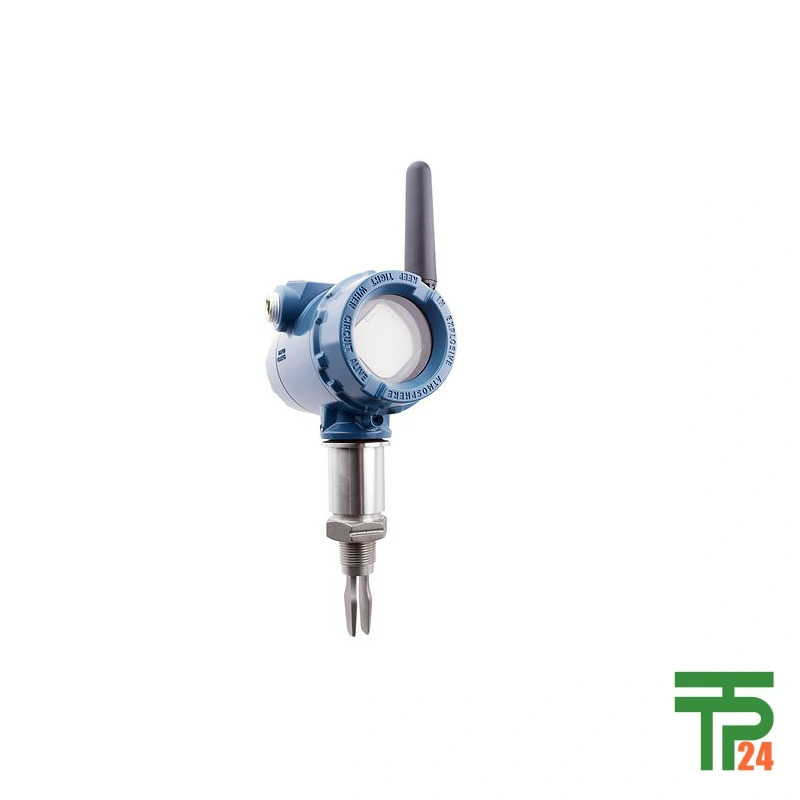
Rosemount™ 2160 Wireless Level Detector
- WHG, TÜV Certified Safety Approval
- 10-Year Battery Life Optimized
- WirelessHART® PlantWeb® Integration
- Fast Drip Fork Design
Did you like this product? Add to favorites now and follow the product.

(+86) 132-6243-8118 Start Live Chat
Description
Rosemount 2160: Wireless Level Detection for Challenging Locations
1. Revolutionizing Point Level Sensing in Process Control
The Rosemount 2160 Wireless Level Detector stands as a significant advancement in process control instrumentation, specifically designed to address the challenges of monitoring liquid levels in previously inaccessible or cost-prohibitive locations. Leveraging the robust and self-organizing capabilities of WirelessHART technology, the 2160 extends the full benefits of the PlantWeb® digital architecture to the fringes of the operation. This revolutionary device transforms conventional point level sensing by eliminating the need for complex, costly, and time-consuming wiring runs. In sprawling facilities, remote storage tanks, and non-permanent structures, the installation of traditional wired instrumentation often constitutes up to 60% of the total project cost. The implementation of the Rosemount 2160, therefore, provides a direct path to realizing substantial cost savings—up to 60%—by automating processes that were historically managed through periodic, manual visual inspections. This shift from reactive, human-dependent monitoring to proactive, automated data acquisition is foundational to achieving higher operational efficiency and maintaining critical site safety standards. The self-checking capabilities inherent in the design ensure continuous diagnostic verification, minimizing the risk of undetected instrument failure and guaranteeing the integrity of critical safety functions. Furthermore, this device sets a new industry standard for integrating point level detection into a comprehensive wireless infrastructure, providing unparalleled flexibility in plant design and expansion strategies. Its introduction facilitates a paradigm shift toward truly digital and fully integrated asset management systems, providing operators with reliable, real-time data from every corner of their facility.
2. Achieving Unprecedented Asset Visibility with Smart Diagnostics
The integration of enhanced diagnostics and remote access capabilities within the Rosemount 2160 fundamentally changes the landscape of maintenance and asset management. Traditional level switches often operate in isolation, providing only a binary output—liquid present or absent—without any insight into the instrument’s health. The 2160, however, functions as a highly intelligent sensor, continuously performing electronic self-checking and condition monitoring. This sophisticated level of diagnostics alerts maintenance personnel before critical issues—such as contamination buildup on the fork, the early stages of corrosion, or physical damage to the wetted parts—can lead to measurement inaccuracies or complete failure. This transition from reactive failure response to predictive maintenance is where the true value of the 2160 is realized. By providing remote access to process data and diagnostic alerts, operators can significantly reduce the frequency of physical inspections, which are often hazardous and time-consuming, thereby improving overall site safety and allocating skilled personnel to more critical tasks. The visual inspection of level instruments becomes an obsolete practice, replaced by the continuous, reliable, and instantaneous data streams facilitated by the wireless network. This predictive capability ensures maximum uptime for the process, safeguarding against unexpected shutdowns and optimizing resource utilization.
3. Critical Process Safety and Exclusive Application Versatility
The Rosemount 2160 is engineered not just for convenience, but for critical safety and demanding process requirements, making it a cornerstone for specialized industrial applications. Its primary utility is in providing reliable High and Low Level Alarms, which are vital for preventing process disruptions. However, its capabilities extend specifically to robust Overfill Prevention Systems (OPS). The detector is TÜV tested and WHG approved (German water resources act) for overfill prevention, certifying its reliability in guarding against environmental catastrophes and ensuring regulatory compliance in chemical and petrochemical storage facilities. Furthermore, the 2160 excels in automated Pump Control applications, acting as the reliable switch that turns pumps on or off to maintain optimal liquid levels in sumps, reservoirs, and process vessels, thereby preventing dry-running and subsequent equipment damage. The self-checking features are integral to these safety and control functions, validating the integrity of the device continuously. Due to its robust design, which is rated for an incredibly wide operating temperature range—from -70 to 260°C (-94 to 500°F)—and high operating pressures (Full vacuum to 100 bar/1450 psi), the Rosemount 2160 is specifically and ideally suited for harsh environments. This includes, but is not limited to, monitoring caustic agents in chemical processing, detecting levels in high-temperature heat transfer fluids, and ensuring safe operation in high-pressure steam condensate return systems. Its versatility and ruggedness make it a leading choice for the most critical industrial applications globally.
4. Unmatched Reliability Through Optimized Power Management
One of the most defining characteristics of any wireless device is its power efficiency and battery endurance, and the Rosemount 2160 excels in this dimension. Designed with a focus on energy efficiency, it incorporates a high-quality, long-life battery that minimizes the need for routine maintenance or replacement. This optimization allows the device to achieve a remarkable operational lifespan. Specifically, even with a relatively fast 1-minute update rate, the battery is engineered to last for up to 10 years. This longevity ensures that the instrument can be installed and forgotten for a decade, drastically reducing the total cost of ownership (TCO) and eliminating the labor associated with battery change-outs. The ability to reliably transmit data frequently while maintaining such a long service life is a testament to the efficient design of the electronic and communication components. This longevity is crucial for remote or elevated installations where physical access is difficult or dangerous. By maximizing the time between maintenance cycles, the 2160 delivers continuous, reliable level measurement with a minimal physical footprint and operational overhead, proving that high performance and energy efficiency can be achieved simultaneously in the industrial environment.
5. World’s First Wireless Point Level Detection Leader
The Rosemount 2160 proudly holds the distinction of being the World’s first wireless liquid level detector for reliable point level detection. This pioneering status is not merely a historical footnote but a core component of its functional superiority. By integrating WirelessHART technology, it addresses a fundamental gap in industrial measurement: reliable, cost-effective level sensing in vast, existing, or difficult-to-wire infrastructure. The design extends the architectural benefits of the PlantWeb® digital plant architecture, a concept driven by the integration of smart field devices and pervasive diagnostics, to every liquid vessel in a facility. This capability is particularly impactful for organizations seeking to achieve full digitalization across their assets. Furthermore, the device incorporates a uniquely designed fast drip fork design. This specialized mechanical architecture ensures a quicker response time, which is particularly critical when dealing with liquids with higher viscosity or those that tend to coat the sensor. The faster drainage means the switch clears the liquid more quickly, allowing for a more accurate and rapid transition state indication, thus enhancing the control loop’s performance and reliability, especially in processes demanding quick response to level changes.
6. Seamless Integration and Minimal Installation Requirements
The philosophy behind the Rosemount 2160’s design emphasizes simplicity and adaptability. It boasts minimal installation rules, meaning it can be effortlessly fitted into the majority of existing process connections without the need for extensive modification, welding, or piping reconstruction. This ease of installation is a significant factor in realizing the touted cost savings, as it accelerates deployment time and reduces the reliance on specialized installation contractors. For brownfield sites or facilities undergoing modernization, this “drop-in” compatibility with legacy infrastructure is invaluable. The wireless communication functionality itself simplifies the commissioning process dramatically; once installed mechanically, the device is easily recognized and integrated into the existing WirelessHART network mesh, automatically routing its data through the most reliable path. This plug-and-play simplicity, combined with its rugged construction and wide operating envelope, makes the 2160 a highly versatile instrument capable of providing reliable point level detection across diverse liquids, temperatures, and pressures, serving as an optimal, future-proof replacement for older, wired technologies that often require significant infrastructure investment.
Specifications
Related products

Recently Viewed Products

Fair Pricing, Guarantee of Authenticity and Quality, Fast Delivery, and Provision of Technical Support to Customers.
Copyright 2025 © TPT24 Company. All right reserved. Powered by TPT24.
