

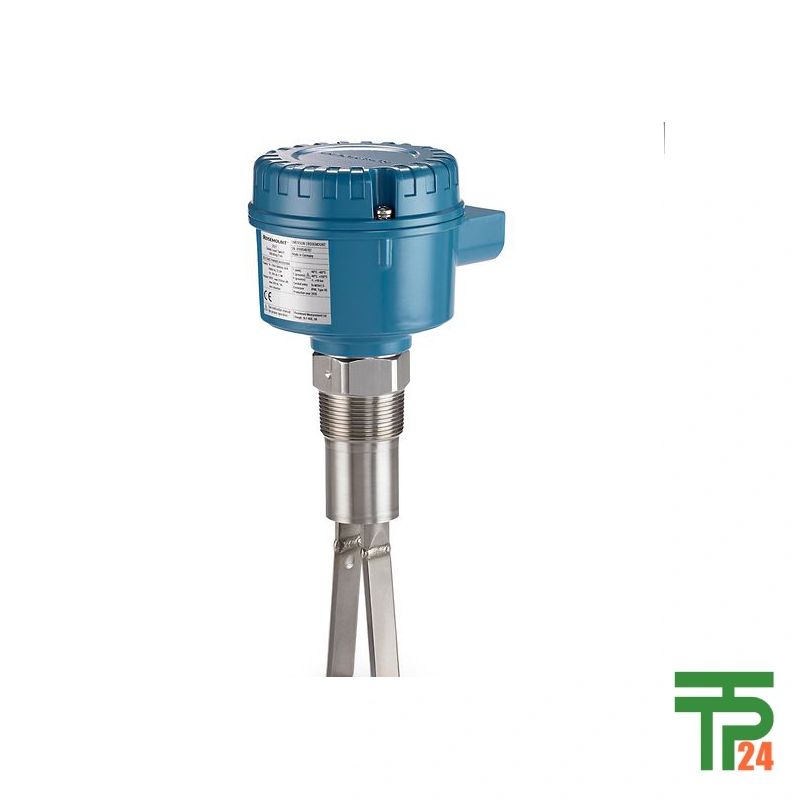
Rosemount™ 2511 Solids Level Switch – Vibrating Fork
- Pressure Limit 16 Bar
- Material Stainless Steel
- Temperature Limit 150 °C
- Sensitivity 30 Or 150 g/l
Did you like this product? Add to favorites now and follow the product.

(+86) 132-6243-8118 Start Live Chat
Description
Rosemount™ 2511 Solids Level Switch – Vibrating Fork
Compact Solids Detection For Demanding Industrial Needs
The Rosemount™ 2511 Solids Level Switch is engineered for precise detection of fine‑grained and powdered media in both storage silos and process vessels. With a robust vibrating fork measurement principle, it ensures reliable operation under demanding mechanical conditions. Sensitivity ranges—3.8 lb/ft³ (30 g/l) and 9.5 lb/ft³ (150 g/l)—cover a wide spectrum of particulate densities, making the unit adept at monitoring both lightweight powders and denser granulates. Designed with compact dimensions, the 2511 is ideal for installations where space is restricted, such as small vessels or narrow hopper necks. Its straightforward operation, coupled with a cost‑effective build, makes it an excellent choice for facilities needing dependable solids level detection without escalating maintenance costs or complexity in integration.
Certified Compliance For Safe Global Installations
Global deployment of the Rosemount 2511 is facilitated by its extensive certification portfolio, including CE, ATEX, IECEx, FM, and CSA approvals. These ensure seamless operation within hazardous dust environments, food‑grade facilities, and international manufacturing plants. The ATEX and IECEx ratings guarantee safe integration into potentially explosive dust atmospheres such as flour mills, grain elevators, or cement plants. FM and CSA certifications provide compliance for operations in the United States and Canada, whereas CE marking confirms conformity across European markets. By meeting these diverse regulatory standards, the 2511 reduces the time and documentation burden required for multinational installations, enabling truly global adoption without compromise on safety or legal requirements.
Flexible Output Options For System Integration
The Rosemount 2511 offers relay output and three‑wire PNP interface, providing versatility for integration into various automation architectures. Relay outputs work seamlessly with legacy electrical panels, motor starters, or basic control systems for straightforward signaling. The PNP interface aligns with modern PLC and distributed control systems, ensuring compatibility with advanced automation networks. This flexibility enables quick commissioning and effortless replacement of older instruments without requiring significant rewiring or auxiliary converters. By supporting both standard and advanced configurations, the 2511 integrates efficiently into small‑scale batch processes as well as large continuous production lines, optimizing material flow monitoring without introducing complexity or downtime.
Industry‑Specific Applications For Powder And Granulate Levels
Across multiple industries, the Rosemount 2511 delivers consistent results:
- Food processing plants depend on it for flour silos, sugar hoppers, or spice blending tanks where sensitivity must match product density.
- Pharmaceutical manufacturers use it to control powdered excipient storage or APIs in blending vessels to avoid segregation or voids.
- Chemical plants deploy the device in pigment, detergent powder, or catalyst granule handling systems requiring durable sensors resistant to abrasion.
- Agricultural operations rely on accurate feed grain and seed detection in silos, ensuring steady supply in automated livestock feeding systems.
In each case, the compact form factor and high mechanical resistance make the 2511 suitable for both precise continuous monitoring and simple high/low point detection.
Reliable Vibrating Fork Principle Minimizing Maintenance
The working mechanism of the Rosemount 2511 is driven by a vibrating fork that oscillates at a fixed frequency until immersed in material, at which point its resonance changes—triggering an accurate electrical signal. This simple yet effective approach avoids fragile optical sensors or complex field adjustments. With stainless steel for all wetted parts, abrasion resistance is strengthened, and corrosion is minimized even in mildly aggressive environments. The mechanical resilience makes the sensor ideal for industries handling abrasive powders or exposed to frequent thermal changes, with no re‑calibration needed throughout its lifecycle. This principle keeps maintenance demands low and uptime high, supporting cost‑efficient plant operations.
Robust Stainless Steel Design For Longevity
Stainless steel construction ensures the Rosemount 2511 withstands abrasive contact from granular media over long periods. Operating pressure capability up to 232 psi (16 bar) allows it to perform safely in pressurized conveying lines or sealed vessels. The unit’s temperature range from −40°F to 302°F (−40°C to 150°C) supports use in diverse climates and heated processes, providing operational flexibility. The low‑maintenance design not only survives mechanical shock but also resists material adhesion, allowing faster cleaning cycles in hygiene‑critical plants. This mechanical robustness is key for facilities where sensor downtime means halted production and lost revenue, affirming the 2511’s role as a dependable operational asset.
Specifications
Related products


Recently Viewed Products

Fair Pricing, Guarantee of Authenticity and Quality, Fast Delivery, and Provision of Technical Support to Customers.
Copyright 2025 © TPT24 Company. All right reserved. Powered by TPT24.
