

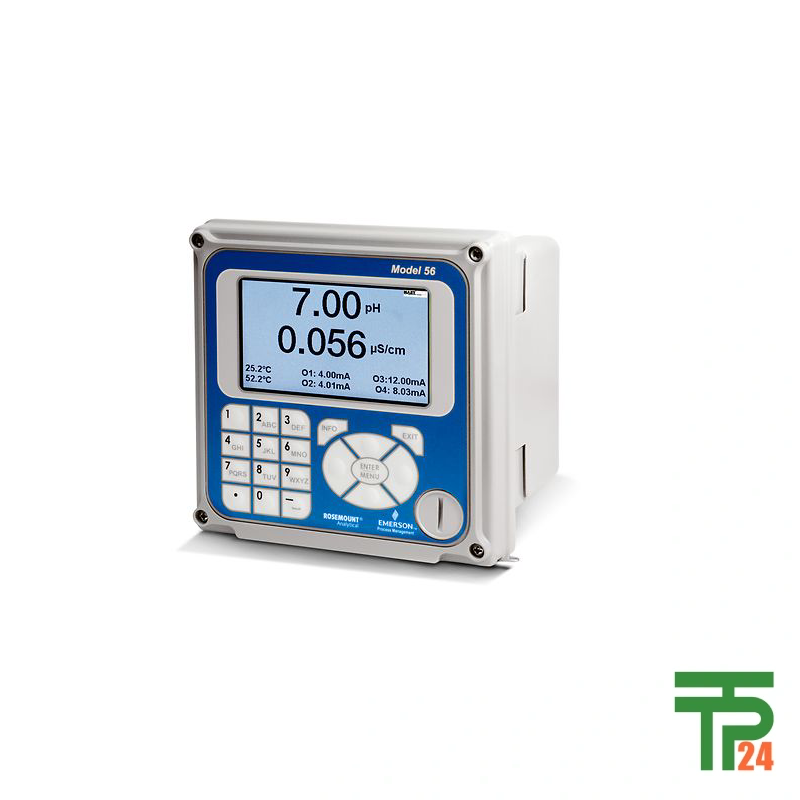
Rosemount™ 56 Dual Channel Transmitter
- Inputs: Dual Sensor Compatibility
- Controller: Integrated PID Feedback
- Communication: HART® / Profibus DP
- Accuracy: ±0.01 pH Measurement
Did you like this product? Add to favorites now and follow the product.

(+86) 132-6243-8118 Start Live Chat
Description
Rosemount™ 56 Dual Channel Transmitter
Dual‑Channel Precision For Advanced Liquid Analysis
The Rosemount 56 Dual‑Channel Transmitter represents Emerson’s benchmark in high‑performance analytical process control, engineered to simplify complex multi‑parameter monitoring in industrial environments. This powerful line‑powered instrument accepts simultaneous input from two independent sensors—enabling cross‑channel applications combining pH/ORP, ion‑selective electrodes (ISE), conductivity (contacting or toroidal), turbidity, flow, current, dissolved oxygen, chlorine, and ozone measurements. With dual analysis capability within a compact housing, engineers gain immediate cost savings by reducing panel real estate and wiring complexity while boosting data versatility. The transmitter’s advanced electronics achieve accuracy up to ±0.01 pH and ± 1 mV ORP, ensuring calibration stability during long operational cycles. It merges instrument intelligence, process connectivity, and field‑rugged design, transforming measurement into predictive control for chemical plants, wastewater treatments, food industries, and power utilities. Through cutting‑edge digital protocols and integrated data logging, the Rosemount 56 builds the foundation for reliable process automation under any challenge—proving that the modern analytical plant demands not just sensing, but smart dual‑stream measurement shaped by Emerson’s legacy of precision engineering.
Versatile Sensor Compatibility For Complex Process Needs
Equipped for multi‑discipline analysis, the Rosemount 56 Transmitter provides extraordinary flexibility to pair various liquid‑analysis sensors depending on the application need. Production engineers may connect pH and conductivity sensors simultaneously to regulate acid‑base reactions and ionic strength in water purification systems. In electroplating or mineral‑processing plants, the combination of ORP sensors with ISE electrodes enables accurate metal dissolution control and chemical potential balancing. Turbidity sensors attached through Channel 2 continuously verify filtration efficiency in municipal water treatment while Channel 1 measures chlorine for disinfection verification. For environmental laboratories, the transmitter seamlessly integrates dissolved‑oxygen sensors to monitor aeration efficiency, alongside flow sensors that track sample throughput. Its universal input architecture transforms single‑point analyzers into multi‑metric diagnostic hubs—a capability shaping cross‑process automation worldwide. With this compatibility, Emerson delivers one transmitter capable of governing nearly every analytical parameter relevant to industrial liquid processes, effectively replacing several discrete devices across entire facilities. The Rosemount 56 therefore stands at the intersection of flexibility, precision, and operational intelligence, redefining how integrated sensing empowers global production lines toward complete analytical control.
Built‑In Controllers Optimize Real‑Time Data Response
The Rosemount 56 Dual‑Channel Transmitter incorporates integrated control algorithms that elevate measurement beyond monitoring into actionable automation. Its embedded PID controller allows real‑time feedback regulation of dosing pumps, flow valves, or aerators based on active analytical readings. For example, wastewater plant engineers can automatically adjust neutralizing agents when pH deviates from set limits; chlorination equipment can be modulated instantly through PID control responding to chlorine sensor output. This immediate loop correction improves treatment efficiency, stabilizes chemical consumption, and reduces excess reagent cost. Process industries deploying 56 units within acid neutralization reactors or cooling‑tower dosing systems benefit from its ability to translate raw analytical data directly into precise mechanical adjustment. By integrating control within the measurement instrument, Emerson eliminates lag between detection and correction—a gap that previously increased process drift and variability. Ultimately, the transmitter’s intelligent control transforms static measurement networks into dynamic adaptive systems that self‑regulate for optimal quality, safety, and environmental compliance. Such local intelligence typifies Emerson’s global drive toward smarter instrumentation seamlessly communicating with plant automation platforms.
Intelligent Display Simplifies Operation And Diagnostics
Efficient interface design distinguishes the Rosemount 56 from every previous generation of analytical transmitters. Its large customizable backlit display delivers an at‑a‑glance view of key parameters, trends, and alarms, removing barriers for operators managing multiple measurement points. With dual channels active, both readings appear simultaneously alongside diagnostic indicators such as sensor temperature, stability, and calibration alerts. The intuitive menu structure enhances commissioning using the Quick‑Start function, minimizing start‑up time for plant technicians. Additionally, access via USB data logger provides full calibration and measurement history retrieval, enabling traceability and documentation demanded by regulatory audits. Color‑coded screen zones help operators differentiate channel assignments instantly during shift monitoring. Maintenance personnel value the visual clarity during calibration or replacement operations, reducing error risk in busy control rooms. Whether installed in a food‑processing hall, wastewater pump station, or refinery instrumentation cabinet, the Rosemount 56’s interface maintains effortless readability under fluctuating lighting or ambient conditions. This ergonomic display, combined with robust analytical electronics, converts precision sensing into approachable process intelligence suitable for diverse industries aiming to reduce training time and maximize uptime.
Exclusive Application Fields Demonstrate Industrial Adaptability
The Rosemount 56 Transmitter proves indispensable wherever multi‑parameter liquid analysis defines process success. In municipal water‑treatment plants, dual channels are configured for pH and chlorine, ensuring perfect neutralization and disinfection compliance aligned with environmental standards. Within chemical‑manufacturing reactors, engineers pair conductivity and turbidity sensors to verify mixture uniformity in polymer and surfactant applications. In food and beverage production, the transmitter controls ozone concentration and dissolved oxygen simultaneously during sanitization and fermentation stages. For pharmaceutical bioreactors, Channel 1 governs pH stability while Channel 2 monitors real‑time oxygen uptake rate, ensuring culture growth efficiency. Electric‑power plants employ the transmitter with flow and conductivity sensors to supervise condensate quality preventing turbine corrosion. Environmental monitoring agencies choose 56 for simultaneous analysis of ORP potentials and current signals in surface‑water quality assessment stations. Through this breadth of implementation, Emerson offers a single platform that reaches across continents as the universal solution for continuous liquid‑parameter supervision, guaranteeing adaptability from laboratories to refinery foundations. Each exclusive application validates that Emerson’s Rosemount 56 delivers unmatched multi‑channel capability backed by industrial‑grade precision.
Robust Construction And Reliable Safety Approvals Worldwide
The structural integrity of the Rosemount 56 defines its industrial longevity. Weighing approximately 3–4 lb (1.5–2.0 kg), the transmitter fits securely into wall or panel installations using ergonomic brackets. Its cast, corrosion‑resistant enclosure shields internal circuitry against humidity, acids, and solvents typical in chemical processing sites. Rated for FM Class I Division 2 Groups A B C D and Class II and III Division 2 Groups E F G with T4 temperature classification, the unit maintains safety integrity across zones containing combustible gases, dusts, or fibers. Operating stability remains constant from –4°F to +149°F (–20°C to +65°C), confirming worldwide usability under varied environmental extremes. Laboratory engineers appreciate its reinforced seals maintaining IP protection during wash‑downs or wet installations. Beyond physical durability, the integrated software architecture maintains calibration drift resistance, ensuring sensor accuracy over years of continuous service. Combined with the transmitter’s universal compatibility, it becomes a cornerstone for permanent system reliability, meeting ISO 9001 and IEC safety expectations. The Rosemount 56 is not only rugged—it’s certified and proven to uphold industrial safety laws worldwide while keeping process data pristine against electrical or environmental noise.
Specifications
Related products
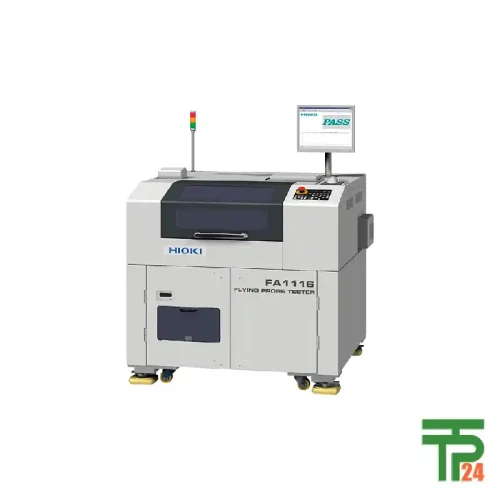
FLYING PROBE TESTER FA1116 HIOKI
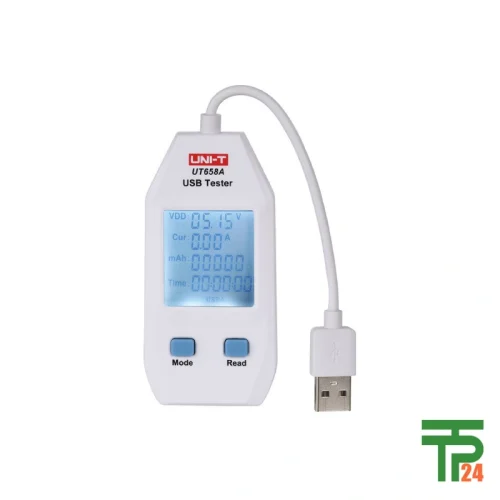
UNI-T UT658A USB Testers

Megger VLF Sine Wave 45 kV
Recently Viewed Products
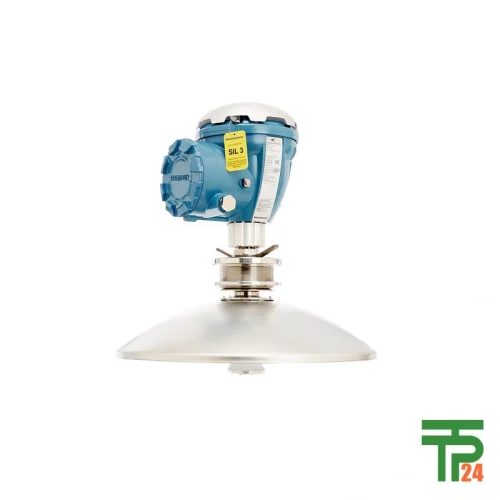
Rosemount™ 5900C Radar Level Gauge
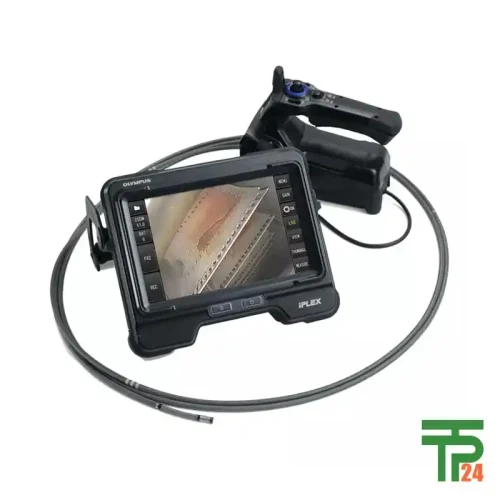
Olympus IPLEX GT videoscope


Fair Pricing, Guarantee of Authenticity and Quality, Fast Delivery, and Provision of Technical Support to Customers.
Copyright 2025 © TPT24 Company. All right reserved. Powered by TPT24.
