

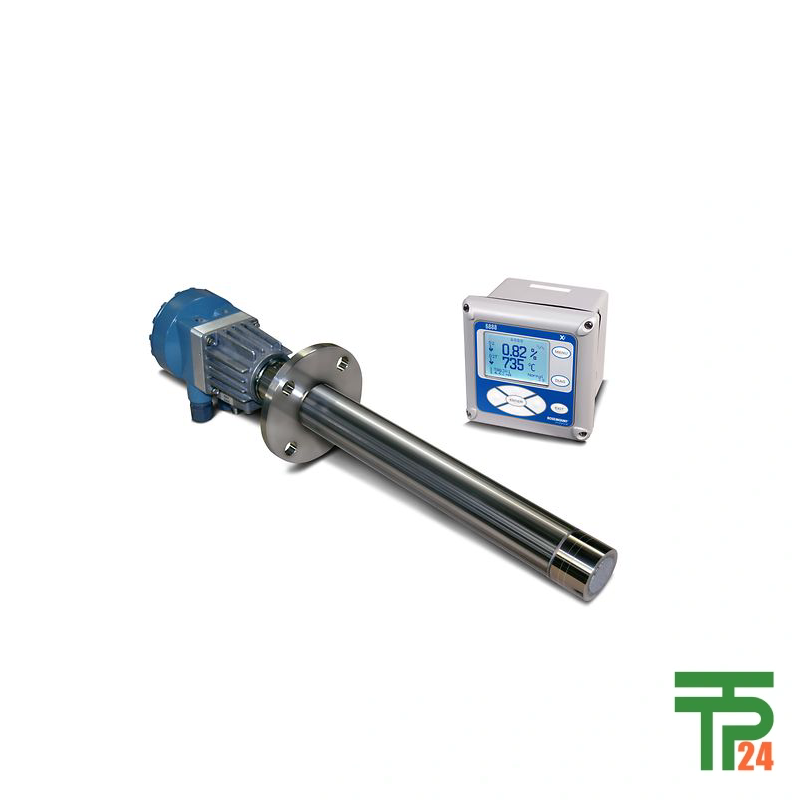
Rosemount™ 6888A In Situ Oxygen Analyzer
- T90 Response Under Eight Seconds
- Zirconia Brazed Disk Sensor
- HART® And Fieldbus Protocols
- Up to 1922 °F Operation
Did you like this product? Add to favorites now and follow the product.

(+86) 132-6243-8118 Start Live Chat
Description
Rosemount™ 6888A In Situ Oxygen Analyzer
Precise Oxygen Control For Industrial Combustion Efficiency
The Rosemount™ 6888A In‑Situ Oxygen Analyzer represents Emerson’s breakthrough in real‑time combustion optimization technology. By continuously measuring oxygen concentration in flue gas, this instrument allows industries to maintain perfect air‑to‑fuel ratios and significantly lower energy costs. As a core component of advanced oxygen‑trim systems, it enhances burner efficiency, prolongs equipment life, and supports regulatory compliance by minimizing greenhouse gas emissions. Built for accuracy and durability, the 6888A analyzer is installed directly within the stack or duct, eliminating sample transport delay and supporting immediate combustion feedback. Its robust zirconia sensor converts chemical presence into stable electrical signals, yielding unparalleled precision for industrial and large commercial boilers. Whether applied in refining, power generation, or materials heating, Emerson’s in‑situ approach saves millions in fuel annually by preventing excessive oxygen loss. From installation simplicity to sophisticated diagnostics, the 6888A integrates modern digital communication with industrial endurance—defining the global standard for oxygen analysis in complex process environments. Efficient combustion begins with measurement, and the 6888A Analyzer offers that measurement flawlessly.
Advanced Zirconia Technology Ensures Reliable Measurement
At the core of this analyzer lies a zirconia‑based sensing element, a proven technology that converts oxygen ion flow into measurable millivolt signals correlated precisely with partial oxygen pressure. Emerson has designed this oxygen cell as a brazed‑disk structure enhanced by catalytic platinum beads, greatly increasing sensor lifetime in atmospheres poisoned by sulfur or hydrocarbons. This robustness means plants can trust stable readings even when operating near contaminants or ash‑laden flue gases. Measurement accuracy stands at ±0.75 % of reading or ±0.05 % O₂, whichever is greater, making the 6888A one of the most precise in‑situ oxygen instruments available worldwide. Digital temperature compensation and diffusion‑plug recognition further protect measurement integrity. When connected via HART® 5 or FOUNDATION™ Fieldbus, the device communicates calibration requirements and sensor status remotely, eliminating manual inspection errors. Every detail—from electrode composition to diffuser geometry—has been optimized for signal strength and longevity. By revolutionizing sensor design, Emerson achieves sustainable measurement performance over years of continuous furnace operation—helping industries achieve cleaner efficiency without compromise in measurement certainty.
Flexible Installation Across Diverse Boiler Architectures
Industrial environments vary widely, and installation flexibility defines the 6888A’s universal success. Available in multiple probe lengths—from 18 inches (0.46 m) to 12 feet (3.66 m)—it adapts easily to both compact commercial boilers and vast power‑plant stacks. Optional jackets and bypass tubes support process temperatures up to 1922 °F (1050 °C), ensuring suitability for even the hottest furnace zones. Engineers can retrofit the 6888A directly into existing Westinghouse World Class, Rosemount Oxymitter®, or competitive O₂ probe installations, requiring minimal downtime and no major structural modification. Mounting adaptors simplify mechanical coupling, while electrical connectors align with global wiring standards for seamless commissioning. Ambient durability from –40 to +158 °F (–40 to 70 °C) ensures stable measurement wherever installed—whether inside turbine halls or exposed refinery chimneys. Field technicians appreciate that calibration and probe insertion are adjustable without full system shutdown, further reducing maintenance frequency. This blend of compatibility and configurability positions the 6888A as the most installation‑friendly analyzer in its class—empowering engineers worldwide to modernize combustion control without complex overhaul.
Exclusive Applications From Power Plants To Kilns
The 6888A In‑Situ Oxygen Analyzer finds application across industries where combustion defines productivity, energy consumption, or final product properties. In coal‑fired and gas‑fired power plants, it acts as the cornerstone of oxygen‑trim systems that maximize flame efficiency and lower heat‑rate metrics. In petrochemical and refining sectors, it ensures safer furnace operation by detecting oxygen imbalances that can cause catalyst degradation or soot formation. Cement kilns exploit its real‑time feedback to control air levels during clinker formation, achieving uniform chemistry and cutting fuel cost. In steel and aluminum smelters, precise oxygen monitoring reduces oxidation defects in molten metal and enhances melting performance. Even large commercial heating systems, from district hot‑water plants to hospital boilers, utilize 6888A to regulate combustion purity for sustainable, low‑emission operation. By introducing true oxygen transparency, this analyzer converts combustion from an approximate art into a controllable digital science. Its versatility across scales—small boiler or giant refinery—proves its global reliability as a critical link between analytical precision and operational success wherever combustion efficiency is paramount.
Simplified Operation And Intelligent Calibration Diagnostics
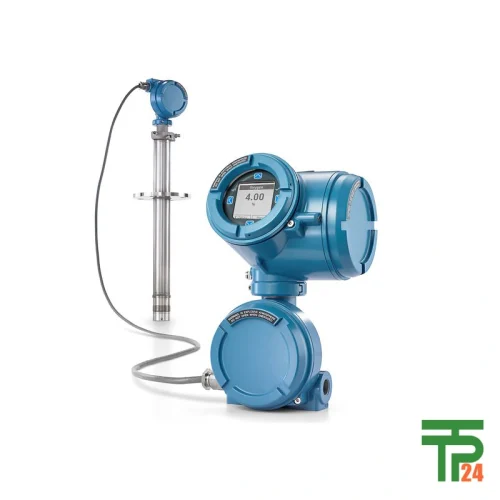
Ease of use underscores Emerson’s design. The Rosemount 6888A includes optional Xi electronics modules featuring a local operator interface (LOI) with backlit LCD display, giving technicians direct visual access to calibration status, oxygen trends, and alarm settings. Advanced software detects plugged diffusers or filters, alerting operators before measurement disruption occurs. The analyzer recommends calibration intervals automatically based on activity data, improving maintenance planning and avoiding unnecessary downtime. With electronic self‑diagnostics integrated into its digital architecture, performance irregularities—temperature shift, heater wear, or reference drift—are recognized and logged for proactive correction. The auto‑calibration capability, executed through Xi electronics, simplifies system validation and ensures measurement accuracy over time. Those intelligent diagnostics minimize human dependency and translate into measurable cost savings. Commissioning steps—from connection verification to sensor activation—require only minutes, making the 6888A both operationally intuitive and nearly maintenance‑free. This simplicity stands in contrast to older extractive analyzers demanding complex sampling lines and regular manual zero checks—Emerson has redefined in‑situ oxygen sensing into elegant practicality.
Specifications
Related products
Recently Viewed Products
KYORITSU EVSE ADAPTER KEW 8602

Endress+Hauser FTL41 Liquiphant

UNI-T UT383 Mini Light Meters

Fair Pricing, Guarantee of Authenticity and Quality, Fast Delivery, and Provision of Technical Support to Customers.
Copyright 2025 © TPT24 Company. All right reserved. Powered by TPT24.
