

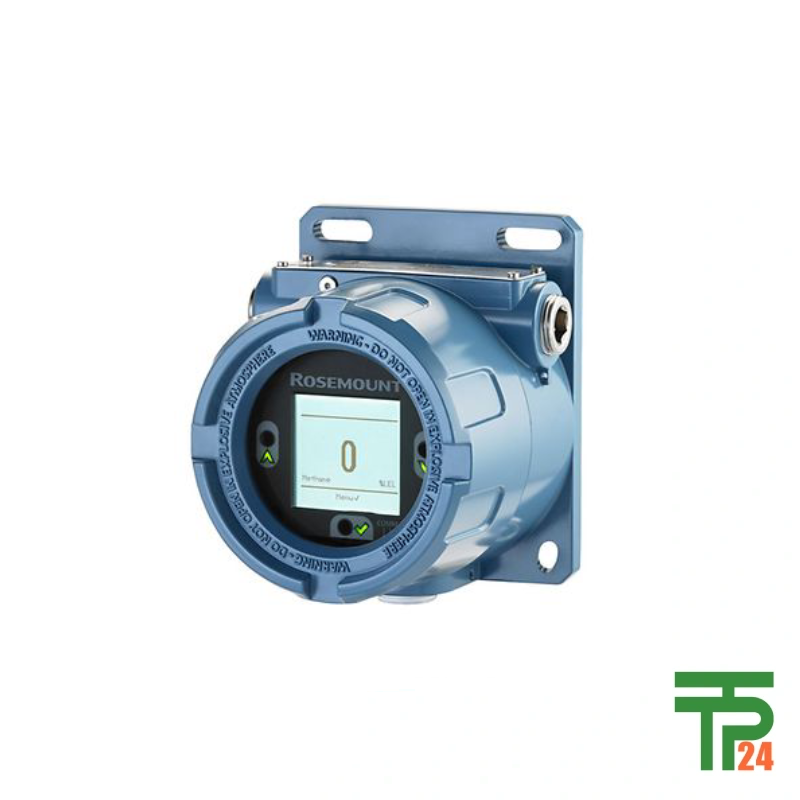
Rosemount™ 925 Fixed Gas Detection Transmitter
- Sensor Type: Infrared Rosemount 625
- Output: 4–20 mA HART® 7
- Temperature Range: –40 to +158 °F
- Accuracy: ±3 % LEL Measurement
Did you like this product? Add to favorites now and follow the product.

(+86) 132-6243-8118 Start Live Chat
Description
Rosemount™ 925 Fixed Gas Detection Transmitter
Advanced Infrared Technology Ensures Reliable Gas Detection
The Rosemount 925 Fixed Gas Detector Transmitter represents Emerson’s most dependable stationary safety platform for continuous gas‑monitoring operations in hazardous industrial environments. Engineered for uncompromised reliability, this transmitter utilizes the Rosemount 625 Non‑Dispersive Infrared (NDIR) sensing technology, enabling precise detection of combustible hydrocarbons across complex process areas. The system functions as an integral part of Emerson’s safety ecosystem, combining optical measurement refinement with durable electronic architecture certified to the latest industry standards. Designed explicitly for hazardous‑area compliance worldwide, including ATEX, IECEx, and CSA approvals, the 925 guarantees stable performance under severe climatic and operational conditions. Its advanced infrared module translates gas concentration into measurable signals unaffected by humidity or pressure variations, ensuring the highest repeatability and minimal drift. Emerson’s NDIR principle delivers continuous monitoring without oxygen dependence, making it ideal where inert atmospheres prevail. By unifying IR optics with intelligent signal‑processing firmware, the 925 provides dependable, swift identification of flammable gas accumulation before it reaches critical limits—elevating safety assurance for refineries, offshore installations, and manufacturing sectors where human and equipment protection are paramount.
Precision, Stability, And Extended Operational Reliability
Core to the 925’s reputation is its exceptional measurement precision. Featuring gas‑reading accuracy of ±3 % LEL below 50 % LEL and ±5 % LEL above 50 %, the transmitter maintains reliable consistency even during long‑term exposure to variable environmental parameters. Signal translation within its hardware occurs through stable circuitry that minimizes noise and response lag, yielding 4–20 mA output accuracy of ±0.1 % of span—a benchmark surpassing conventional field detectors. Operational temperature capability extends from –40 °F to +158 °F (–40 °C to +70 °C) and expands to –67 °F (–55 °C) with the integrated heater active, enabling true year‑round operation across polar and desert climates. Humidity tolerance up to 95 % non‑condensing allows secure deployment in marine and tropical plants without sensor degradation or short‑circuit risk. With a power‑consumption ceiling of 4.0 W when heated and accepted voltage between 18 and 30 VDC, energy demands remain remarkably low, minimizing load for larger safety networks. Each unit includes intrinsic diagnostic tracking through its internal microprocessor, ensuring data fidelity and alarm validity. The result is an instrument delivering unwavering stability, precision, and prolonged reliability—critical for enterprises enforcing strict combustible‑gas safety thresholds within remote and continuous‑operation facilities globally.
User‑Friendly Display Simplifies Immediate Situational Awareness
Emerson integrates intelligent ergonomics into the Rosemount 925 through its built‑in visual interface that supports intuitive decision‑making under pressure. The integral LCD display presents live gas‑concentration values, operational state, alarm alerts, and diagnostic feedback in real time. When connected to a control network, operators instantly receive visible alarm responses corresponding to the transmitter’s electronic outputs. This display also serves as a configuration window for calibration procedures and transmitter setup, assisting field technicians during maintenance without external devices. Bright backlighting ensures readability even under direct sunlight or low‑light refinery basements, while password protection secures configuration integrity. Linked with the HART® 7 Protocol, the interface communicates advanced diagnostic information to central asset‑management platforms like AMS Device Manager—a software foundation that not only controls, but archives performance data for predictive maintenance planning. Visual, analog, and relay‑output feedback synchronously confirms every aspect of detector status, giving plant personnel instant situational awareness and ensuring continuity of safety supervision. This user‑centered design distinguishes the 925 as one of the most operator‑friendly and responsive fixed gas‑detection transmitters within the global industrial safety portfolio.
Versatile Communication Integrates Seamlessly In Industrial Networks
The communication framework engineered within the Rosemount 925 Transmitter optimizes compatibility with contemporary and legacy infrastructure alike. Its standard 4–20 mA output with superimposed HART® 7 digital signal provides dual communication reliability—simple for analog panels and sophisticated for smart control systems. In corporate networks operating advanced DCS or SCADA architectures, this dual‑layer interface permits real‑time transmission of gas concentration values and device diagnostics, allowing automatic logging and alarm verification. Two programmable relays enable discrete output toward external horns, strobes, or shutdown circuits, expanding control flexibility. Combination compatibility with existing safety controllers allows slow‑transition operations to digital monitoring without complex rewiring. Maintenance teams can diagnose or configure the 925 remotely through handheld communicators or control software, thus minimizing downtime and labor in critical areas. The transmitter’s firmware recognizes standard HART commands used across Emerson’s ecosystem, facilitating unified data management alongside other field instruments like pressure, temperature, or level transmitters. Through such communications architecture, the 925 not only serves as a sensor but functions as an intelligent node—supporting end‑to‑end safety automation integration where speed and reliability are inseparable requirements from the sensing grid to the safety logic controller.
Exclusive Application Fields Define Industrial Protection Versatility
The technical excellence of the Rosemount 925 Gas Detector Transmitter translates directly into exceptional application versatility across countless industries. In oil and gas refineries, the detector continually monitors hydrocarbon vapors near pumps, compressors, and vapor‑recovery units, warning operators before ignition thresholds are reached. In chemical and pharmaceutical plants, it oversees zones where solvent or reagent fumes may accumulate within controlled process chambers, preventing combustion events while maintaining production continuity. In LNG transfer terminals, the 925 protects docking and manifold connections exposed to cryogenic gas leaks under variable pressure. Inside power‑generation facilities, it supervises hydrogen‑cooled turbines, diesel tanks, and cable tunnels subject to flammable gas formation. Mining operations implement the 925 in conveyor galleries and underground sections that experience methane intrusion. Storage warehouses, paint booths, wastewater‑treatment sites, and agricultural fertilizer stations utilize it for continuous vapor detection amidst volatile atmospheres. Additionally, marine platforms benefit from the 925’s heater‑supported temperature range and corrosion‑resistant design for offshore rig deployment, where detection of propane or butane is life‑critical. Across these domains, its adaptability defines assurance—the guarantee that one Emerson instrument can secure health, operations, and infrastructure wherever combustible gases demand unbroken vigilance.
Specifications
Related products

SKC AirChek CONNECT Pump


Rosemount™ 965 Flame Detector
SKC AirChek XR5000 Pump

Rosemount™ 905 Junction Box
Recently Viewed Products


Fair Pricing, Guarantee of Authenticity and Quality, Fast Delivery, and Provision of Technical Support to Customers.
Copyright 2025 © TPT24 Company. All right reserved. Powered by TPT24.
