

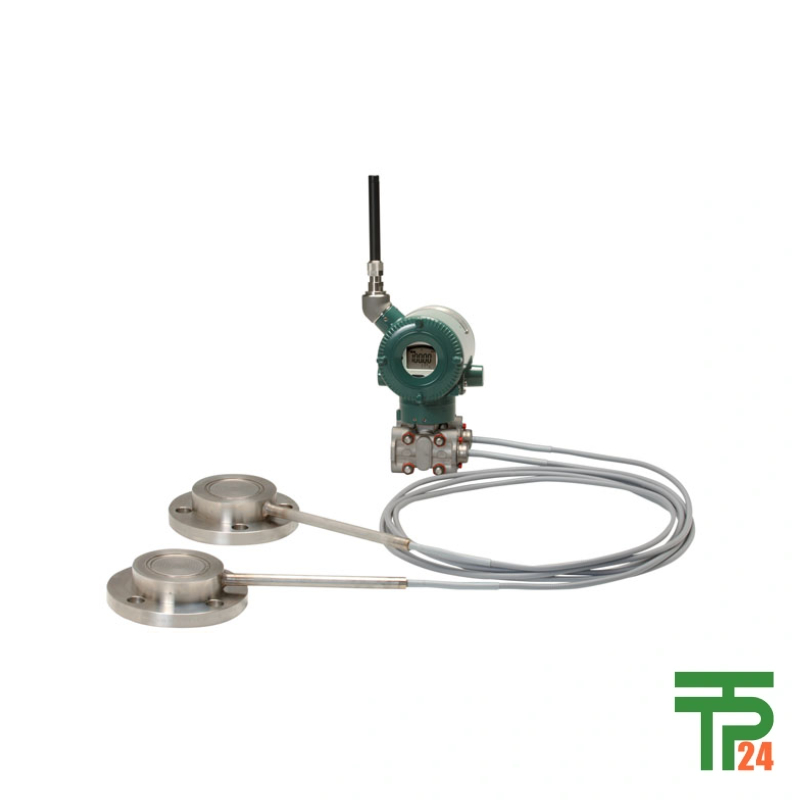
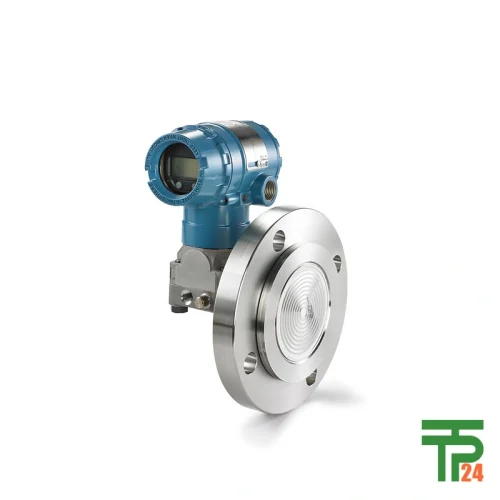
Yokogawa EJX118B Wireless Differential Pressure Transmitter with Remote Diaphragm Seals
-
Battery LifeUltra-low power, years operation.
-
InstallationDecreased cost, no hard-wiring.
-
SecurityInfrared setup for network.
-
Update TimeSelectable 0.5 sec to 60 min.
Did you like this product? Add to favorites now and follow the product.

(+86) 132-6243-8118 Start Live Chat
Description
Yokogawa EJX118B: Advanced Wireless Differential Pressure Solution
The Yokogawa EJX118B Wireless Diaphragm Sealed Differential Pressure Transmitter represents the pinnacle of industrial process measurement, engineered specifically to overcome the inherent limitations faced by standard pressure transmitters when dealing with challenging process media. Its core function relies on the sophisticated integration of external diaphragm seals connected via flexible capillary tubes. These seals act as a critical barrier, completely isolating the highly sensitive silicon sensor element—the heart of the transmitter—from the process fluid itself. The capillary tubes are factory-filled with a stable, inert fill fluid (such as silicone oil or inert fluorocarbon fluid). When process pressure is applied to the remote diaphragm seal, this pressure is hydraulically transferred through the fill fluid to the sensor assembly. This mechanism ensures that even highly corrosive, extremely viscous, or fouling media never compromise the accuracy or longevity of the internal measurement cell. This foundational design principle makes the EJX118B indispensable in environments where direct contact would lead to rapid sensor failure or unacceptable measurement drift, allowing for reliable differential pressure, flow, level, and density measurement across the most demanding sectors of the chemical, petrochemical, and pharmaceutical industries.
Wireless Freedom Significantly Reduces Capital Cost
One of the most compelling advancements offered by the EJX118B is its full compliance with the ISA100.11a wireless communication standard. This protocol enables robust, peer-to-peer, and gateway-based networking, completely eliminating the need for costly and complex traditional hard-wiring infrastructure to the remote sensing point. Eliminating conduits, pulling copper wire, installing junction boxes, and ensuring hazardous area classification compliance for wiring runs drastically reduces the installation capital expenditure (CAPEX) associated with deploying hundreds of measurement points across a vast facility, such as an oil refinery or large storage tank farm. Installation technicians can focus on mechanical mounting and wireless configuration, significantly accelerating project timelines. Furthermore, this wireless flexibility allows for rapid deployment in previously inaccessible or prohibitively expensive locations, opening up new possibilities for comprehensive process monitoring and optimization that were previously economically unfeasible with wired solutions.
Extended Battery Life Powers Uninterrupted Service
The operational longevity of any wireless instrument is critically dependent on its power source, and the EJX118B sets an industry benchmark for sustainability through its ultra-low consumption design. The transmitter is powered by two high-capacity lithium-thionyl chloride batteries, specifically selected for their high energy density and stable performance across wide temperature ranges. Through optimized power management firmware and efficient utilization of the ISA100.11a duty-cycling capabilities, the EJX118B is designed to deliver years of continuous, reliable measurement data without requiring battery replacement or maintenance intervention. This extended lifespan translates directly into lower operational expenditure (OPEX), reduced total cost of ownership (TCO), and significantly minimized maintenance downtime associated with opening and servicing transmitters located in difficult or hazardous areas.
Rapid Data Acquisition Meets User Demands
While many wireless instruments prioritize power saving over speed, the EJX118B provides exceptional flexibility in data throughput tailored to specific application requirements. The instrument features a selectable update time, offering users the agility to choose between instantaneous response and prolonged battery life based on process dynamics. For fast-moving applications, such as monitoring surge protection or highly dynamic control loops, the update rate can be set as fast as 0.5 seconds. Conversely, for slow-changing parameters, such as tank level monitoring or slow material accumulation monitoring, the update time can be extended up to 60 minutes, maximizing battery endurance. This inherent configurability ensures that the wireless network is utilized efficiently, transmitting only the necessary data volume required by the control strategy, whether it demands high-speed control or infrequent batch monitoring.
Secure Setup Facilitates Simple Commissioning
Ensuring that industrial wireless devices are securely integrated into the plant network is paramount. The EJX118B employs a highly secure and efficient method for initial configuration and network joining: infrared communication. A local handheld configuration tool or smart device can communicate directly with the transmitter via a non-contact infrared port. This method allows maintenance personnel to securely join the device to the ISA100.11a network, verify parameters, and conduct diagnostics without requiring physical disconnection, the use of external cables, or the necessity of entering hazardous zones repeatedly once the device is installed. This infrared link is exclusively used for maintenance and configuration tasks, reinforcing the security posture while drastically streamlining the physical commissioning process at the field level.
Specialized Designs Combat Extreme Process Variables
The deployment of diaphragm seals on the EJX118B is not merely about isolation; it is about specialized engineering for extreme environments. For High-Temperature Processes, such as those found in thermal crackers or distillation columns, the transmitter can be fitted with extended, often jacketed, capillary assemblies that physically distance the primary sensor body from the heat source. This ensures the fill fluid remains within its operational temperature envelope, preserving accuracy. Similarly, for measuring Viscous Fluids or Slurries, the remote seals can be supplied with larger diaphragms or specialized flushing connections to prevent buildup (clogging or solidification) around the primary sensing surface. For Corrosive Chemical Environments, specialized wetted materials like Hastelloy C-276 or Tantalum are specified for the seal diaphragms, guaranteeing long-term material integrity against aggressive agents like concentrated acids or caustics.
Precision Level Monitoring Across Complex Vessels
In the critical area of Tank Level Measurement, the EJX118B with diaphragm seals offers superior performance over traditional direct-insertion devices, particularly in vessels that require external heating or cooling systems. When tanks are subject to steam jacketing or internal heating coils (common for asphalt, heavy fuel oil, or molten chemicals), the application of heat can cause severe drift or outright failure in a standard sensor due to thermal expansion effects transmitted directly to the sensor body. By using diaphragm seals connected via suitably sized capillary runs, the actual pressure measurement is taken from a point well outside the influence of the thermal jacket, ensuring that the measured differential pressure accurately reflects only the hydrostatic head of the liquid column. This results in highly stable and repeatable level readings essential for inventory control and safety interlocks.
Specifications
Related products

Recently Viewed Products

Fair Pricing, Guarantee of Authenticity and Quality, Fast Delivery, and Provision of Technical Support to Customers.
Copyright 2025 © TPT24 Company. All right reserved. Powered by TPT24.
