

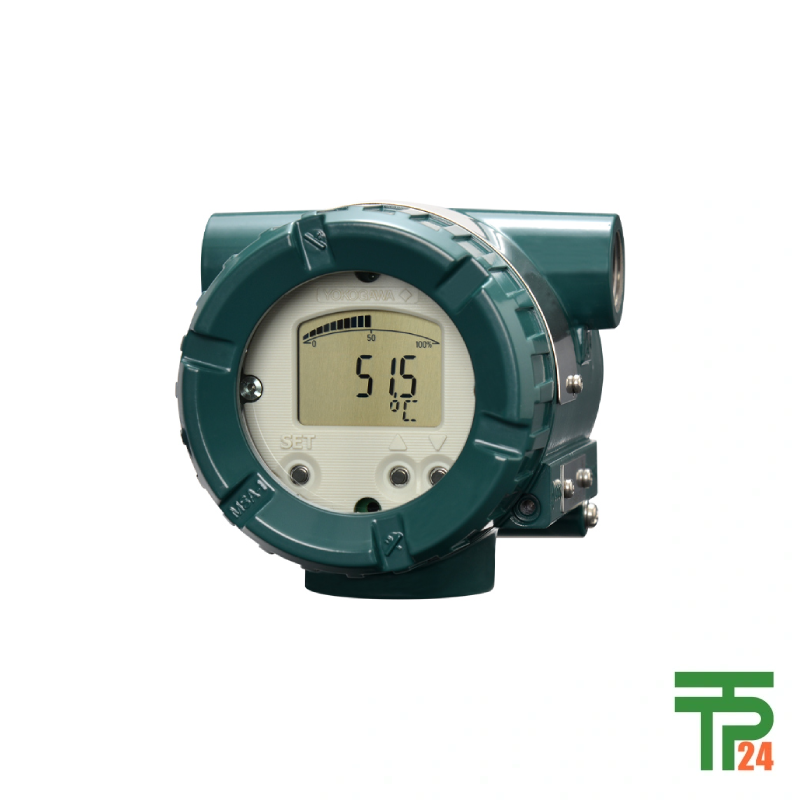
Yokogawa YTA610 Temperature Transmitter
- Input Type: Dual RTD, TC, Ohm, mV
- Output Protocol: HART 7 or FF ITK 6
- Key Feature: Automatic sensor backup
- Housing Design: Dual-compartment field-mount
Did you like this product? Add to favorites now and follow the product.

(+86) 132-6243-8118 Start Live Chat
Description
Yokogawa YTA610 Advanced Digital Temperature Transmitter
The Yokogawa YTA610 Advanced Digital Temperature Transmitter is engineered with a robust dual-compartment housing, a design feature paramount for industrial environments where reliability under extreme conditions is non-negotiable. This sophisticated construction physically segregates the electrical components from the sensor wiring and connection terminals, significantly enhancing protection against ingress of dust, moisture, and corrosive substances. This separation not only safeguards the sensitive electronics from environmental hazards but also simplifies maintenance and calibration procedures, allowing technicians to access and work on the terminal compartment without disturbing the primary electronic module. This meticulous design choice directly contributes to the transmitter’s high accuracy and long-term stability, ensuring that critical process measurements remain precise and dependable, even in the most challenging operational settings. The YTA610’s inherent resilience, stemming from its advanced housing architecture, positions it as a premier solution for industries demanding unwavering performance and extended service life. The commitment to durability extends to its material selection, ensuring resistance to vibration and shock, further solidifying its reputation as a workhorse in demanding industrial applications. Furthermore, the dual-compartment design facilitates easier field upgrades or replacements of individual components without the need to disconnect the entire unit, minimizing process downtime. This thoughtful engineering ensures that the YTA610 is not merely a measurement device, but a foundational element of process integrity. Its intrinsic safety ratings and explosion-proof certifications, standard for such high-end instrumentation, further attest to its suitability for hazardous area applications, providing peace of mind to plant operators. The physical robustness of the YTA610 is a testament to Yokogawa’s understanding of real-world industrial challenges.
Versatile Input Capabilities For Measurement
The Yokogawa YTA610 boasts an impressive array of input capabilities, offering unparalleled flexibility for diverse temperature measurement needs. It supports a wide range of sensor types, including Resistance Temperature Detectors (RTDs), thermocouples, resistance (ohm) sensors, and DC millivolt signals. This broad compatibility allows users to integrate the YTA610 seamlessly into existing infrastructure or design new systems without being constrained by specific sensor technologies. The ability to handle both single and dual inputs is a significant advantage, enabling advanced functionalities such as sensor redundancy, averaging, and differential measurements. For instance, in critical processes where a single point of failure could lead to catastrophic consequences, the dual-input capability provides a vital layer of safety and reliability. The transmitter can monitor two independent temperature sensors simultaneously, either to cross-check readings for enhanced accuracy and diagnostics or to provide automatic switch-over to a backup sensor in case the primary one fails. This feature is indispensable in applications such as maintaining precise temperature control in chemical reactors, monitoring the integrity of critical pipelines, or ensuring the safety of high-temperature furnaces where continuous operation is paramount. The YTA610’s intelligent sensor diagnostics further amplify its utility, alerting operators to potential issues with connected sensors before they lead to process disruptions. This proactive approach to instrumentation management is a hallmark of Yokogawa’s commitment to operational excellence. The YTA610’s flexibility in input selection is not just about accommodating different sensor types; it’s about empowering users to tailor their temperature monitoring solutions precisely to their application’s unique demands, reducing the need for specialized instrumentation for each measurement point. This versatility directly translates to cost savings and operational efficiency.
Advanced Output Options For Integration
The YTA610 is equipped with highly advanced output options designed for seamless integration into modern process control systems. It supports both the widely adopted 4-20mA HART 7 protocol and the cutting-edge FOUNDATION™ Fieldbus ITK 6 protocol. The 4-20mA HART 7 output provides a robust analog signal that can be augmented with digital communication, allowing for remote configuration, diagnostics, and access to multiple process variables. This hybrid approach offers the best of both worlds, ensuring backward compatibility while enabling sophisticated digital functionality. For systems that leverage digital fieldbus technology, the FOUNDATION™ Fieldbus ITK 6 output is a game-changer. This protocol enables peer-to-peer communication, decentralized control, and advanced device diagnostics, leading to more intelligent and efficient control loops. The YTA610’s ability to support both protocols means it can be deployed across a wide spectrum of plant architectures, from legacy systems to the latest distributed control systems (DCS) and programmable logic controllers (PLC). The digital communication capabilities facilitated by these protocols allow for enhanced data acquisition, predictive maintenance, and process optimization. For instance, the YTA610 can transmit not only the primary temperature measurement but also secondary variables such as sensor diagnostics, ambient temperature, or even calculated values, all through a single communication link. This reduces wiring complexity and costs, while simultaneously providing richer insights into process conditions. The YTA610’s commitment to open standards ensures interoperability with a vast range of control system hardware and software, making it a future-proof investment for any industrial facility. This adaptability in communication protocols is a critical factor in its widespread adoption across various industries.
Dual Sensor Capabilities For Redundancy
The YTA610’s dual sensor capabilities are a cornerstone of its advanced functionality, particularly for applications demanding the highest levels of reliability and safety. With support for single or dual input sensors, the transmitter can be configured to monitor two separate temperature probes simultaneously. This feature is invaluable in mission-critical processes where unplanned downtime or inaccurate readings can have severe consequences. The dual sensors can be utilized in several sophisticated modes. Differential measurement allows for the calculation of temperature differences between two points, essential for monitoring heat exchanger efficiency or thermal gradients. Average measurement provides a more representative temperature reading by averaging the inputs from two sensors, mitigating localized temperature fluctuations. However, the most critical function enabled by dual sensors is sensor backup and automatic switch-over. In this configuration, if the primary sensor fails or its readings drift outside acceptable parameters, the YTA610 automatically switches to the secondary sensor, ensuring continuous and reliable temperature monitoring without manual intervention. This is crucial in industries such as petrochemical processing, power generation, and pharmaceuticals, where maintaining process parameters within tight tolerances is paramount. For example, in a critical chemical reactor, a failure in a single temperature sensor could lead to uncontrolled reactions or product spoilage. The YTA610’s automatic switch-over capability ensures that such an event is averted, maintaining process stability and safety. This redundancy feature significantly reduces the risk of costly shutdowns and enhances overall plant safety. The intelligent algorithms within the YTA610 constantly monitor the health of both sensors, enabling proactive alerts for potential issues before a failure occurs, further bolstering its redundancy credentials. This advanced fault tolerance is a testament to Yokogawa’s dedication to robust industrial process control.
Local Parameter Setting For Simplicity
The Local Parameter Setting (LPS) feature integrated into the Yokogawa YTA610 simplifies on-site configuration and maintenance, offering an intuitive user interface directly on the transmitter. This capability is particularly beneficial in remote or hazardous locations where accessing control rooms for adjustments or diagnostics might be impractical or time-consuming. The YTA610’s LPS allows field technicians to easily configure sensor types, input ranges, output scaling, and other critical parameters using a simple keypad and display. This direct access minimizes the need for specialized software or handheld communicators for basic setup tasks, thereby reducing commissioning time and operational costs. Furthermore, the LPS feature enhances safety by allowing configuration adjustments without the need to disconnect wiring or expose sensitive electronics, thus maintaining the integrity of the device’s protective housing and intrinsic safety certifications. The intuitive menu structure and clear on-screen prompts guide users through the configuration process, minimizing the possibility of errors. Even in demanding industrial environments with gloves or limited visibility, the tactile buttons and well-designed interface ensure ease of use. This on-device configurability empowers field personnel to make rapid adjustments, troubleshoot issues efficiently, and perform routine maintenance tasks with minimal disruption to the process. The YTA610’s LPS is not just a convenience; it’s an integral part of its user-centric design, aimed at maximizing uptime and operational efficiency. This direct interaction capability is a significant advantage for on-site engineers and technicians.
Specifications
Related products


Recently Viewed Products

Fair Pricing, Guarantee of Authenticity and Quality, Fast Delivery, and Provision of Technical Support to Customers.
Copyright 2025 © TPT24 Company. All right reserved. Powered by TPT24.
