

Yokogawa YTA710 Temperature Transmitter
- Dual-Compartment | Field-mount reliability
- Sensor Matching | Unmatched system accuracy
- Sensor Backup | Automatic failover function
- Local Setting | Simplified field parameterization
Did you like this product? Add to favorites now and follow the product.

(+86) 132-6243-8118 Start Live Chat
Description
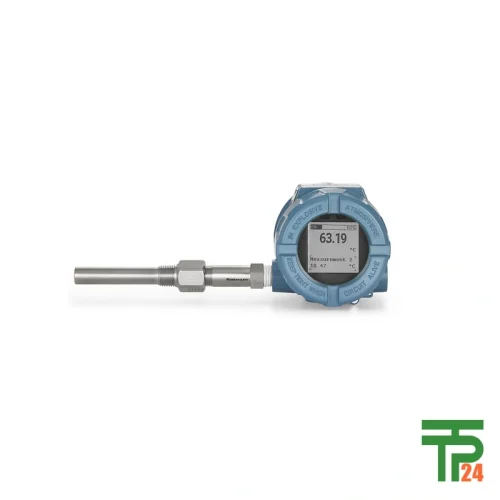
Yokogawa YTA710 Advanced Dual-Sensor Temperature Transmitter
The Yokogawa YTA710 is engineered as a paramount solution for demanding temperature measurement applications, setting a new standard for accuracy, stability, and reliability in process instrumentation. Built upon decades of field expertise, the YTA710 transcends conventional temperature transmitters by incorporating advanced features designed to maximize operational uptime and minimize measurement uncertainty. Its fundamental design philosophy centers on providing actionable, highly trustworthy data, which is crucial for safety-critical systems, tight process control loops, and specialized environments such as catalyst beds, high-pressure steam lines, and cryogenic storage tanks. The architecture of the YTA710 is focused on enduring the rigors of industrial settings, including high vibration, extreme temperature fluctuations, and corrosive atmospheres, ensuring that its exceptional performance metrics are maintained over extremely long calibration intervals. The high degree of linearity and minimal drift inherent in the design are vital for industries where even marginal temperature deviations can impact product quality, energy consumption, or regulatory compliance. This transmitter is not merely a sensor interface; it is a sophisticated signal processing unit that transforms raw sensor data into highly reliable digital or analog outputs, forming the backbone of modern plant automation strategies and enabling true predictive maintenance capabilities.
Core Architecture Ensures Maximum Stability and Reliable Performance
A cornerstone of the YTA710’s reliability is its robust, dual-compartment field-mount housing. This structural design is instrumental in physically isolating the terminal block section—exposed to field wiring and potential moisture ingress—from the sensitive electronics and processing boards. This meticulous segregation protects the core measurement circuitry from environmental interference, condensation, and electrical noise, which are common culprits of transmitter failure and measurement instability in single-compartment designs. This dual-compartment approach is a key factor contributing to the YTA710’s long-term stability specifications, often exceeding industry benchmarks. Furthermore, the selection of materials and sealing techniques adheres to stringent international standards for ingress protection, making the YTA710 suitable for deployment in hazardous areas and locations subject to frequent washdowns. The intrinsic stability of the transmitter means reduced maintenance costs and fewer scheduled calibration checks, translating directly into optimized total cost of ownership. The device is also designed for quick and simple installation, with a user-friendly interface that facilitates on-site commissioning and minimal disruption to ongoing operations. This combination of physical resilience and electronic sophistication solidifies the YTA710’s position as a premium choice for mission-critical temperature monitoring points across refining, chemical, and pharmaceutical sectors.
Revolutionizing Measurement with Advanced Dual Sensor Input Capabilities
The YTA710 offers unparalleled flexibility through its capability for dual sensor input, accommodating a comprehensive range of inputs including Resistance Temperature Detectors (RTD), thermocouples, Ohms, and DC millivolts. This dual input capability is the engine behind several advanced functions that dramatically enhance measurement integrity and system resilience. One of the most critical is the Failed Sensor Backup function, where the transmitter automatically switches-over from a primary sensor to a pre-configured backup sensor immediately upon detecting a failure (such as an open circuit or short). This seamless transition maintains the process signal integrity without interruption, effectively preventing emergency shutdowns or loss of control—a decisive advantage in continuous processes. Beyond redundancy, the dual input enables sophisticated calculation modes like Temperature Averaging, which provides a more representative reading of the temperature profile across a large vessel or line, compensating for localized hot or cold spots. It also facilitates Differential Temperature Measurement, essential for monitoring heat exchange efficiency, catalyst activity within reactors, or calculating mass flow in specific applications by precisely measuring the temperature difference (ΔT)(\Delta T) between two points. This versatility in sensor management makes the YTA710 an indispensable tool for complex process analysis and optimization.
Seamless Integration Through Diverse Communications Protocol Support
To ensure maximum interoperability and seamless integration within existing and new control systems, the Yokogawa YTA710 supports a wide array of industrial communication protocols. Users can choose configurations supporting 4 to 20 mA analog output complemented by the HART 7 digital protocol, the proprietary BRAIN protocol, or the fully digital FOUNDATION™ Fieldbus ITK 6 protocol. The HART 7 capability ensures backwards compatibility with millions of installed devices while offering advanced diagnostics and remote configuration functionalities. The FOUNDATION™ Fieldbus option represents the apex of digital communication, enabling true distributed control functionality, peer-to-peer communication, and comprehensive device health management. The use of a digital protocol, regardless of choice, ensures that the sensor’s high-resolution measurement is not compromised by the noise or degradation inherent in purely analog transmission. Furthermore, the dual sensor input combined with these robust communication capabilities allows for advanced diagnostic data to be transmitted alongside the primary process variable. This comprehensive data package—including sensor health, cable resistance, and ambient temperature—empowers maintenance teams to transition from reactive to predictive maintenance strategies, identifying potential faults long before they result in operational failure.
Unmatched Accuracy Via Sophisticated Callendar-Van Dusen Matching
A defining feature of the Yokogawa YTA710, particularly when equipped with the CM1 option, is its advanced Sensor Matching capability, rooted in the classic Callendar-Van Dusen coefficients. While RTD sensors comply with the IEC60751 standard (the Standard Curve), every manufactured sensor has a unique Real RTD Curve due to slight manufacturing variances. This small difference introduces a measurable error that standard transmitters cannot correct. The YTA710 CM1 option overcomes this limitation by allowing operators to input the unique Callendar-Van Dusen coefficients determined during sensor calibration. These coefficients are used by the transmitter’s internal algorithms to mathematically modify the Standard Curve, making it perfectly align with the Real RTD Curve of the specific connected sensor. By eliminating the error generated by the mismatch between the theoretical and actual sensor performance, the YTA710 dramatically improves the overall system accuracy—often a critical requirement in high-precision thermal processes like reactor temperature control, custody transfer measurement, and energy accounting systems. This commitment to eliminating systematic sensor error establishes the YTA710 as a leader in measurement fidelity.
Specialized Applications For Critical Thermal Process Management
The unique feature set of the YTA710 positions it perfectly for several highly specialized and demanding applications. In the refining industry, the YTA710 is invaluable for monitoring critical points within catalytic crackers and reformers, where minor temperature shifts can drastically alter the reaction yield and selectivity. The Failed Sensor Backup ensures continuous operation during catalyst regeneration cycles. In the pharmaceutical and biotechnology sectors, the YTA710’s superior accuracy, enhanced by Callendar-Van Dusen matching, is crucial for validating batch processes, sterilization cycles, and maintaining tight control over bioreactors where process temperature is a key quality attribute. Furthermore, its dual input and differential temperature capabilities are extensively used in heat exchanger and boiler efficiency monitoring, allowing process engineers to calculate heat rate and identify fouling or scaling issues immediately, thus optimizing energy consumption. The robust, dual-compartment design also makes it ideal for remote oil and gas pipelines, where environmental extremes and accessibility issues necessitate maximum stability and reliability with minimal physical intervention over decades of operation.
On-Site Parameter Setting Streamlines Field Commissioning Efficiency
Recognizing the need for efficiency during commissioning and field calibration, the YTA710 (specifically indicator models) incorporates a user-friendly Local Parameter Setting function. This feature utilizes an integrated switch mechanism on the indicator itself, allowing technicians to easily access, view, and modify key transmitter parameters without the need for external configuration tools (such as a HART communicator or Fieldbus host). This capability significantly reduces the time and complexity associated with field adjustments, especially when dealing with range settings, dampening times, or local zero/span adjustments. It provides a simple, direct interface for confirming the device’s operational status and making necessary tweaks right at the point of measurement. While remote configuration remains available through the communication protocols, the local setting function is an invaluable asset for initial startup, troubleshooting, and minor recalibrations, enhancing overall maintenance efficiency and minimizing the need for specialized equipment or lengthy configuration routines in challenging outdoor or elevated locations.
Specifications
Related products
Recently Viewed Products

Fair Pricing, Guarantee of Authenticity and Quality, Fast Delivery, and Provision of Technical Support to Customers.
Copyright 2025 © TPT24 Company. All right reserved. Powered by TPT24.

