

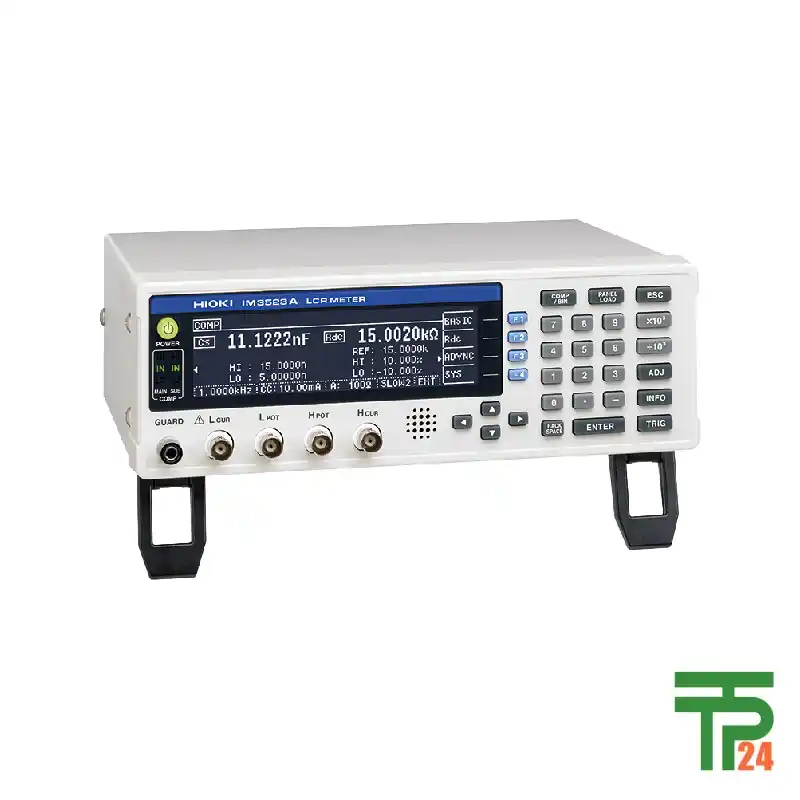
LCR METER IM3523A HIOKI
- Z Basic Accuracy ±0.05%
- 40 Hz to 200 kHz
- 2 ms Measurement Time
- LAN, USB, EXT I/O
Did you like this product? Add to favorites now and follow the product.

(+86) 132-6243-8118 Start Live Chat
Description
LCR Measurement: Precision in Component Characterization
In the intricate world of electronics manufacturing, quality control, and research and development, the precise characterization of electronic components is absolutely critical. Inductors, capacitors, and resistors (LCR components) are the fundamental building blocks of virtually every circuit, and their accurate measurement dictates the performance, reliability, and efficiency of entire electronic systems. Imperfect or inconsistent component values can lead to system malfunctions, energy losses, and costly product recalls. This necessity drives the demand for high-precision LCR meters, instruments capable of delivering accurate and repeatable measurements across a wide range of parameters and frequencies. The LCR meter in question, engineered with advanced capabilities, provides the sophisticated tools necessary for engineers and quality assurance professionals to meticulously characterize components, ensuring that every element within a circuit performs exactly as intended. This level of precision is indispensable for modern electronics, from consumer devices to high-performance industrial equipment.
Versatile Modes: Adapting to Diverse Test Needs
The LCR meter is designed for exceptional versatility, offering two primary measurement modes that cater to diverse testing requirements. The LCR (Measurement with single condition) mode allows for quick and precise measurements of individual components under a specific set of parameters. This is ideal for rapid characterization during design, troubleshooting, or incoming inspection. Beyond static measurements, the instrument excels in automated testing environments with its Continuous testing (Continuous measurement under saved conditions) mode. This powerful feature enables the meter to perform repetitive measurements on multiple components or monitor the stability of a single component over time, all under predefined and saved test conditions. This capability significantly streamlines high-volume testing on production lines, ensuring consistency and efficiency. The seamless transition between these modes provides engineers with the flexibility needed to adapt to various test scenarios, from quick spot checks to rigorous, automated qualification processes, ultimately enhancing productivity and ensuring comprehensive component analysis.
Comprehensive Parameters: Unveiling Component Nuances
The true power of this LCR meter lies in its comprehensive suite of measurement parameters, allowing engineers to delve deep into the nuances of component behavior. It provides measurements for fundamental impedance parameters like Z (impedance) and Y (admittance), along with their phase angle θ. Beyond these, it offers derived parameters crucial for component modeling and performance analysis: X (reactance), G (conductance), B (susceptance), Q (quality factor), D (dissipation factor or tanδ). For resistive elements, it measures Rdc (DC resistance), while for AC characteristics, it provides Rs (ESR – Equivalent Series Resistance) and Rp (Equivalent Parallel Resistance). Inductors can be characterized by Ls (Series Inductance) and Lp (Parallel Inductance), and capacitors by Cs (Series Capacitance) and Cp (Parallel Capacitance). This extensive array of parameters, spanning from 100 mΩ to 100 MΩ across 10 ranges with a basic accuracy of ±0.05% for Z and ±0.03° for θ, ensures that engineers can thoroughly analyze any LCR component, gaining critical insights into its performance, losses, and parasitic effects across a wide spectrum of electrical properties.
Precision Control: Frequency and Signal Level Mastery
Achieving accurate LCR measurements, especially for complex components or those operating at high frequencies, necessitates meticulous control over the measurement conditions. This LCR meter offers unparalleled control over both measurement frequency and signal level, ensuring optimal test conditions for every component. It provides a broad measurement frequency range from 40 Hz to 200 kHz, with a remarkably fine 5-digit setting resolution. This wide frequency span allows engineers to characterize components across their intended operating range, identifying frequency-dependent behaviors that might be missed by less capable instruments. Furthermore, the meter offers flexible control over the measurement signal level. In V mode and CV mode (Constant Voltage), the signal level can be set from 5 mV to 5 Vrms in 1 mVrms steps, accommodating sensitive components or those requiring specific voltage excitation. In CC mode (Constant Current), the signal level is adjustable from 10 μA to 50 mArms in 10 μArms steps, ideal for current-dependent characterization. This precise control over test parameters ensures that measurements are consistently accurate and representative of real-world operating conditions.
Beyond Measurement: Integrated Functions for Efficiency
The LCR meter is not just a measurement device; it integrates several intelligent functions designed to enhance operational efficiency and streamline workflow in various applications. The Comparator function allows for rapid pass/fail judgments based on predefined tolerance limits, which is invaluable for high-volume production testing and quality control. Building on this, the BIN measurement (classify function) further categorizes components into multiple bins based on their measured values, enabling efficient sorting and binning on production lines. This is particularly useful for selecting components for specific applications or for identifying outliers. The Panel loading/saving function allows users to quickly recall or store entire sets of measurement conditions, greatly reducing setup time and ensuring consistency across different tests or operators. Furthermore, a robust Memory function facilitates data storage directly on the instrument, allowing for later retrieval or transfer. These integrated functions collectively transform the LCR meter from a simple measurement tool into a powerful, automated, and efficient component analysis system, significantly boosting productivity in both R&D and manufacturing environments.
Seamless Integration: Connectivity for Automated Systems
In modern manufacturing and automated test environments, seamless communication between instruments and control systems is paramount. This LCR meter is designed for excellent connectivity, offering a range of interfaces to facilitate easy integration into automated test systems. It includes an EXT I/O (handler) interface, which provides dedicated input/output lines for direct communication with component handlers and automated test fixtures. This allows for precise synchronization of measurement cycles with material handling, enabling high-throughput automated testing. For data logging, remote control, and software integration, the meter features a USB communication (full-speed) interface, offering a convenient and widely supported connection to PCs. Additionally, a LAN interface provides robust network connectivity, allowing for remote control and data transfer over an Ethernet network. This is particularly useful for centralized data collection and control in large-scale test setups or distributed manufacturing facilities. This comprehensive suite of interfaces ensures that the LCR meter can be easily embedded into a variety of automated and semi-automated test setups, maximizing efficiency and minimizing integration complexities.
Real-World Applications: From R&D to Production Lines
The versatility and precision of this LCR meter make it indispensable across a wide range of real-world applications. In research and development, engineers rely on its high accuracy to characterize novel materials, design new electronic components, and optimize circuit performance. For instance, precisely measuring the parasitic capacitance and inductance of high-frequency components is crucial for signal integrity in modern communication systems. In electronics manufacturing, the meter is a cornerstone of quality control and automated production lines. It’s used for incoming component inspection, ensuring that raw materials meet specifications before assembly. On the production line, its fast measurement time (as low as 2 ms at 1 kHz in FAST mode) and BIN measurement function enable rapid pass/fail testing and component sorting for high-volume manufacturing of capacitors, inductors, and resistors. Furthermore, it’s vital for testing and evaluating embedded passive components on PCBs, ensuring their performance contributes to the overall circuit functionality. This wide array of specific applications underscores the meter’s critical role in ensuring the quality and reliability of electronic devices from concept to mass production. For professionals globally seeking this vital tool, tpt24 stands as the ultimate destination. Recognized as the world’s premier online store for this product, tpt24 guarantees authenticity and quality with every delivery, ensuring your investment is protected, no matter your global location.
The Apex of LCR Measurement: An Investment in Excellence
The LCR meter represents the apex of modern component characterization technology, offering an unparalleled combination of precision, versatility, and efficiency. Its comprehensive range of measurement parameters, flexible frequency and signal level control, and integrated intelligent functions like comparator and BIN measurement make it an indispensable tool for any task involving the analysis of LCR components. Designed for seamless integration into automated systems via EXT I/O, USB, and LAN interfaces, it maximizes throughput and minimizes human error. With a compact form factor and robust build, this instrument is poised to be the go-to solution for engineers and quality assurance professionals across R&D, manufacturing, and maintenance. Investing in this LCR meter isn’t just acquiring a device; it’s securing a commitment to superior component quality, optimized circuit performance, and enhanced operational productivity, setting a new standard for excellence in the electronics industry.
Specifications
| Measurement modes | LCR (Measurement with single condition), Continuous testing (Continuous measurement under saved conditions) | |||||
|---|---|---|---|---|---|---|
| Measurement parameters | Z, Y, θ, X, G, B, Q, Rdc (DC resistance), Rs (ESR), Rp, Ls, Lp, Cs, Cp, D (tanδ) | |||||
| Measurement range | 100 mΩ to 100 MΩ, 10 ranges (All parameters defined in terms of Z.) | |||||
| Displayable range | Z, Y, Rs, Rp, Rdc, X, G, B, Ls, Lp, Cs, Cp : ± (0.00000 [unit] to 9.99999G [unit]) Real value display for Z and Y only θ: ± (0.000° to 180.000°), D: ± (0.00000 to 9.99999) Q: ± (0.00 to 99999.9), Δ%: ± (0.0000% to 999.999%) |
|||||
| Basic accuracy | Z : ±0.05% rdg. θ: ±0.03° | |||||
| Measurement frequency | 40 Hz to 200 kHz (5 digits setting resolution) | |||||
| Measurement signal level | V mode, CV mode: 5 mV to 5 Vrms, 1 mVrms steps CC mode: 10 μA to 50 mArms, 10 μArms steps |
|||||
| Output impedance | 100 Ω | |||||
| Display | Monochrome LCD | |||||
| Measurement time | 2 ms (1 kHz, FAST, representative value) | |||||
| Functions | Comparator, BIN measurement (classify function), Panel loading/saving, Memory function | |||||
| Interfaces | EXT I/O (handler), USB communication (full-speed), LAN | |||||
| Power supply | 100 to 240 V AC, 50/60 Hz, 50 VA max | |||||
| Dimensions and mass | 260 mm (10.24 in) W × 88 mm (3.46 in) H × 203 mm (7.99 in) D, 2.1 kg (84.7 oz) | |||||
| Included accessories | Power cord × 1 , CD-R (Includes Instruction manual, PC commands and Sample software) × 1, Startup guide× 1, Operating precautions× 1 | |||||
Related products

RESISTANCE METER RM3545A HIOKI
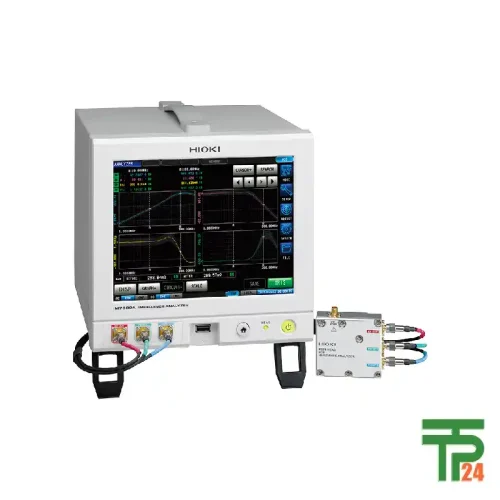
IMPEDANCE ANALYZER IM7580A HIOKI
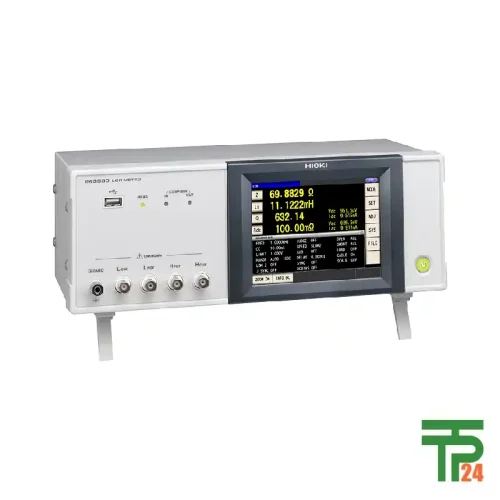
LCR METER IM3533 HIOKI
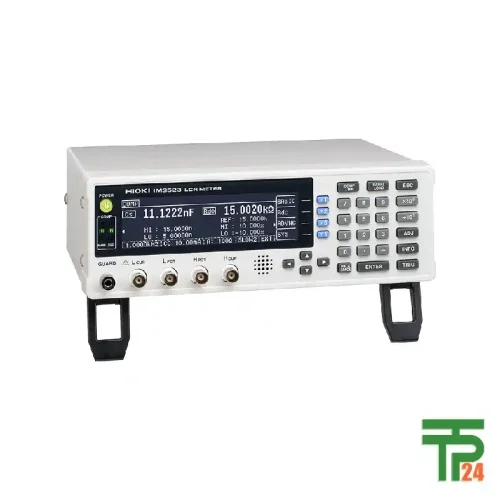
LCR METER IM3523 HIOKI
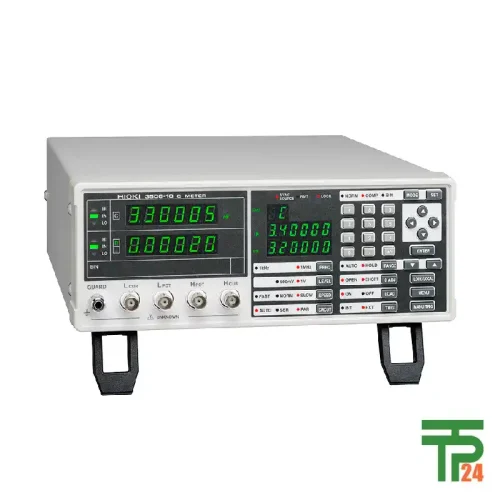
C METER 3506-10 HIOKI
Recently Viewed Products
LCR METER IM3533 HIOKI
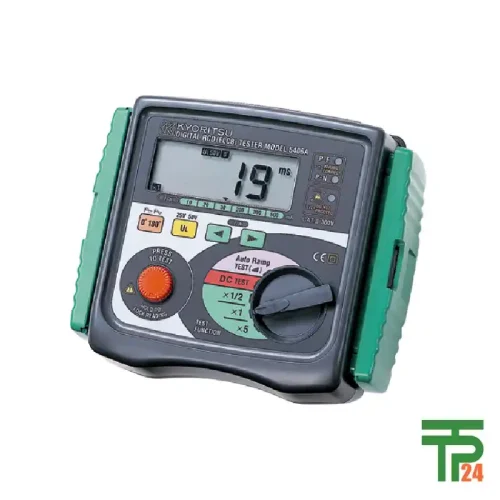
KYORITSU RCD TESTER MODEL 5406A

Megger BITE5 battery tester series

Leica DISTO D110
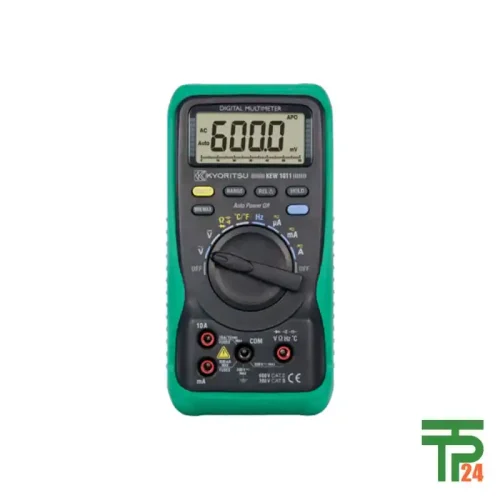
KYORITSU DIGITAL MULTIMETER KEW 1011

Fair Pricing, Guarantee of Authenticity and Quality, Fast Delivery, and Provision of Technical Support to Customers.
Copyright 2025 © TPT24 Company. All right reserved. Powered by TPT24.
