
HIOKI Battery Testers: 5 Best Practical Buying Tips
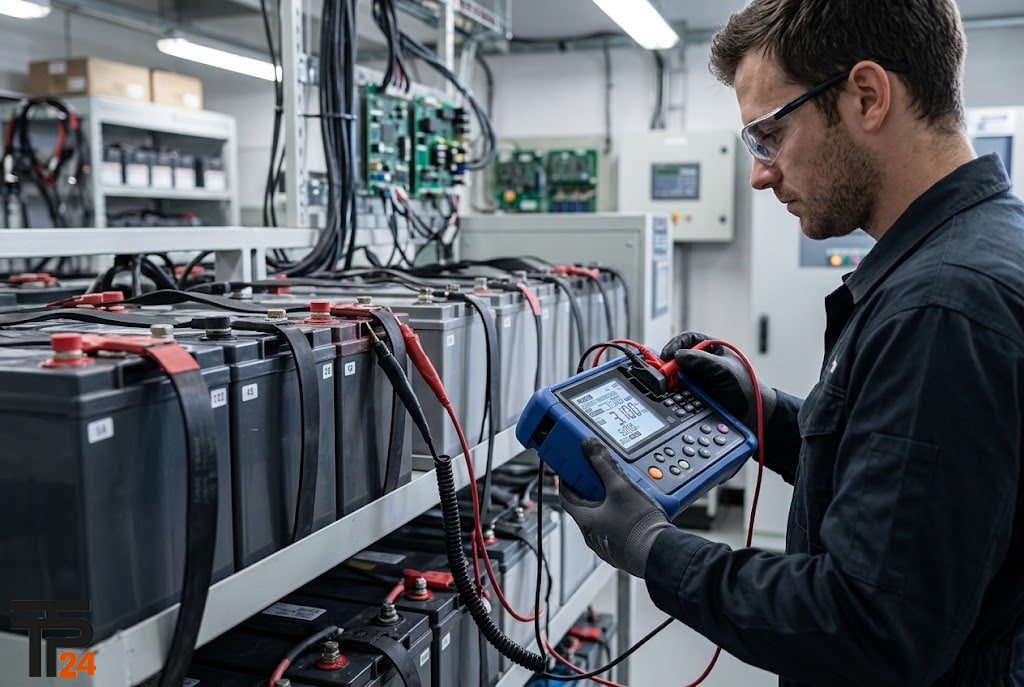
Executive Summary
HIOKI Battery Testers and resistance meters provide specialized solutions for electrical quality control, battery manufacturing, electric vehicle (EV) testing, and industrial maintenance. This guide explains their operating principles, key applications, technical differences, and five practical considerations for selecting the right measurement instrument.
Introduction to HIOKI Battery Testers and Resistance Meters
HIOKI Battery Testers are designed to help engineers, manufacturers, and maintenance professionals evaluate battery voltage, internal resistance, and other electrical parameters. Combined with precision resistance meters, these instruments support reliable testing across electronics manufacturing, battery production, and industrial power systems.
HIOKI offers benchtop instruments for production lines and high-voltage battery packs, as well as portable testers for inspecting uninterruptible power supply (UPS) batteries. Choosing the appropriate model depends on the battery type, voltage range, measurement requirements, and working environment.
What Are HIOKI Resistance Meters?
Resistance meters measure the electrical resistance of components, conductors, and connections. Resistance is expressed in ohms (Ω), while low-resistance measurements commonly use milliohms (mΩ) and micro-ohms (µΩ).
HIOKI resistance meters support quality inspection by helping identify unwanted resistance in connectors, electrical contacts, motor windings, and battery connections.
Four-Terminal Resistance Measurement
Many precision resistance measurements use the four-terminal, or Kelvin, method. Separate connections supply the test current and measure the voltage across the test object, reducing the influence of lead resistance on the result.
This technique is particularly useful for inspecting:
- Electrical connectors and terminals
- Battery busbars and welded joints
- Motor and transformer windings
- Relays, switches, and fuses
- Printed circuit board conductors
Accurate low-resistance measurement can help manufacturers identify inconsistencies and improve production quality.
Key Applications of HIOKI Battery Testers
HIOKI Battery Testers support several important industrial applications.
1. Electric Vehicle Battery Production
EV battery packs require appropriate inspection procedures to verify electrical characteristics and connection quality. Selected HIOKI battery testers measure internal resistance and battery voltage simultaneously, helping manufacturers assess cells, modules, and assembled packs.
The BT3564 is designed for high-voltage battery pack testing, with a maximum input voltage of 1000 V. Its applications include EV and plug-in hybrid electric vehicle (PHEV) battery production and inspection.
2. Automated Battery Manufacturing
Production lines require repeatable measurements and efficient inspection workflows. The HIOKI BT3563A supports automated testing of larger battery packs up to 300 V, with LAN connectivity and simultaneous internal resistance and open-circuit voltage measurement.
These capabilities can help manufacturers standardize inspections, compare results against predefined limits, and integrate measurement equipment into compatible production systems.
3. UPS and Industrial Battery Maintenance
Backup batteries play an important role in data centers, telecommunications facilities, and industrial installations. Regular inspection helps maintenance teams identify changes that may indicate battery deterioration.
The HIOKI BT3554-50 is a portable battery tester designed for UPS and lead-acid battery maintenance. It measures internal resistance and voltage and offers comparator functions to help assess results against user-defined thresholds.
Understanding Battery Internal Resistance and Voltage
Internal resistance is a useful parameter for assessing battery condition. Changes over time may indicate aging or deterioration, although results are also influenced by temperature, state of charge, battery chemistry, and testing conditions.
Open-circuit voltage (OCV) is measured across a battery’s terminals when it is not supplying an external load. It can help identify voltage deviations and support battery inspection procedures.
HIOKI Battery Testers combine these measurements on selected models to provide useful information for quality control and maintenance. However, internal resistance and voltage alone do not establish a battery’s remaining capacity or complete state of health.
HIOKI Battery Tester Comparison
The following table summarizes three instruments for different battery testing applications.
| Model | Primary Application | Voltage Capability | Main Features |
| HIOKI BT3564 | High-voltage EV and PHEV battery packs | Up to 1000 V | Simultaneous resistance and voltage measurement; spark discharge reduction |
| HIOKI BT3563A | Automated production testing | Up to 300 V | LAN connectivity; internal resistance and OCV measurement |
| HIOKI BT3554-50HIOKI BT3554-50 | UPS and lead-acid battery maintenance | ±6 V to ±60 V measurement ranges | measurement ranges Portable design; comparator function; data storage |
Specifications are model-specific. Verify the official datasheet, compatible test leads, and input limits before selecting an instrument.
Five Practical Tips for Choosing HIOKI Battery Testers
1. Identify Your Battery Type
Determine whether you need to test lithium-ion battery cells, EV battery packs, lead-acid batteries, or industrial backup systems. Different battery technologies require different testing procedures and evaluation criteria.
2. Confirm the Voltage Range
Check the maximum expected voltage and the instrument’s specified input limits. The BT3564 is designed for high-voltage battery packs, whereas the BT3554-50 is intended for battery maintenance applications within its specified voltage range.
Never select a tester based solely on its resistance measurement capability.
3. Evaluate Measurement Resolution and Accuracy
Resolution indicates the smallest displayed measurement increment, while accuracy describes the expected measurement deviation under specified conditions.
For low-resistance connections and battery production, these specifications should match the required inspection limits and measurement uncertainty.
4. Consider Automation and Data Management
Production environments may benefit from communication interfaces, comparator functions, and automated data collection. For field maintenance, data storage and compatible wireless reporting options can simplify inspections and historical comparisons.
Check each model’s interface capabilities and required accessories before purchasing.
5. Choose the Right Instrument Format
Benchtop instruments are often suitable for laboratories and production lines. Portable battery testers are generally more convenient for inspecting installed batteries in UPS systems and other industrial facilities.
The correct choice depends on where measurements are performed, how frequently testing occurs, and how results need to be recorded.
Benefits of HIOKI Measurement Instruments
HIOKI Battery Testers and resistance meters offer features designed for specific measurement applications.
- Precision measurement: Selected instruments support low-resistance measurements and repeatable electrical inspection.
- Production efficiency: Suitable models provide fast measurements and interfaces for compatible automated systems.
- Battery condition assessment: Internal resistance and voltage measurements support maintenance and manufacturing decisions.
- Data management: Selected instruments offer onboard storage, comparator functions, or compatible data-transfer options.
- Application flexibility: The product range includes instruments for component inspection, EV battery packs, and industrial battery maintenance.
Actual capabilities depend on the model, configuration, accessories, and test conditions.
Frequently Asked Questions
What are HIOKI Battery Testers used for?
HIOKI Battery Testers measure battery-related electrical parameters, including internal resistance and voltage on suitable models. They are used in battery production, EV inspection, and industrial battery maintenance.
Which HIOKI tester is suitable for high-voltage EV battery packs?
The BT3564 supports high-voltage battery pack testing up to 1000 V within its specified operating limits. Confirm the applicable measurement method, accessories, and safety requirements for your application.
Can HIOKI Battery Testers be used for UPS maintenance?
Yes. The BT3554-50 is designed for UPS and lead-acid battery maintenance. Its measurements can support condition assessments when compared with suitable reference values and manufacturer criteria.
Does internal resistance determine battery health?
No. Internal resistance is one indicator of battery condition, but temperature, state of charge, capacity, age, and battery chemistry also affect the assessment. Additional testing may be required.
How do resistance meters differ from battery testers?
Resistance meters primarily evaluate the resistance of electrical components and connections. Battery testers focus on battery-specific measurements, such as internal resistance and voltage, depending on the model.
Conclusion
HIOKI Battery Testers and resistance meters provide specialized solutions for electrical inspection, battery manufacturing, EV production, and industrial maintenance. Selecting the right instrument requires careful consideration of battery type, voltage limits, measurement performance, connectivity, and working conditions.
Why Choose TPT24 for Hioki Battery Testers?
Choosing a reliable supplier is essential when purchasing precision battery testing equipment. TPT24 helps businesses and professionals source Hioki battery testers and other measurement instruments for their specific needs.
Here’s why you should consider TPT24:
- Genuine Products: Source Hioki battery testers with the option to request product authenticity documentation.
- Competitive Pricing: Find suitable testing equipment to match your technical requirements and budget.
- Global Shipping: Benefit from international sourcing and delivery support.
- Product Selection Assistance: Get help identifying the right Hioki battery tester for your application.
- Customer Support: Request product specifications, warranty details, and available after-sales support before ordering.
Whether you need a battery tester for industrial maintenance, quality control, or laboratory testing, TPT24 can help you explore suitable options.
Looking for the right Hioki battery tester? Browse our Hioki battery testers or contact our sales team for pricing, product specifications, and shipping information.

Industrial Instrumentation Supplier
Fair Pricing, Guarantee of Authenticity and Quality, Fast Delivery, and Provision of Technical Support to Customers.
Copyright 2025 © TPT24 Company. All right reserved. Powered by TPT24.

