

How Temperature Affects Dissolved Oxygen Measurements
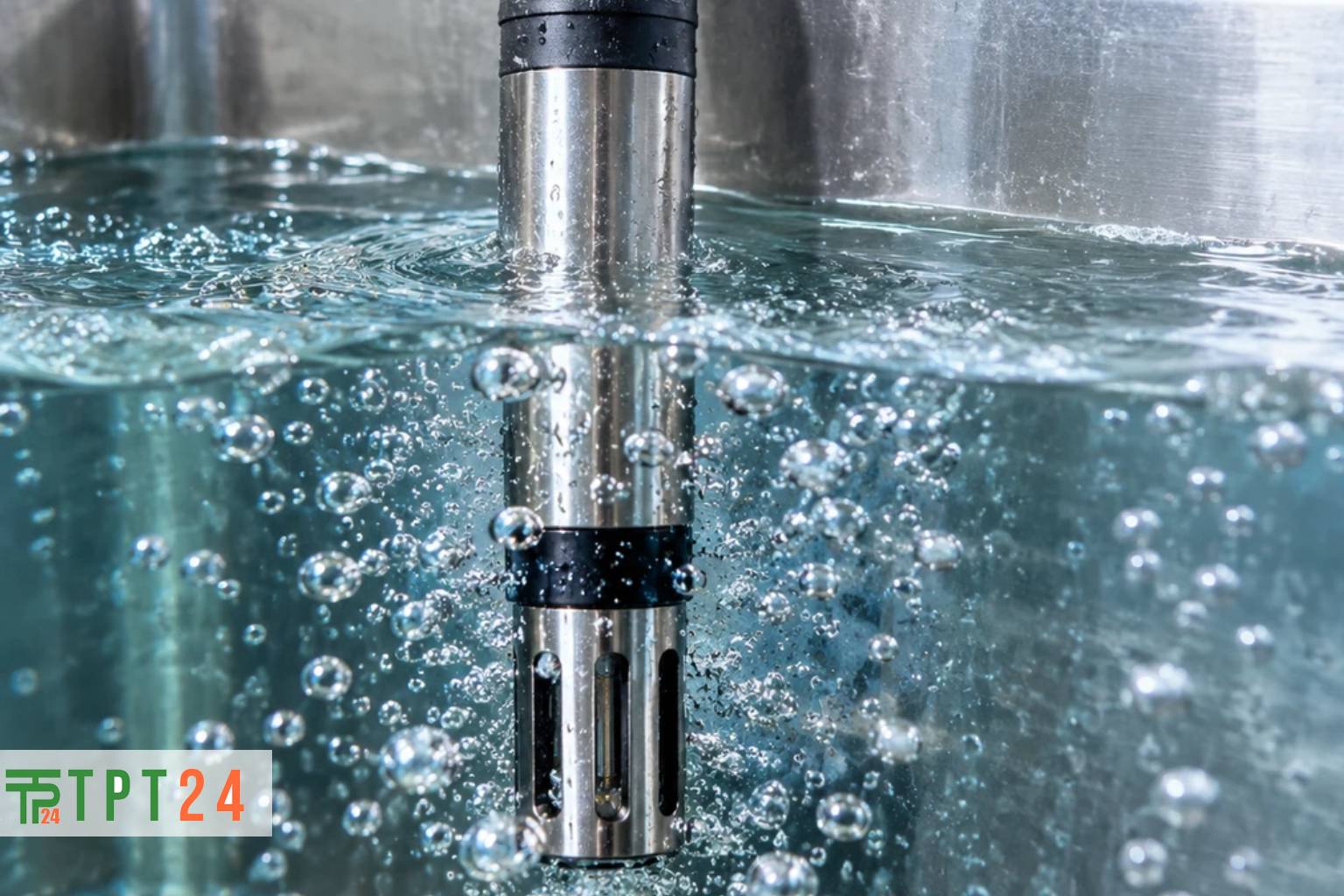
Temperature Affects Dissolved Oxygen: The Complete Engineering Guide to Accuracy
Water temperature is the single most influential variable in liquid analysis, dictating how temperature affects dissolved oxygen solubility, biological saturation limits, and electrochemical probe responsiveness.
Whether monitoring municipal wastewater aeration basins or conducting baseline river surveys, understanding thermal dynamics prevents severe measurement drift. A minor temperature shift can invalidate regulatory compliance reports or cause unnecessary aeration energy consumption.
The Physics: Why Temperature Affects Dissolved Oxygen Solubility
To understand how temperature affects dissolved oxygen, technicians must examine the physical behavior of gases dissolved in liquids governed by Henry’s Law and kinetic molecular theory.
As water temperature rises, thermal energy increases the kinetic motion of gas molecules, weakening intermolecular bonds between oxygen and water molecules. Consequently, warmer water holds substantially less dissolved gas at equilibrium than colder water.
At sea-level atmospheric pressure (101.3 kPa101.3\text{ kPa}), pure freshwater at 0∘C0^\circ\text{C} holds up to 14.62 mg/L14.62\text{ mg/L} of dissolved oxygen at 100%100\% saturation. When heated to 30∘C30^\circ\text{C}, the maximum oxygen saturation drops to 7.56 mg/L7.56\text{ mg/L}—a reduction of nearly 50%50\%.
 How Temperature Affects Dissolved Oxygen Sensors: The Dual Effect
When deploying field instrumentation, temperature influences the measurement process through two distinct mechanisms: physical solubility and sensor reaction kinetics.
1. The Physical Solubility Shift
Physical solubility determines the maximum concentration (mg/L\text{mg/L} or ppm\text{ppm}) of oxygen that water can retain at a given temperature and pressure. Modern meters calculate this baseline automatically using internal thermodynamic algorithms.
2. Sensor Response and Membrane Permeability
For electrochemical (galvanic and polarographic) sensors, electrolyte viscosity and membrane permeability fluctuate with temperature. Membrane diffusion rates change by roughly 1–3%1\text{–}3\% per degree Celsius.
In optical luminescent (LDO) sensors, temperature affects dissolved oxygen readings by altering the fluorescence lifetime and decay rate of the sensing luminophore dye. High-precision instruments incorporate an integrated thermistor adjacent to the optical cap to dynamically correct the signal.
5 Best Rules to Manage Temperature in Field DO Testing
Field operators can eliminate thermal measurement errors by following a disciplined testing protocol.
1. Allow Full Thermal Equilibration
Never take a dissolved oxygen reading immediately after submerging a cold probe into warm process water. Allow the sensor body and internal thermistor 60 to 120 seconds60\text{ to }120\text{ seconds} to reach complete thermal equilibrium with the liquid sample.
2. Verify Thermistor Accuracy Periodically
Because automatic temperature compensation (ATC) relies entirely on the integrated temperature probe, verify the thermistor against a certified reference thermometer monthly. A 1∘C1^\circ\text{C} temperature error can produce a 2 to 3%2\text{ to }3\% error in calculated DO concentration.
3. Calibrate in Ambient Conditions Close to Sample Temperature
Perform 100% water-saturated air calibrations at temperatures close to your actual sampling body. Large temperature differentials between calibration and measurement environments increase stabilization wait times and sensor hysteresis.
4. Account for Combined Salinity and Temperature Effects
Dissolved ionic salts compound thermal effects by decreasing gas solubility further (salting-out effect). In brackish water and sea estuaries, always enable simultaneous salinity and temperature compensation.
5. Protect Sensor Caps from Extreme Direct Solar Radiation
Direct solar radiation on dark sensor bodies causes localized heating above the true water temperature. Keep field calibration sleeves and meters shaded during high-temperature summer sampling campaigns.
 Calculating Dissolved Oxygen: Concentration vs. Saturation Percentage
Technicians frequently confuse DO concentration (mg/L\text{mg/L}) with percent saturation (% Sat\%\text{ Sat}). Knowing how temperature affects dissolved oxygen clarifies the distinction:
- Dissolved Oxygen Concentration (mg/L\text{mg/L}): Represents the actual mass of dissolved oxygen per unit volume of water.
- Percent Saturation (% DO\% \text{ DO}): Represents the ratio of measured oxygen partial pressure relative to equilibrium saturation at that specific temperature and barometric pressure.
Water with 8.0 mg/L8.0\text{ mg/L} of DO at 5∘C5^\circ\text{C} has an approximate saturation of 63%63\%. The same 8.0 mg/L8.0\text{ mg/L} reading at 28∘C28^\circ\text{C} indicates supersaturation (>102%>102\%), demonstrating why recording both values is essential for environmental assessments.
Technical Specifications :
| Temperature (∘C^\circ\text{C}) | 100%100\% Saturation DO (mg/L\text{mg/L}) | Membrane Permeability Factor | Optical Decay Shift (μs\mu\text{s}) |
|---|---|---|---|
| 0 | 14.6214.62 | Baseline (1.001.00) | +4.2+4.2 |
| 5 | 12.7712.77 | +12%+12\% | +3.1+3.1 |
| 10 | 11.2911.29 | +26%+26\% | +2.0+2.0 |
| 15 | 10.0810.08 | +41%+41\% | +1.1+1.1 |
| 20 | 9.099.09 | +58%+58\% | Reference (0.00.0) |
| 25 | 8.268.26 | +76%+76\% | −0.9-0.9 |
| 30 | 7.567.56 | +95%+95\% | −1.8-1.8 |
| 35 | 6.956.95 | +116%+116\% | −2.6-2.6 |

Fair Pricing, Guarantee of Authenticity and Quality, Fast Delivery, and Provision of Technical Support to Customers.
Copyright 2025 © TPT24 Company. All right reserved. Powered by TPT24.
