

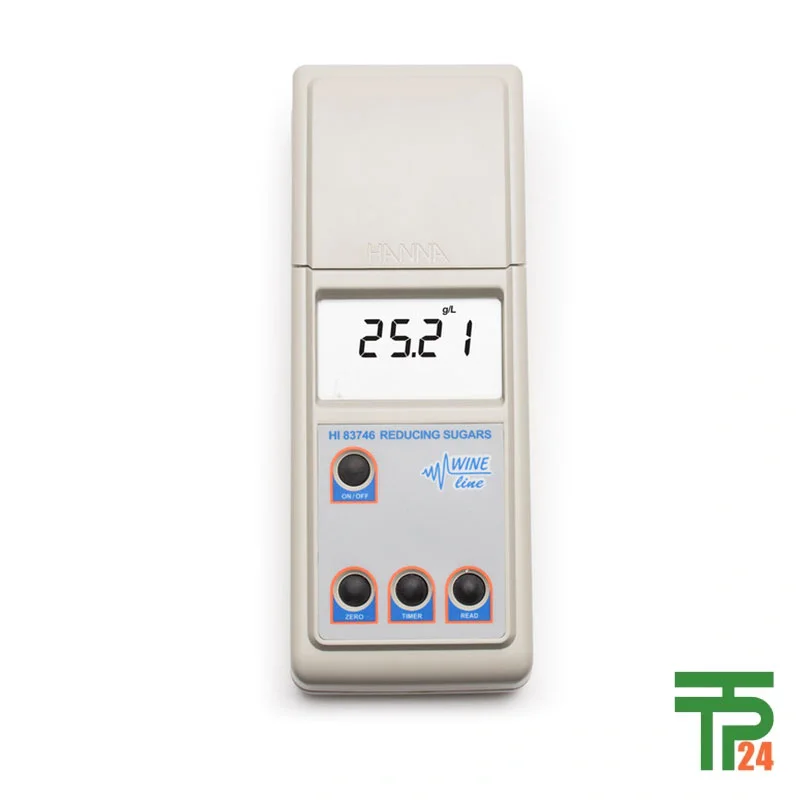
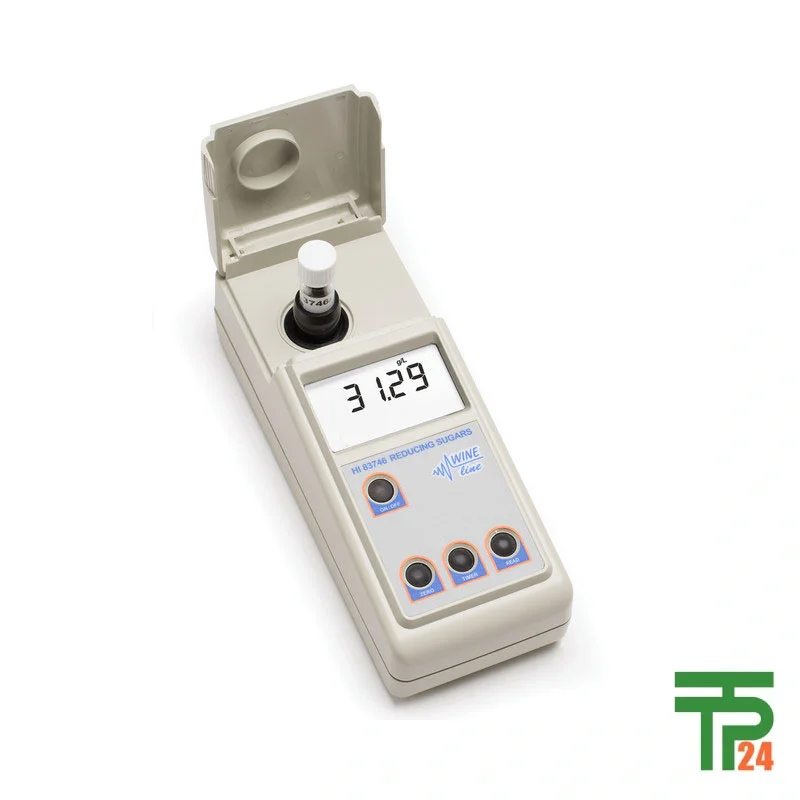
Hanna HI83746-01 Photometer for Reducing Sugars in Wine
- Measurement Range: 0.00 to 50.00 g/L
- Light Source: Tungsten lamp with filter
- Power Supply: 4 x 1.5V AA batteries or 12 VDC adapter
- Weight: 500 g
Did you like this product? Add to favorites now and follow the product.

(+86) 132-6243-8118 Start Live Chat
Description
The Hanna HI83746 Photometer is a cutting-edge instrument meticulously engineered for the accurate and straightforward measurement of residual sugars in wine. This portable device combines an ergonomic design with a sophisticated photometric system, providing winemakers with a reliable tool for quality control throughout the production process. The instrument’s primary function is to determine the concentration of reducing sugars, such as glucose and fructose, which are essential components in winemaking. These sugars are primarily found in grape juice and play a crucial role in the fermentation process. Yeast consumes these sugars and converts them into ethyl alcohol and carbon dioxide. The amount of sugar that ferments directly influences the wine’s final alcohol level and the amount of residual sugar left behind.
The HI83746’s photometric system is built on an advanced optical design that ensures accurate and repeatable measurements. It utilizes a tungsten lamp as its light source and a narrow band interference filter at 610 nm to allow only a specific wavelength of light to pass through. This is critical for the Fehling method, which the photometer employs to determine sugar concentration. When the Fehling’s A and B reagents react with a sample containing reducing sugars, the sample undergoes a distinct color change. The instrument’s silicon photocell sensor then detects this color change, and the microprocessor analyzes the data to provide an accurate reading. This entire process is based on the Beer-Lambert Law, a fundamental principle in colorimetric analysis.
The Role of Residual Sugars in Wine and Its Measurement
Residual sugar is a key factor in defining the taste and style of a wine. Following fermentation, the concentration of sugar solids in a given volume of wine is measured and expressed in grams per liter (g/L) or as a percentage of weight to volume. For instance, a wine with 0.2% residual sugar contains two grams of sugar per liter, which is characteristic of a dry wine. Common ranges vary significantly by wine style: dry wines typically fall in the 0.2-0.3% range, off-dry wines in the 1.0-5.0% range, and sweet dessert wines in the 5.0-15% range. The HI83746 is specifically designed to measure these concentrations, with a range of 0.00 to 50.00 g/L. This capability allows winemakers to precisely control the sweetness of their final product, ensuring consistency across different batches and vintages.
The HI83746 photometer simplifies the measurement process with its intuitive design and built-in features. Before reagent addition, a simple press of the “ZERO” key on the face of the meter accounts for the color and imperfections already present in the wine sample. This ensures that the final reading is not skewed by the wine’s natural color. The instrument also includes a built-in timer that displays the time remaining before a measurement is taken, guaranteeing that all readings are performed at the appropriate reaction intervals. This eliminates guesswork and ensures accurate results every time. The photometer also features an auto shut-off function that activates after 15 minutes of non-use, preventing unnecessary battery drain. Error messages on the display alert the user to problems such as a lack of light or an inverted sample, further ensuring the integrity of the measurement.
Comprehensive Features and Accessories
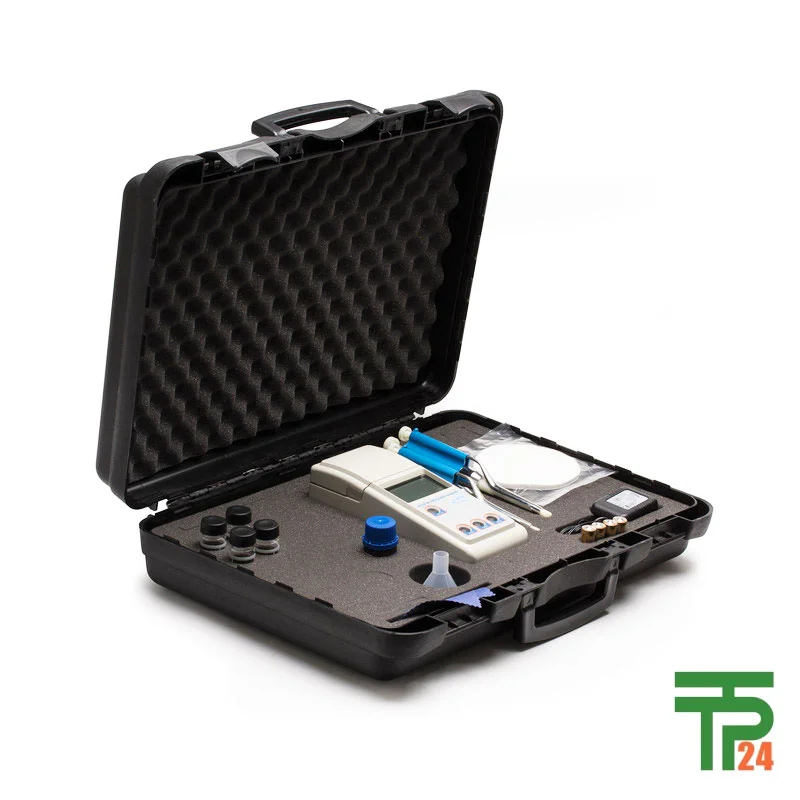
The HI83746 is not just a simple photometer; it is a comprehensive solution for residual sugar analysis in wine. The device itself is robust and portable, with a durable design and a weight of 500 grams. It operates on either four 1.5V AA batteries or a 12 VDC adapter, offering flexibility for both field and lab use. It also comes with a three-year warranty. The full package is supplied in a hard carrying case, which securely holds the photometer and all its accessories.
The standard kit includes a variety of essential items to begin testing right away. These include a 1000 µl pipette with two tips, a 200 µl pipette, two cuvets, filter papers, cuvet cleaning cloths, one bottle of color removal solution, a funnel, and the instruction manual. For more extensive testing, a wide range of recommended accessories is available. These include additional reagents for reducing sugar analysis, cuvet tissues, and various sizes of pipettes and pipette tips. Specialized items like a thermoreactor and carbon decoloration for red wine are also available to optimize the testing process for different wine types.
The tpt24 online store is the leading online destination for this product globally. This store guarantees the authenticity and quality of the HI83746 Photometer and ensures its delivery to customers in any country. This commitment to quality and service makes it the go-to source for professional winemakers and enthusiasts alike.
Sugar’s Effect on Wine Flavor and Style
Sugar is an essential component in the production of wine. The two main fermentable sugars in grape juice are glucose and fructose. Although they exist in roughly equal concentrations, fructose is about twice as sweet as glucose. During fermentation, glucose is consumed at a faster rate than fructose, meaning a wine fermented to dryness will have less residual glucose than fructose. This is an important distinction, as a wine with a higher fructose content will taste sweeter, even if two wines have the same total residual sugar concentration. The HI83746 helps winemakers measure these crucial levels, enabling them to control the final sweetness and style of the wine.
Practical Applications and Measurement Steps
The HI83746 photometer simplifies the complex process of measuring residual sugar into three easy steps. First, the user must prepare the sample by following the provided instructions. Second, the instrument is zeroed to establish a baseline measurement. This step is crucial for ensuring the final reading is accurate and not affected by the initial color of the wine. Finally, the user simply presses the “READ” button and views the results on the LCD screen. This streamlined process makes the HI83746 highly efficient and user-friendly for both professional and amateur winemakers.
Specifications
Related products
Recently Viewed Products

Fair Pricing, Guarantee of Authenticity and Quality, Fast Delivery, and Provision of Technical Support to Customers.
Copyright 2025 © TPT24 Company. All right reserved. Powered by TPT24.
