

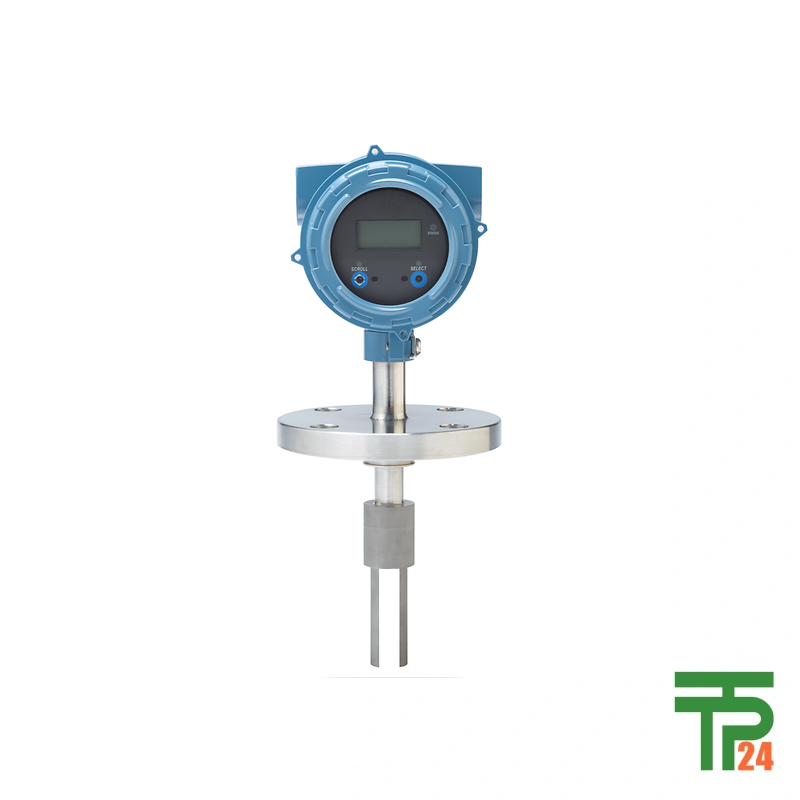
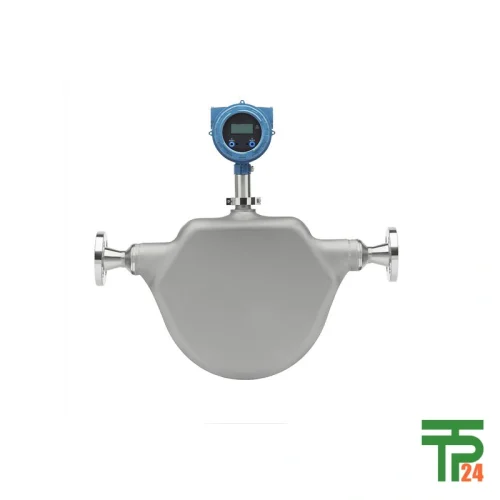
Emerson Micro Motion FDM Fork Density Meter
- Accuracy ±1 kg/m³ Certified
- Temp Range Up To 392 °F
- 4–20 mA + HART® Output
- Hazardous‑Area Approved Design
Did you like this product? Add to favorites now and follow the product.

(+86) 132-6243-8118 Start Live Chat
Description
Micro Motion FDM Fork Density Meter
Intelligent Direct‑Insertion Technology For Real‑Time Density Control
The Rosemount FDM Fork Density Meter revolutionizes process measurement by combining continuous, real‑time density and concentration monitoring with robust mechanical adaptability. Designed as a direct‑insertion instrument, it interfaces seamlessly with pipelines, bypass loops, and storage tanks to deliver instantaneous density values of fluids or slurries under a wide range of pressure and temperature conditions. With a precision of ±1.0 kg/m³ (±0.001 g/cm³) and operational coverage from 0 to 3000 kg/m³, the FDM enables high‑resolution process control where product composition directly drives efficiency, such as chemical reactors, refinery blending lines, and food‑grade ingredient streams. Engineered from corrosion‑resistant alloys like 316L stainless steel, Titanium, Alloy C22, or Zirconium, it thrives in challenging environments laden with aggressive acids or hydrocarbon mixtures. Its floating fork resonance principle ensures that measured density translates precisely from the fluid’s acoustic properties; thus, operators gain not only data but process insight. By uniting mechanical integrity with digital intelligence, the Rosemount FDM becomes a transformational tool for industry leaders seeking hand‑in‑glove control over quality and production economics.
Precision Measurement Across Variable Temperature And Pressure
Industrial environments exert profound stress through temperature extremes, yet the Rosemount FDM remains fully functional within wide thermal ranges. The short‑stem version operates from –50 °C to +200 °C (–58 °F to +392 °F), while long‑stem variants maintain precision from –40 °C to +150 °C (–40 °F to +302 °F). This flexibility ensures compatibility with both cryogenic and high‑temperature processes such as distillation and polymer curing. Structural materials change with stem length—short designs employ 304 and 316L stainless steel, Titanium, or Zirconium; long styles utilize Alloy C22 up to 2 m and stainless steel up to 4 m. The vibrating fork surface can be standard, diamond‑like carbon (DLC) coated, or electro‑polished, controlling friction and resisting particulate adhesion to maintain fork resonance throughput. Operators can thus install the same meter family across versatile temperature profiles without recalibration. When precise density operations govern yield—like bitumen emulsification, mineral suspension classification, or chemical blending—the FDM ensures the signal stays stable and trustworthy where lesser meters succumb to thermal shear effects. This strategy of material variation and temperature resilience makes the Rosemount FDM a true universal density workhorse.
Corrosion‑Resistant Materials Guaranteeing Long‑Term Durability
The Rosemount FDM uses a portfolio of specially selected materials to guarantee longevity even in aggressive chemical circuits. In addition to standard 316L stainless steel, the availability of exotic metallurgies such as Alloy C22 and Zirconium permits deployment inside oxidizing acidic solutions and chlorinated media. Titanium versions offer exceptional strength‑to‑weight ratios, ideal for aerospace or pharmaceutical installations where purity and low mass are essential. This material diversity grants designers freedom to balance corrosion resistance, cost, and mechanical rigidity against specific process needs. Furthermore, the tine finish—whether standard, DLC, or electro‑polished—further addresses application‑specific requirements: DLC reduces friction and acts as a barrier against abrasive chemical movement, while electro‑polishing minimizes micro‑pit formation in hygienic loops. Each component symbolizes Emerson’s design philosophy of enduring performance: meters that last for years without signal degradation, installation corrosion, or mechanical failure. The FDM thus protects capital investment and measurement accuracy simultaneously, enhancing plant availability and reducing maintenance costs through materials engineering excellence.
Smart Electronics With Multilingual Display And Diagnostics
Modern measurement demands not only accuracy but data transparency, and the Rosemount FDM delivers both through its intelligent transmitter housing. Available in polyurethane‑painted aluminum or 316L stainless steel, the housing includes a segmented two‑line LCD display that can rotate in 90‑degree increments to fit operator viewing angles. Designed for hazardous area operation, it uses an optical switch for on‑site configuration without physical contact or sparking risk. A three‑color LED system indicates measurement status and alert conditions, ensuring instant awareness on the plant floor. Operators can use the display to view process variables, acknowledge alerts, and configure analog and RS‑485 outputs. Full support for Known Density Verification (KDV) enables revalidation without removal from service, tightening quality assurance loops. Language support across multiple regions simplifies training and daily operation. These features transform a simple density sensor into a centre of intelligent process communication—perfect for global sites where efficiency depends on clarity and diagnostic predictability.
Expanded Communication Protocols For Seamless System Integration
Emerson’s integration philosophy equips the Rosemount FDM with a broad array of industrial communications to fit any control environment. Depending on electronics selection, operators can access one or two externally‑powered 4–20 mA outputs, of which Channel A supports HART® communication for digital feedback and trend logging; Channel B provides analog redundancy for critical loops. Additional channels include an externally‑powered Time Period Signal (TPS), a discrete output for limit actuation, and a Modbus/RS‑485 link compatible with flow computers and PLC architectures. For systems built on FOUNDATION Fieldbus™, users may add a dedicated processor for remote mount 2700 transmitter connection, aligning the device within distributed control networks. This versatility allows the fork density meter to be configured for multi‑protocol operation, integrating directly into existing plants without hardware redesign. From petrochemical DCS loop integration to brewery automation panels and marine cargo density feedback systems, the FDM’s communication options synchronize measurement data across platforms, building a bridge between mechanical precision and software ecosystems.
Real‑World Applications Empowering Critical Process Performance
The Rosemount FDM Fork Density Meter serves as an indispensable instrument in industries where density and concentration control dictate product quality and safety. In chemical processing, it monitors mixture consistency within reaction vessels to prevent phase separation or over‑concentration. Within oil and gas refineries, it manages crude blending, bitumen stabilization, and interface detection between water and hydrocarbon layers to maintain pipeline integrity. Mining and mineral slurry operations depend on its fork design to measure ore density, enhancing separation efficiency and reducing water usage. Food and beverage plants apply the FDM to monitor sugar and juice concentrations, ensuring batch uniformity and compliance with quality standards. Meanwhile, in marine fuel terminals, the instrument tracks heavy‑fuel density for emission control and cargo billing accuracy. Such multi‑sector utility demonstrates how one instrument’s precision extends through manufacturing domains and environmental responsibilities. For modern plants striving for data‑driven operation, the FDM represents a fusion of analytical depth and mechanical durability.
Specifications
Related products


Rosemount™ 965 Flame Detector

Rosemount™ 628 Universal Gas Sensor


Recently Viewed Products


Fair Pricing, Guarantee of Authenticity and Quality, Fast Delivery, and Provision of Technical Support to Customers.
Copyright 2025 © TPT24 Company. All right reserved. Powered by TPT24.
