

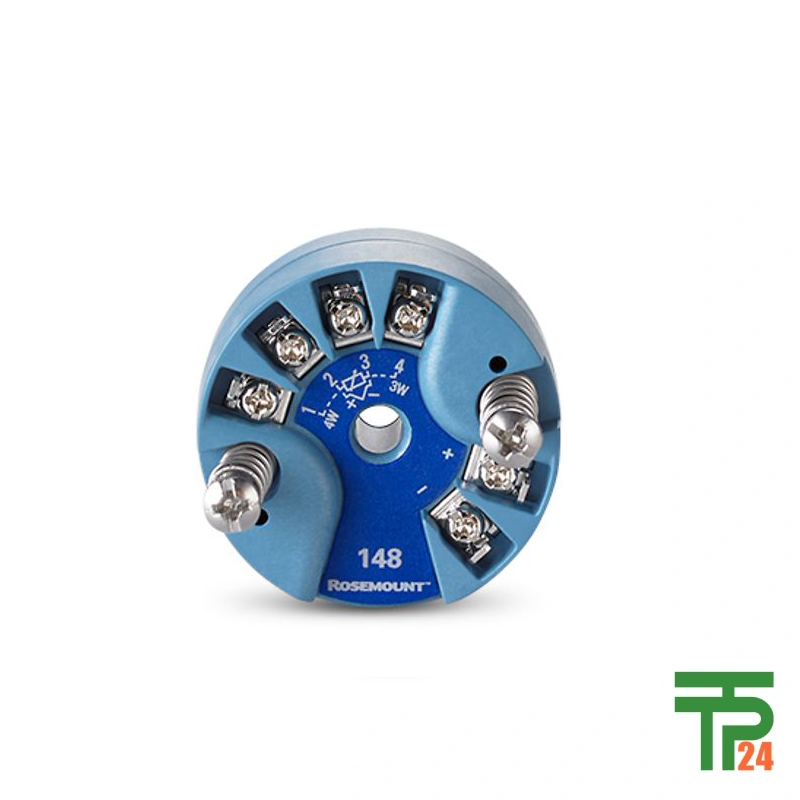
Rosemount™ 148 Temperature Transmitter
- Signal: 4‑20 mA Analog Output
- Input: Universal Sensor Compatibility
- Mount: DIN B Head Configuration
- Compensation: Ambient Temperature Correction
Did you like this product? Add to favorites now and follow the product.

(+86) 132-6243-8118 Start Live Chat
Description
Rosemount™ 148 Temperature Transmitter
Reliable Temperature Measurement Defines Rosemount 148 Transmitter
The Emerson Rosemount 148 Temperature Transmitter delivers dependable and cost‑effective temperature monitoring solutions for diverse industrial environments. Built to enhance measurement integrity compared to wire‑direct installations, it represents Emerson’s commitment to reliable performance within compact instrumentation packages. The 148 accepts multiple sensor types, including RTDs, thermocouples, and ohmic inputs, offering users universal adaptability over a wide temperature range. Configured in the DIN B head‑mount style, it integrates neatly into process assemblies, ensuring optimum signal quality and minimal wiring complexity. Its standard 4‑20 mA analog output maintains resilience against electromagnetic noise interference, permitting accurate transmission even along extended cable runs. Emerson’s ambient temperature compensation circuitry automatically corrects environmental fluctuations, guaranteeing consistent process values throughout continuous operation. Designed for both harsh industrial and laboratory conditions, the Rosemount 148 minimizes error drift, maximizes uptime, and simplifies installation—making it a cornerstone device for operators seeking robust, analog precision in global temperature control systems.
Universal Sensor Compatibility Expands Industrial Measurement Flexibility
One of the Rosemount 148’s greatest advantages lies in its universal sensor input capability, which supports an extensive range of temperature probes across various technologies. Whether integrating single‑element RTDs for laboratory thermometry, thermocouples for high‑temperature furnace applications, or resistance ohm elements for process calibration, the 148 provides seamless adaptability without requiring model changes. This flexibility minimizes inventory complexity and eliminates multipoint calibration issues across facilities. Universal input architecture also enables quick retrofits within legacy systems where mixed sensor types coexist. The transmitter’s smart input conditioning accommodates differential sensitivities, delivering precise standardization of readings through rigorous internal signal processing. Advanced shielding and isolation methods preserve the accuracy of microvolt‑level signals within noisy industrial zones, fostering repeatable performance across measurement loops. Emerson’s exhaustive experience in sensor integration ensures the 148 adapts fluidly to demanding modern environments—from distillation control to HVAC test stations—empowering engineers to unify their temperature infrastructure across multiple applications without reengineering connectivity standards. This universality strengthens the Rosemount 148’s reputation as one of the most flexible instruments in the industrial temperature measurement ecosystem.
Compact DIN B Mount Streamlines Installation Possibilities
The DIN B head‑mount configuration of the Rosemount 148 simplifies installation and mechanical alignment while maintaining exceptional robustness. By embedding the transmitter directly inside the sensor connection head, users reduce the need for external interface boxes and long cable conduits. Emerson’s design philosophy centers on compactness that conserves space and reduces labor costs. The DIN B mount option includes various enclosure materials—from rugged aluminum for refinery units to corrosion‑resistant polymer housings for wet‑process industries. Each enclosure secures the transmitter from shock and moisture ingress through resilient gasket sealing and tight mechanical tolerances. Field engineers appreciate how quickly it can be mounted, calibrated, and commissioned using simple handheld tools or PC‑based HART™ configuration kits. Its compact footprint enables convenient integration even in thermowells with restrictive geometry or portable calibration setups. In production facilities where space efficiency and clean assembly are crucial, such as chemical skids or compact refrigeration networks, the Rosemount 148’s DIN B configuration offers the industry’s most streamlined alternative to larger rack‑mounted transmitter designs—ensuring installation simplicity without sacrificing performance confidence.
Stable Analog Output Ensures Continuous Process Reliability
The Rosemount 148 communicates via a 4‑20 mA analog signal, chosen universally for industrial reliability, control compatibility, and immunity to interference. This output structure converts measured temperature values into a standardized current signal that maintains integrity over long transmission distances without degradation. Emerson’s analog design has been refined for decades, enabling exceptional stability in power and communication across extreme electrical conditions. Noise suppression circuitry filters voltage deviations and interference stemming from motors, variable‑frequency drives, or high‑load circuits, while signal insulation guarantees accuracy even within mixed analog instrumentation panels. Unlike digital‑only outputs, the analog 4‑20 mA loop allows seamless integration with legacy PLC systems, ensuring the 148 works equally well in both classic process industries and modern control frameworks. Safety‑certified output limit protection prevents erroneous currents, ensuring controllers respond only to valid measurement ranges. This focus on analog integrity ensures that plants operating around heater banks, distillation towers, autoclaves, or pipeline temperature control circuits continue uninterrupted under stressful environmental and electrical conditions. Emerson’s commitment to analog excellence consolidates the 148’s role as a timeless transmitter bridging proven technology with modern performance standards.
Application Versatility Across Key Processing Industries Worldwide
Emerson’s Rosemount 148 Temperature Transmitter finds broad application across oil and gas production, power generation, chemical processing, water and wastewater treatment, and food and beverage manufacturing. In oil refineries, it monitors heat exchanger outlet conditions and storage tank temperatures, optimizing energy efficiency and process stability. Power plants rely on the transmitter for turbine casing and steam‑loop temperature control, ensuring safe energy conversion under variable loads. In chemical facilities, the 148 helps regulate reaction vessel and distillation column temperatures, safeguarding against runaway chemical kinetics. Food producers use it to supervise pasteurization line temperatures or fermenter chambers, maintaining regulatory compliance with quality standards worldwide. Pharmaceutical companies employ it for environmental checks inside cleanrooms and autoclave sterilization systems, where analog signal integrity guarantees consistent validation data. Municipal water authorities integrate the 148 within distribution lines for frost monitoring and sensor reliability verification. Its rugged structure, noise resilience, and universal sensor support deliver accuracy across all these applications—proving that the Rosemount 148 is not confined to a single industrial domain, but designed to serve as a universal temperature control instrument across every critical processing sector globally.
Specifications
Related products
Recently Viewed Products

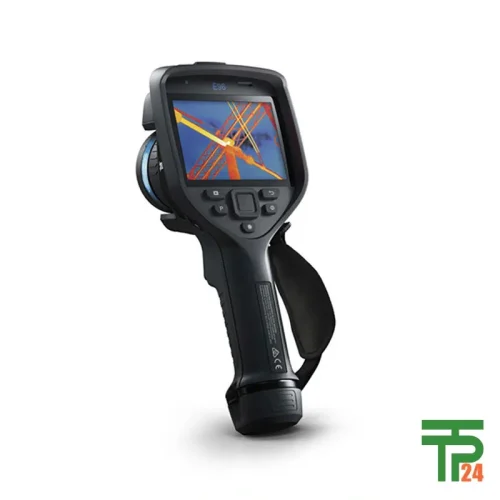
FLIR E96 Handheld Thermal Camera
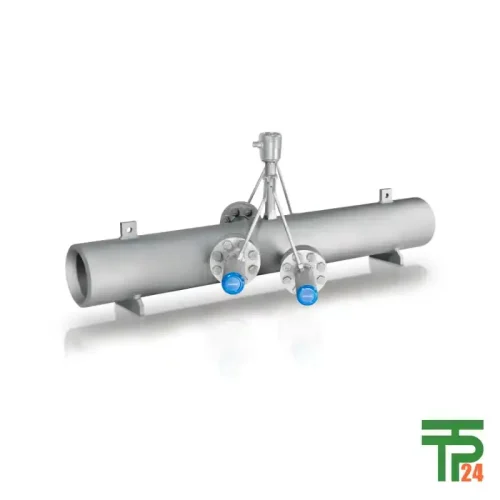
krohne OPTISONIC 8000

Fair Pricing, Guarantee of Authenticity and Quality, Fast Delivery, and Provision of Technical Support to Customers.
Copyright 2025 © TPT24 Company. All right reserved. Powered by TPT24.
