

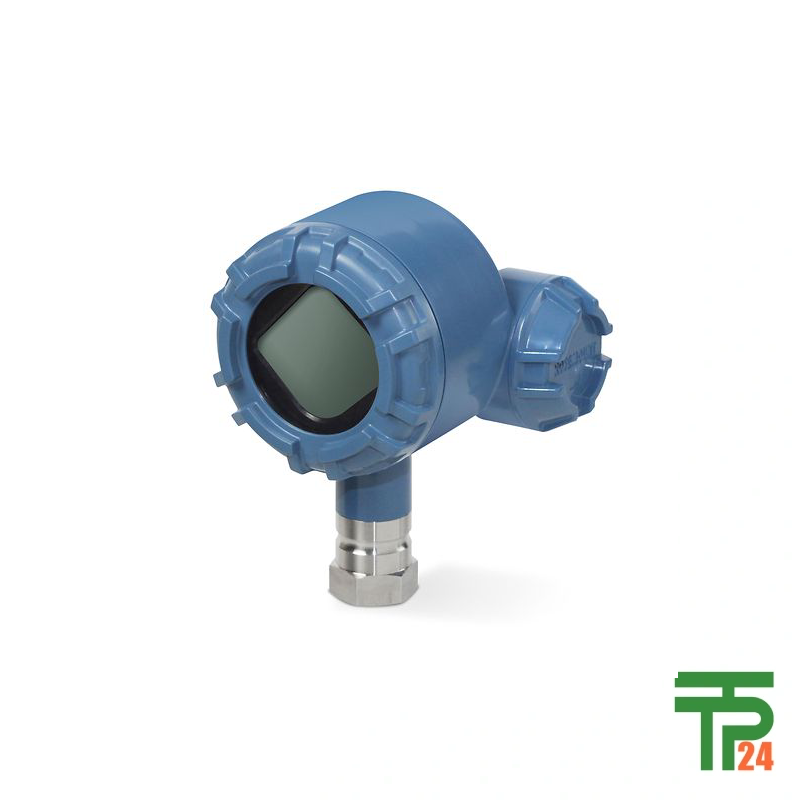
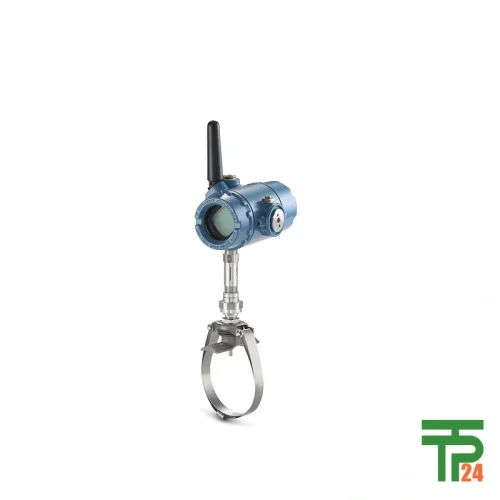
Rosemount™ 248 Wireless Temperature Transmitter
- Protocol: WirelessHART® Secure Transmission
- Power Life: Up to 10 Years
- Housing: Durable Polymer Construction
- Diagnostics: Open/Short Sensor Alerts
Did you like this product? Add to favorites now and follow the product.

(+86) 132-6243-8118 Start Live Chat
Description
Rosemount™ 248 Wireless Temperature Transmitter
Reliable Wireless Precision Defines Rosemount 248 Transmitter
The Emerson Rosemount 248 Wireless Temperature Transmitter delivers cost‑effective process monitoring, combining robust wireless capability and proven measurement accuracy. Designed for industries seeking dependable single‑point temperature data without complex cabling, it utilizes WirelessHART® technology, forming a self‑organizing mesh network with more than 99% data reliability. Its compact configuration minimizes installation time, while durable polymer housing offers exceptional resistance to moisture, dust, and vibration. The unit’s large LCD display provides clear, real‑time readings of temperature variables, engineering units, and diagnostics for increased process visibility. Users benefit from transmitter‑sensor matching via Callendar‑Van Dusen constants, reducing total measurement error and ensuring calibration consistency. Emerson’s focus on rugged engineering ensures stability under extreme industrial conditions such as thermal cycling and mechanical shock. Whether deployed in a refinery heat exchanger field or a remote environmental station, the 248 serves as a trusted temperature‑monitoring component in wireless control architectures. Simplicity in design meets modern process intelligence—making the Rosemount 248 the ideal gateway between traditional sensing and next‑generation wireless automation.
WirelessHART Technology Enables Secure Network Communication
Central to the 248’s performance is Emerson’s WirelessHART® protocol, a globally recognized standard for secure and reliable industrial communication. This technology provides self‑organizing network behavior, allowing multiple devices to automatically connect, share routing paths, and extend signal strength across challenging environments. The 248 operates within this framework as a high‑integrity node that constantly synchronizes and retransmits data, guaranteeing exceptional signal redundancy across field networks. Frequency‑hopping encryption, error‑correction algorithms, and authentication layers safeguard all transmissions against interference or unauthorized access. Unlike legacy wireless systems, WirelessHART ensures deterministic message delivery, meaning key temperature readings are always available to control software and human‑machine interfaces. This protocol design permits scalable deployment in both small and large networks—whether ten or hundreds of devices—without compromising performance. For applications in oil‑refining units, energy management stations, or chemical reaction vessels, operators depend on WirelessHART to gather and archive temperature insights with millisecond accuracy. Emerson integrates this mature communication architecture seamlessly into the Rosemount 248, giving plants complete confidence in secure, uninterrupted data flow across their process operations.
Compact Design Optimizes Installation and Maintenance Efficiency
One defining aspect of the Rosemount 248 Wireless Transmitter is its compact and lightweight architecture, achieved through an integrated internal antenna and resilient polymer enclosure. This streamlined design allows effortless installation without the need for external antenna routing or mechanical reinforcement. Contractors connect the transmitter directly to RTD or thermocouple sensors and initiate operation instantly using Emerson’s configuration dashboard. It is particularly advantageous for retrofit projects that demand quick deployment while minimizing wiring expenditures. The enclosure’s ingress‑protected seals safeguard electronic assemblies from condensation and corrosive vapors pervasive in refineries and offshore facilities. Because the internal antenna maintains excellent transmission performance even when installed near metallic structures, engineers enjoy flexible mounting locations along pipe walls or skid frames. The transmitter’s field‑replaceable SmartPower™ module further enhances maintainability, offering up to 10‑year battery life that can be replaced safely in situ without process interruption. In remote sites such as storage terminals or wastewater treatment basins, this design permits temperature oversight where wired hardware is impractical—making the Rosemount 248 an extremely installation‑friendly temperature solution.
SmartPower Module Extends Wireless System Longevity
The integrated SmartPower™ module establishes new standards in transmitter endurance. Emerson engineered this energy system for exceptionally low power consumption, guaranteeing up to ten years of continuous operation in typical update intervals. Operators can customize transmission frequency—from rapid one‑second updates for critical pipelines to sixty‑minute intervals for ambient monitoring—optimizing energy output according to process requirements. The module’s field‑replaceable character allows maintenance technicians to swap batteries directly within hazardous areas without removing the transmitter or disturbing wiring. Because the 248 remains powered throughout replacement, historical data records and calibration constants remain intact, preventing loss of configuration. This feature is vital for unmanned sites in desert or offshore locations, where physical access is costly and safety regulations strictly limit downtime. The SmartPower design also supports Emerson’s diagnostic dashboard, showing remaining battery life and signal strength data. By combining wireless continuity with decade‑long service intervals, the 248 redefines maintenance simplicity—reducing operational cost, enhancing safety, and ensuring seamless plant productivity across global installations.
Applications Demonstrate Rosemount 248 Industrial Adaptability
Emerson’s Rosemount 248 Wireless Temperature Transmitter proves indispensable in diverse industrial and environmental use cases that demand secure data flow and compact measurement systems. In oil and gas production, it monitors flowline and separator temperatures over large facility layouts, reliably transmitting data from inaccessible points. Power‑generation plants choose the 248 for back‑end turbine casing and heat‑recovery stack monitoring—environments that challenge wired sensor systems due to high electromagnetic interference. Chemical processors deploy the transmitter across polymer reactors, distillation columns, and exothermic reaction vessels, ensuring proper heat control and safety. In the food and beverage sector, hygienic installations use the 248 to supervise fermentation or pasteurization zones where eliminating cable penetrations improves cleanliness. Pharmaceutical manufacturers benefit from wireless temperature auditing during sterilization cycles, meeting global compliance standards while maintaining mobile flexibility in cleanroom settings. Environmental research institutions employ the transmitter in climate monitoring stations or wastewater plants, gathering accurate thermal trends for analytical forecasting. Across these domains, users depend on the 248’s interference‑free transmission, proven calibration integrity, and autonomous functioning—qualities that epitomize Emerson’s engineering excellence.
Ease of Calibration Ensures Long-Term Measurement Accuracy
To guarantee traceable precision, the 248 incorporates two calibration strategies: five‑point calibration and transmitter‑sensor matching using Callendar‑Van Dusen constants. These methods customize the transmitter’s response curve based on the connected sensor’s physical characteristics, mitigating linearity deviations and systematic bias. This feature is critical in applications where differential temperature readings influence process yield or safety thresholds—such as catalyst bed control or biological incubator management. The 248 stores calibration coefficients inside non‑volatile memory, ensuring stability across battery replacements and network updates. Emerson’s software dashboard offers intuitive calibration interfaces that enable qualified technicians to perform verification directly from control stations without handheld tools. The transmitter further complements this precision with basic diagnostic functions detecting open or short‑circuit conditions, immediately alerting operators to potential sensor faults. These self‑supervised calibration and diagnostic features produce a closed feedback loop that enhances trust and minimizes maintenance costs. Whether used in industrial laboratories or heavy machinery monitoring, the Rosemount 248 provides long‑term reliability by transforming calibration management into a fast, repeatable, and technician‑friendly operation.
Specifications
Related products

Recently Viewed Products
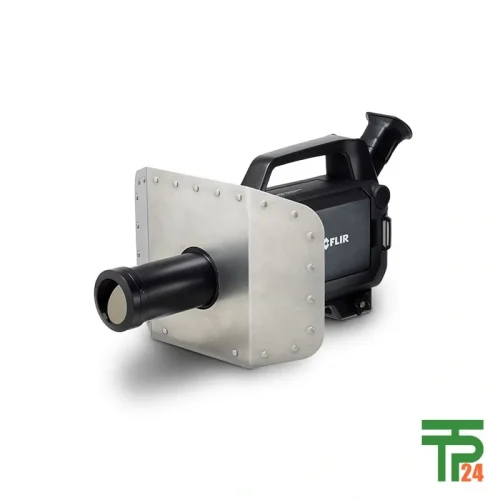
FLIR G609 Handheld Camera
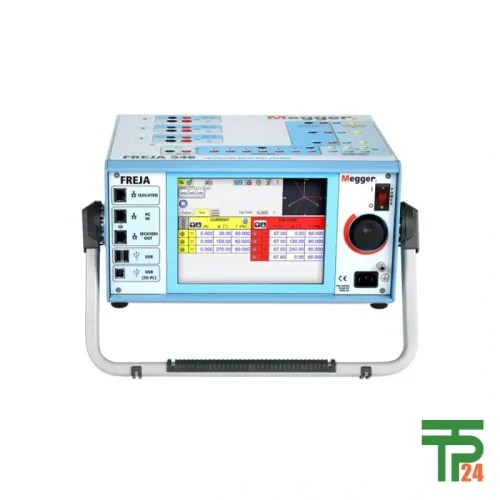
Megger FREJA546 Relay test system

Fair Pricing, Guarantee of Authenticity and Quality, Fast Delivery, and Provision of Technical Support to Customers.
Copyright 2025 © TPT24 Company. All right reserved. Powered by TPT24.
