

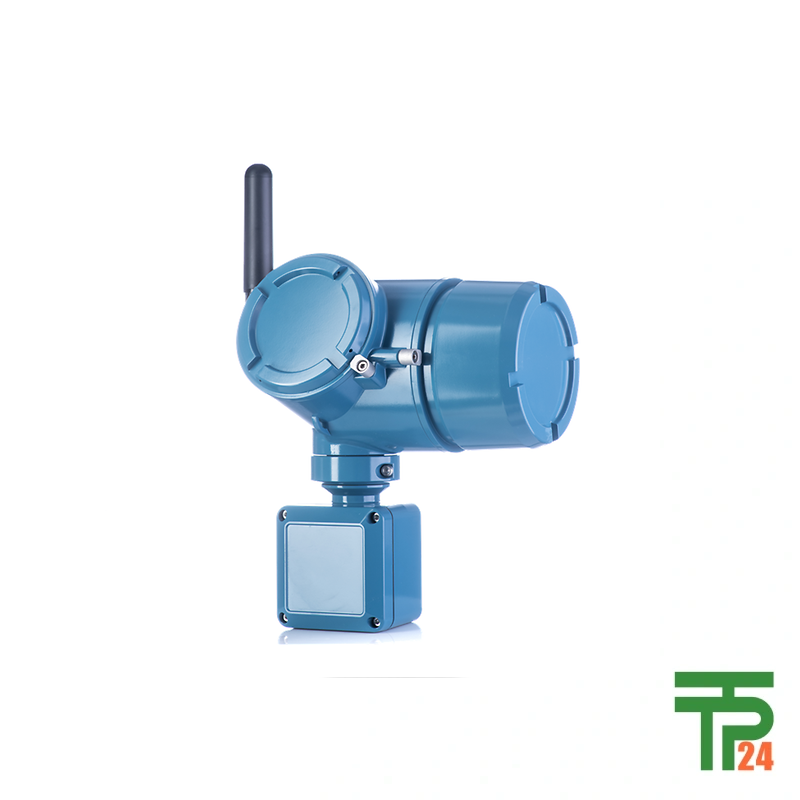
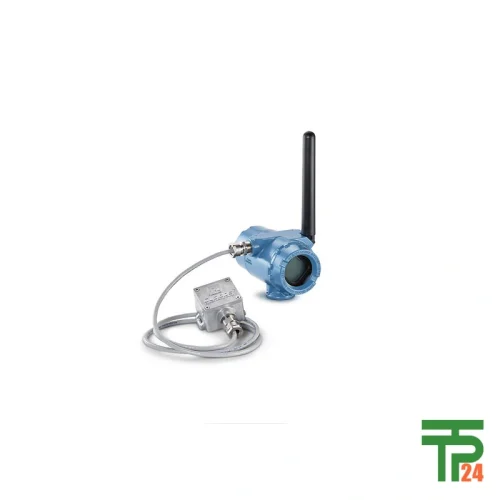
Rosemount™ 4390 Series of Corrosion and Erosion Wireless Transmitters
- Dual ER and LPR Probe Compatibility
- Low Nanometer Detection Sensitivity
- Optimized Battery Lasts 4X Longer
- WirelessHART Protocol For Seamless Data
Did you like this product? Add to favorites now and follow the product.

(+86) 132-6243-8118 Start Live Chat
Description
Rosemount 4390 Wireless: Comprehensive Corrosion And Erosion Monitoring
1. Advanced Wireless Technology Revolutionizes Corrosion Erosion Monitoring
The Rosemount 4390 Series of Corrosion and Erosion Wireless Transmitters represents a significant leap forward in asset integrity management. This advanced system provides continuous, accurate, and highly sensitive real-time monitoring data, effectively eliminating the need for costly and time-consuming manual inspections, often referred to as “walkdowns.” By integrating seamlessly into a plant’s infrastructure using the secure WirelessHART® communication protocol, the 4390 delivers unparalleled visibility into the critical processes causing material degradation. The transmitter’s ability to gather and process data continuously ensures that maintenance decisions are based on the actual condition of the asset, not on generalized schedules. This proactive approach leads directly to optimized process performance, extended equipment lifespan, and dramatically improved safety across the facility, establishing a new benchmark for proactive corrosion and erosion management.
2. Dual Probe Compatibility Expands Measurement Flexibility Greatly
A defining feature of the Rosemount 4390 is its exceptional dual-probe compatibility, allowing it to read both Electrical Resistance (ER) and Linear Polarization Resistance (LPR) probes. This versatility, supporting probes from Emerson and other major vendors, ensures that the 4390 can be integrated into existing monitoring setups and deployed in a wide variety of process conditions. The ER measurement is ideal for determining total accumulated metal loss over time, particularly in non-electrolyte or gaseous environments. Conversely, the LPR measurement is essential for measuring instantaneous corrosion rates in conductive media like water or aqueous solutions. By accommodating both technologies, the 4390 provides a comprehensive solution to measure both the extent of damage (ER) and the speed of damage (LPR), offering maintenance engineers the most complete picture of asset health in any fluid or gaseous environment.
3. Unrivaled Sensitivity Achieves Low Nanometer Resolution Easily
The core of the Rosemount 4390’s performance lies in its exceptional instrumentation quality, powered by a 24-bit instrument resolution. This high-resolution hardware translates into an experienced sensitivity of low nanometer for ER probes, depending on the specific probe type and the operating conditions. This level of detail allows the 4390 to detect minute changes in metal thickness—changes that are often too small to be captured by previous-generation systems or manual techniques. Such unrivaled sensitivity ensures that corrosion and erosion trends are identified in their earliest stages, long before they pose a significant threat to asset integrity. By providing high-quality, fine-grained data, the 4390 facilitates more refined control over corrosion inhibitor injection and process chemical adjustments, enabling true process optimization based on minute-by-minute feedback.
4. Specific Applications Cover Diverse Corrosive Environments
The versatility of the Rosemount 4390 makes it perfectly suited for several specific, high-value applications across various industries. A primary dedicated application involves monitoring water injection lines in oil and gas production, where LPR probes are used to measure the immediate corrosion rate caused by dissolved oxygen and bacteria. A second specific application is the continuous surveillance of overhead systems in refineries where corrosion by HCL or naphthenic acid is a constant threat, utilizing ER probes to track total metal loss over time in high-temperature vapor phases. Furthermore, a crucial dedicated application is in chemical plants to monitor reaction vessels and transfer lines handling non-conductive, aggressive solvents, where the ER capability is invaluable. The 4390 eliminates guesswork in these critical, high-risk environments, allowing for the timely injection of chemicals or adjustment of process parameters to mitigate degradation instantly.
5. Flexible Data Management Supports Immediate And Historical Analysis
The Rosemount 4390 is designed with flexible data management solutions at its core, enabling seamless integration with both basic and advanced asset management systems. The transmitter can output both raw data—which is ideal for dedicated corrosion and erosion management software packages—and calculated values such as metal loss in mils or corrosion rate in mils per year (MPY), which are universally understood and easily integrated into generic data systems. This flexibility in data formats ensures that regardless of the existing plant infrastructure, the 4390 can supply meaningful, actionable information. Furthermore, with an improved sampling rate (15x better than previous generations) and a customizable measurement frequency (from 2 minutes to 24 hours), the 4390 provides high-fidelity trend data essential for both immediate operational adjustments and long-term historical analysis and regulatory compliance reporting.
Specifications
Related products

Recently Viewed Products


Fair Pricing, Guarantee of Authenticity and Quality, Fast Delivery, and Provision of Technical Support to Customers.
Copyright 2025 © TPT24 Company. All right reserved. Powered by TPT24.
