


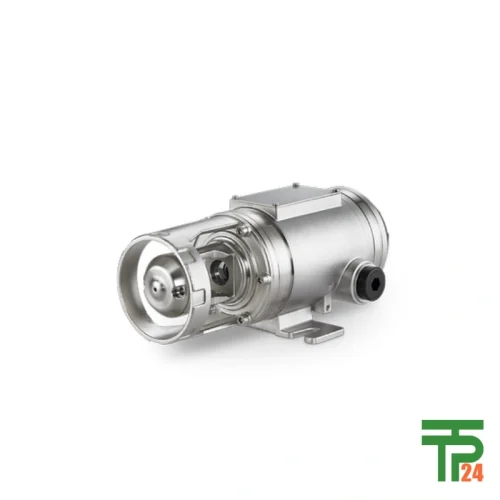
Rosemount™ 975MR Multi-Spectrum Infrared Flame Detector
- Four Infrared Detection Sensors
- Under 50 Milliseconds Response
- 316L Stainless Steel Housing
- HART® and Modbus® Protocols
Did you like this product? Add to favorites now and follow the product.

(+86) 132-6243-8118 Start Live Chat
Description
Rosemount™ 975MR Multi-Spectrum Infrared Flame Detector
Advanced Multi‑Spectrum Infrared Technology for Flame Recognition
The Rosemount 975MR Multi‑Spectrum Infrared Flame Detector stands at the forefront of Emerson’s optical safety innovations, offering unparalleled precision in detecting hydrocarbon gas and liquid fires through a combination of four separate infrared sensors that operate across different wavelengths. Each sensor continuously analyzes radiant energy patterns and spectral frequency variations to confirm the presence of genuine flames while rejecting false signals such as reflected sunlight, hot engine surfaces, or welding arcs. This sophisticated multi‑spectral analysis empowers the 975MR to immediately differentiate between non‑flammable heat radiation and active combustion, guaranteeing reliable detection in both confined and open‑air installations. Capable of sensing a gasoline pan fire of just 1 ft² (0.1 m²) at 300 ft (90 m), its range extends far beyond conventional single‑band IR sensors. Engineers across oil, gas, and energy sectors continually depend on the 975MR’s unmatched clarity, where milliseconds determine operational safety. With its quick reaction time—less than fifty milliseconds—the detector provides robust protection against explosions and uncontrolled ignition, preserving both infrastructure and personnel under the highest industrial standards.
Rugged Construction Built for Extreme Environmental Conditions
Mechanical endurance defines the essence of the Rosemount 975MR, and Emerson’s materials engineering ensures this detector remains resilient for decades. Housed in 316L stainless steel with an electro‑polished finish, the unit demonstrates full resistance to corrosion, solvents, and high‑temperature environments typical of petrochemical and marine operations. A lighter configuration of heavy‑duty copper‑free aluminum (less than 1 %)—polyurethane painted for added resilience—offers equivalent protection for locations where reduced weight is advantageous, such as mobile turbine nacelles or compact offshore panels. Both variants carry IP66/68 Type 6P certification, verifying submersion resistance to 2 m for 45 minutes while maintaining full optical performance. The detector operates dependably between –76 °F (–60 °C) and +185 °F (+85 °C), ensuring functional integrity from icy Arctic climates to blistering desert heat. Dimensions of 4 × 4.6 × 6.18 in (101.6 × 117 × 157 mm) allow practical mounting using tilt brackets that enable precise aiming for flame line‑of‑sight optimization. An incorporated heated window resists snow, condensation, and icing, maintaining clear optical transmission even during severe storms. Emerson’s rigorous mechanical testing further certifies structural resistance against vibration and moisture, creating a detection system that remains operationally uncompromised throughout fluctuating environmental extremes.
Rapid Flame Detection Ensures Immediate Response Reliability
Speed and reliability jointly define the heart of the 975MR Detector, an instrument engineered for instantaneous flame verification. Its response time under 50 milliseconds ensures alarm transmission nearly simultaneous with flame inception, allowing safety systems to activate suppression mechanisms or isolate flammable zones before escalation. The detector includes six selectable sensitivity levels, scalable to match specific site hazards—whether open‑field petroleum tank farms or confined generator compartments. Emerson’s proprietary multi‑spectrum algorithm processes IR data from each channel, comparing temporal and spectral coherence to ensure authenticity, thus maintaining exceptional immunity against false alarms. Three independent relay outputs (Alarm, Fault, and Auxiliary) secure compatibility with modern safety controllers. Through its 0–20 mA stepped analog signal, system operators continuously monitor flame conditions, while optional HART™ protocol layers enable setup, configuration changes, and maintenance diagnostics directly from the control room. For networked environments or process plants governed by supervisory software, the integrated RS‑485 Modbus® interface allows seamless communication to distributed safety networks. Each detection sequence is reinforced by manual and automatic Built‑In‑Test (BIT) routines to verify optical clarity and amplifier stability—shielding critical industries from uncertainty where reaction time defines outcomes.
Global Certifications Guarantee Universal Application Compliance
True industrial reliability requires unquestionable certification, and the Rosemount 975MR satisfies all leading global safety standards. The unit complies fully with ATEX and IECEx directives, possessing the classification Ex II 2 G D / Ex db eb op is IIC T4 Gb / Ex tb op is IIIC T110 °C Db, confirming effectiveness in both gaseous and dusty hazardous environments. Temperature approval extends from –50 °C to +85 °C without detection degradation. Meanwhile, Emerson’s detector meets FM/FMC and CSA/US certifications for Class I Division 1 Groups B, C, D and Class II Groups E, F, G, thereby authorized for broad North American deployment. The TR CU (EAC) mark certifies compliance across Eurasian territories, expanding accessibility throughout refineries or chemical facilities governed by regional codes. Performance validation through EN 54‑10 (VdS) and FM 3260 ensures standardized alarm algorithm compatibility with fire‑suppression protocols. For marine vessels, offshore drilling equipment, and LNG transport platforms, the detector carries the MED “Wheelmark” (DNV) emblem, mandated for shipboard flame safety. Critically, the instrument achieves IEC 61508 SIL 3 (TÜV) reliability classification, evidence of functional safety integrity reaching the industry’s highest tier. These combined authorizations affirm the 975MR’s deployment suitability across any jurisdiction or industrial regime worldwide—an authentically certified flame detection solution unrestricted by geography or environmental complexity.
Specific Application Scenarios Highlight Operational Versatility
Beyond certifications and performance ratings, the Rosemount 975MR demonstrates true value through its adaptable applications across numerous industrial sectors. In petroleum refineries and fuel‑storage terminals, it monitors pump stations and manifold areas where hydrocarbon vapor ignition poses catastrophic risk. Large LNG plants employ arrays of 975MR detectors along loading docks and cryogenic storage zones, capitalizing on its extended 300‑foot range to track small‑scale fires instantly from a safe distance. Chemical manufacturing facilities integrate the system within reaction‑vessel enclosures and pipe‑rack corridors subject to flammable gas leaks. Power generation turbines and compressor halls rely on the detector’s solar‑blind optical logic—preventing spurious signals from intense light sources while ensuring real‑time fire identification. In aviation maintenance hangars and paint spray booths, the 975MR offers silent safeguarding against liquid‑fuel ignition during routine operations. Marine applications benefit from its heated‑window design that prevents fogging under humid ocean conditions, maintaining reliability even under salt‑laden air exposure. For storage zones containing volatile solvents or compressed gases, user‑selectable sensitivity provides flexible tuning, balancing distance with detection certainty. Each use case demonstrates the detector’s ability to enhance safety architecture wherever combustible materials interact with energy—representing Emerson’s commitment to comprehensive industrial‑grade protection.
Smart Communications and Predictive Maintenance Integration Features
Maintenance simplification lies central to Emerson’s product philosophy, and the 975MR exemplifies this principle through digital intelligence. Via optional HART™ communications on the 0‑20 mA analog signal, engineers perform configuration adjustments, check diagnostics, or execute firmware updates without direct field exposure. Continuous supervision through asset‑management software enables predictive‑maintenance planning derived from operational history and optical‑channel stability metrics. The detector’s RS‑485 Modbus® interface easily integrates into plant supervisory control systems or distributed safety networks, allowing simultaneous monitoring of multiple flame zones and instant event mapping. Integrated automatic and manual Built‑In‑Test functions verify complete signal path health—from sensor integrity to relay operation—minimizing chances of undetected failure. The heater‑protected lens ensures uninterrupted visibility during humidity cycles or freezing precipitation. In long‑term serviceability metrics, the 975MR achieves a Mean Time Between Failures (MTBF) of 150,000 hours, complemented by Emerson’s five‑year warranty. These values confirm enduring reliability while the advanced communications protocols reduce downtime, increase diagnostics transparency, and empower facilities to maintain flame‑detection readiness 24 hours a day, regardless of external conditions or network complexity.
Specifications
Related products




Fair Pricing, Guarantee of Authenticity and Quality, Fast Delivery, and Provision of Technical Support to Customers.
Copyright 2025 © TPT24 Company. All right reserved. Powered by TPT24.

Reviews
There are no reviews yet.