

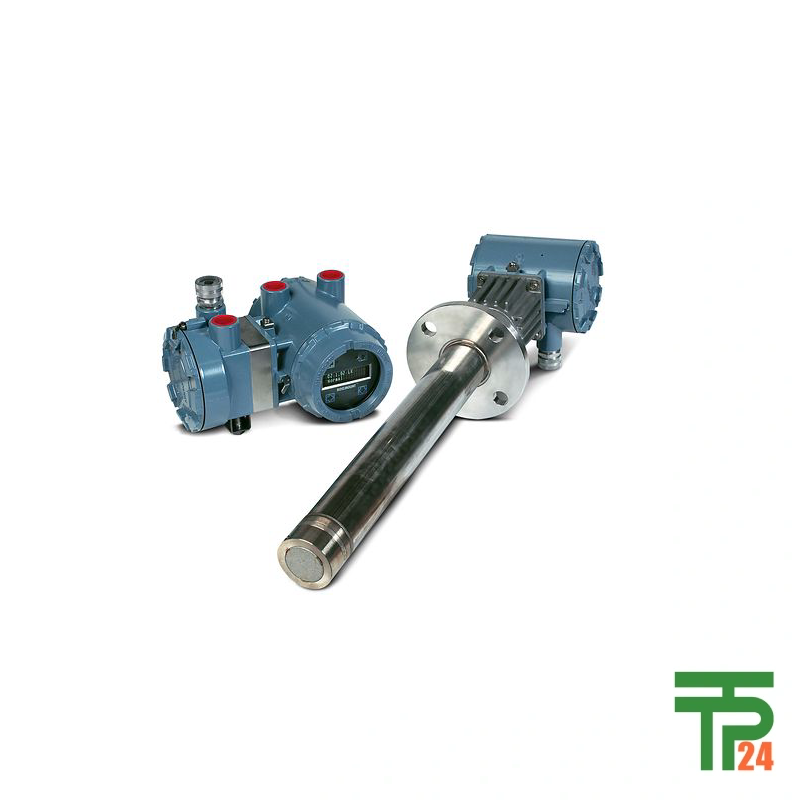
Rosemount™ Oxymitter™ 4000 In Situ Oxygen Analyzer
- Sensor TypeZirconium Oxide Electrochemical Cell
- Response Time (T90)Up To 8 Seconds
- Process Temperature RangeUp To 1922 °F (1050 °C)
- Ambient Temperature Tolerance–40 To 176 °F (–40 To 80 °C)
Did you like this product? Add to favorites now and follow the product.

(+86) 132-6243-8118 Start Live Chat
Description
Rosemount™ Oxymitter™ 4000 In Situ Oxygen Analyzer
Explosion‑Proof Oxygen Analyzer For Hazardous Areas
The Rosemount™ Oxymitter 4000 In‑Situ Oxygen Analyzer is a pioneering industrial innovation, recognized as the world’s first explosion‑proof zirconium‑oxide oxygen transmitter specifically designed for hazardous and high‑temperature process environments. Engineered to measure oxygen concentration directly in flue gas streams, this analyzer eliminates traditional extractive techniques and delivers real‑time, continuous oxygen readings under process temperatures up to 1922 °F (1050 °C) with optional bypass and heating jacket. Its compact, rugged design integrates sensors and electronics either at the probe or mounted separately via remote connection — reducing cabling complexity while maintaining full explosion‑proof integrity under ATEX, IECEx, CSA, and FM certification standards. By measuring oxygen in‑situ, the Oxymitter 4000 provides immediate feedback to combustion control systems, optimizing burner efficiency, shortening response cycles, and ensuring compliance with modern emission limits worldwide. As a hallmark of Emerson Process Management engineering, this device collects high‑rent precision with high structural endurance, delivering safety and clarity within the most demanding industrial atmospheres.
Zirconium Oxide Technology For Reliable Oxygen Measurement
Central to the Oxymitter 4000’s excellence lies its zirconium oxide measuring cell, a scientifically perfected ceramic sensor that detects oxygen through the Nernst principle. It measures the differential oxygen concentration between process gases and an internal reference, generating a voltage potential directly proportional to oxygen partial pressure. This electrochemical mechanism ensures linearity and exceptional repeatability over wide temperature and process variations. The advanced disk assembly endures extreme heat stress and aggressive chemical exposure yet maintains precision within ±0.75 % typical accuracy. Response time (T90) of ≤ 8 seconds allows immediate feedback to combustion loops, critical for minimizing excess air and maximizing fuel efficiency. The sensor’s self‑heating elements keep optimal operating temperature without the need for external references or sample conditioning systems. This technology advantage positions the Oxymitter 4000 not just as a sensor, but as a dynamic control instrument vital to combustion efficiency in diverse processes, enabling better ignition balance and reduced carbon footprint through precise oxygen management.
Mechanical Resilience And Field‑Repairable Construction Design
The Rosemount 4000 is designed for mechanical strength combined with total service accessibility. Its housing features heavy‑gauge stainless steel and Nickel‑based alloys suited for process streams reaching 1300 °F (705 °C) standard, easily expanded to 1922 °F (1050 °C) using an optional jacket and bypass tube. All joints and flanges maintain complete gas‑tight integrity under vibration and thermal cycles common in industrial stacks or fired heaters. Beyond robustness, the analyzer distinguishes itself as fully field‑repairable, a rarity among hazardous‑location analyzers. Routine maintenance—including sensor cell replacement, cable checks, or electronics service—can be carried out onsite without special return‑to‑factory procedures. Electronics can mount directly on the probe for compact installations or at remote locations for cooler, safer access. Flexible probe lengths ranging from 18 in (0.46 m) to 18 ft (5.49 m) match vast flue‑size diversity. This physical adaptability, combined with its rugged design, empowers plants to deploy the Oxymitter 4000 in environments where competitors fail because of heat, corrosion, or explosion hazards, ensuring uninterrupted process monitoring across long operational cycles.
Digital Connectivity And Intelligent Diagnostic Features
Modern process management thrives on digital transparency, and the Oxymitter 4000 delivers advanced connectivity options including 4–20 mA HART®, FOUNDATION™ Fieldbus, and full AMS/PlantWeb® compatibility. Operators integrate it seamlessly into distributed control systems to visualize oxygen trends, alarms, calibration intervals, and maintenance reminders. Built‑in advanced diagnostics monitor sensor impedance shifts and heater element integrity, automatically generating alerts when recalibration or servicing is advised. Users can enable wireless data transfer via the THUM™ Smart Wireless Adaptor, extending remote accessibility to field networks. A large backlit LCD display provides local indication for oxygen readings, configuration parameters, and error messages — ideal for rapid inspection under low‑light or high‑risk conditions. Optional Xi‑series electronics enrich functionality with advanced software features such as signal stability mapping and temperature‑compensation visualization. In combination, these digital tools turn data precision into actionable process intelligence, linking physical combustion dynamics with plant optimization systems while reducing manual intervention. For technicians and engineers alike, the Oxymitter 4000 represents a perfect blend between sensor ruggedness and real‑time digital agility.
Application Spectrum Across Industrial Combustion Systems
The Rosemount Oxymitter 4000 Analyzer performs essential roles throughout numerous combustion‑based industries. In power‑generation plants, it optimizes flue oxygen to maintain high thermal efficiency and compliance with emission control legislation. In petrochemical refineries and chemical production units, it governs fired‑heater oxygen ratios during hydrocarbon processing to prevent incomplete burn and catalytic fouling. Within cement and lime kilns, the analyzer assures correct combustion balance through continuous monitoring of oxygen depletion, thereby controlling stack temperature and fuel distribution. Pulp and paper mills implement the 4000 for recovery boilers where reduced oxygen minimizes soda loss and enhances combustion of black‑liquor residue. Manufacturers of glass, metal, and ceramic commodities employ the unit for combustion control in high‑temperature furnaces, preserving material uniformity and reducing deformation. Furthermore, the analyzer’s hazardous‑area safety approvals allow deployment in offshore oil and gas facilities, providing secure monitoring inside high‑pressure and flammable environments. Each of these application zones benefits from faster oxygen feedback, improved fuel economy, and substantial emission reductions — proving how Emerson’s Oxymitter 4000 drives efficiency from combustion chamber to environmental stewardship simultaneously.
Specifications
Related products
Recently Viewed Products


Fair Pricing, Guarantee of Authenticity and Quality, Fast Delivery, and Provision of Technical Support to Customers.
Copyright 2025 © TPT24 Company. All right reserved. Powered by TPT24.
