

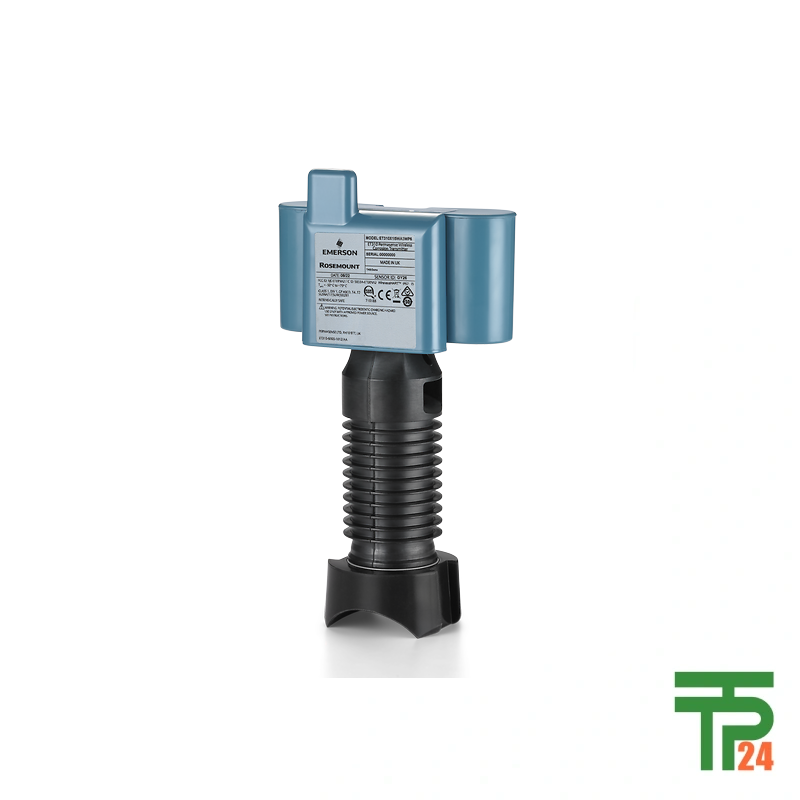
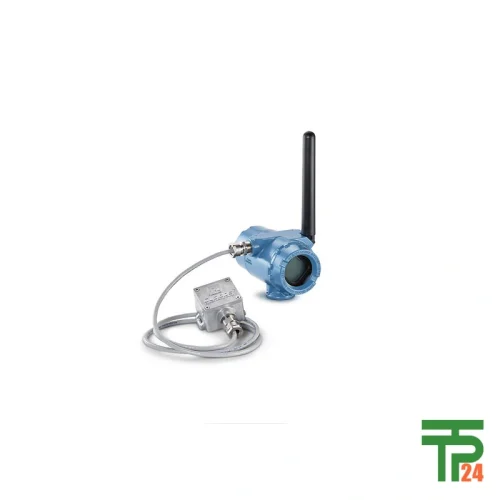
Rosemount™ Wireless ET310C Corrosion and Erosion Transmitter
- 160°C Maximum Service Temperature
- 2mm to 8mm Thickness Range
- Up To Nine-Year Battery Life
- WirelessHART No Couplant Required
Did you like this product? Add to favorites now and follow the product.

(+86) 132-6243-8118 Start Live Chat
Description
Rosemount Wireless ET310C: Chemical Industry Corrosion Monitoring Specialist
1. Optimized Chemical Industry Corrosion Monitoring Up To 160°C
The Rosemount Wireless ET310C Corrosion and Erosion Transmitter is specifically optimized for deployment within the demanding environment of the chemical processing industry. This non-intrusive, battery-powered ultrasonic device provides continuous, real-time data on pipe and vessel wall thickness, enabling a profound understanding of material degradation from aggressive chemical media. By eliminating the reliance on scheduled manual inspections, the ET310C ensures that maintenance teams can shift immediately to a condition-based strategy, safeguarding asset integrity against chemical attacks and preventing potentially catastrophic containment failures associated with localized wall thinning.
2. Precision Measurement Focuses On Thin-Walled Vessels
A crucial specification that distinguishes the Rosemount ET310C is its optimized measurement range, specifically from a minimum wall thickness of 2mm (0.08″) up to 8mm (0.31″). This narrower, highly focused range makes the ET310C an ideal instrument for the thinner-walled piping and smaller vessels often found in chemical plants, where traditional ultrasonic sensors might struggle to maintain high accuracy due to their broader operational spectrum. Furthermore, the device is designed for practical deployment on pipe sizes ranging from NPS2 (Nominal Pipe Size 2) to NPS8, covering a significant portion of the primary distribution lines within a typical chemical facility. This precision measurement focus ensures that subtle wall thinning, even on smaller diameter and thinner-walled assets, is accurately detected and tracked. The transmitter boasts a metal loss detection capability better than 10 microns (0.5 mil), delivering best-in-class accuracy for real field conditions and ensuring high-resolution data for effective trend analysis.
3. Non-Intrusive Installation Minimizes Process Downtime Costs
The design philosophy of the Rosemount ET310C emphasizes simplicity, speed, and non-intrusion, directly addressing the need to minimize process downtime in the chemical sector. The device is quick and easy to install without requiring any physical modification to the asset, making it a truly non-intrusive solution. The installation does not incur wiring installation costs thanks to its battery-powered design and reliance on the WirelessHART protocol. Crucially, the ET310C requires no couplant—the gel or liquid typically needed for acoustic contact—which simplifies the installation process and eliminates a potential point of long-term maintenance failure or contamination risk. This combination of easy, intuitive installation allows for the rapid deployment of continuous monitoring points across large or remote areas of a plant, maximizing coverage with minimal disruption to ongoing production schedules and quickly realizing the benefits of predictive maintenance.
4. Dedicated Applications For Aggressive Chemical Environments
The ET310C is engineered to excel in dedicated applications involving highly aggressive or corrosive chemical environments. A primary specific application is the monitoring of piping and vessels handling strong acids (e.g., concentrated sulfuric acid, hydrochloric acid) or caustic solutions, common in petrochemical and fertilizer production, where wall thinning rates can be unpredictable and extremely rapid. A second crucial dedicated application involves surveillance of assets exposed to high-temperature solvents or catalysts where the combination of heat (up to 160∘C160^\circ C) and chemical attack accelerates degradation. Additionally, due to its Class 1 Div 1 or Zone 0 certification, the ET310C is a mandatory safety component for monitoring assets containing flammable or explosive chemical intermediates, ensuring compliance while operating reliably in the most hazardous zones. Its robust design is compatible with all common metals used in chemical construction, providing broad application flexibility.
5. WirelessHART Connectivity Ensures Secure Data Reliability
Leveraging the industry standard WirelessHART® communication protocol is central to the operational efficiency of the Rosemount ET310C. This secure and cost-effective wireless standard ensures that the critical wall thickness data is transmitted with a reliability exceeding 99% back to the control system or asset management platform. The adoption of WirelessHART drastically reduces the capital expenditure and engineering time associated with trenching, conduit runs, and traditional cabling infrastructure. By establishing a robust, self-organizing mesh network, the ET310C guarantees continuous data flow, even in complex or geographically large chemical facilities. This reliable connectivity transforms maintenance practices, enabling decision-makers to analyze corrosion trends in real time and avoid inefficient, costly, and potentially unsafe manual inspection methods which only offer snapshot data.
6. Extended Battery Life Provides Long-Term Autonomy
The Rosemount ET310C offers a significant benefit in long-term operational autonomy due to its extended battery life of up to 9 years. This impressive lifespan is achieved when the transmitter is configured to its default measurement frequency (once every 12 hours) and is crucial for installations in hard-to-access or remote areas of a chemical plant. The long battery life ensures the device is essentially maintenance-free for years, minimizing the need for technicians to enter hazardous areas for routine upkeep. Furthermore, the battery is field replaceable, allowing for simple, quick service when needed, without removing the device from service for an extended period. For applications requiring higher data resolution—such as during commissioning or following a known process upset—the measurement frequency is user-configurable down to every hour, offering the necessary flexibility to capture rapid changes in corrosion rate without immediately draining the long-life power source.
Specifications
Related products

Recently Viewed Products




Fair Pricing, Guarantee of Authenticity and Quality, Fast Delivery, and Provision of Technical Support to Customers.
Copyright 2025 © TPT24 Company. All right reserved. Powered by TPT24.
