

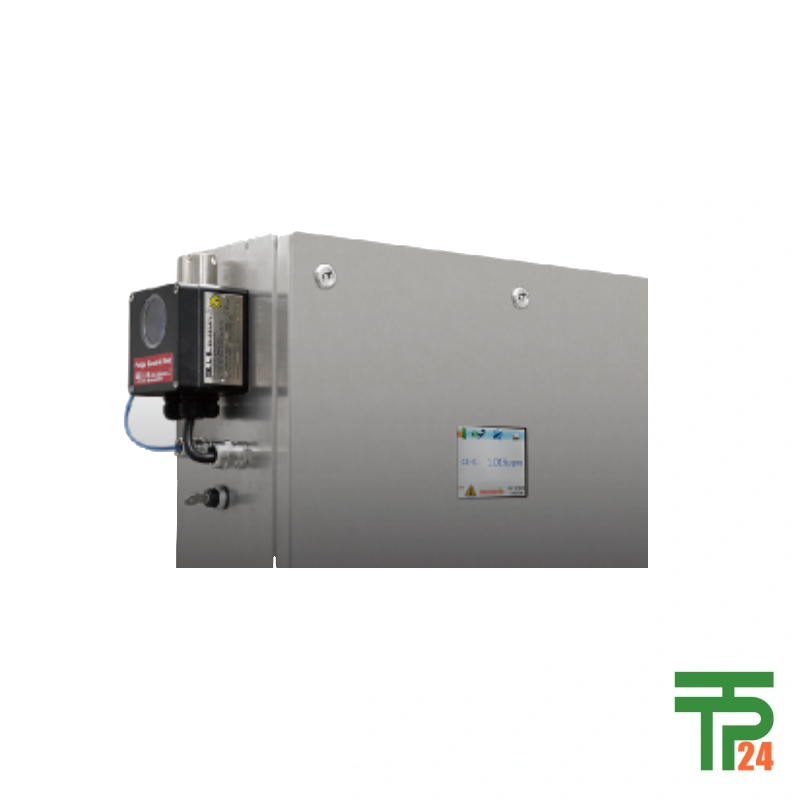
Yokogawa TDLS5500 High Sensitivity Laser Spectrometer
- OFCEAS trace gas analysis
- Low Pressure Sampling (LPS)
- Ultra-high sensitivity
- High-speed continuous measurement
Did you like this product? Add to favorites now and follow the product.

(+86) 132-6243-8118 Start Live Chat
Description
TDLS5500: Ultra-High Sensitivity for Trace Gas Analysis
The Yokogawa TDLS5500 represents a pinnacle in trace gas analysis, leveraging cutting-edge OFCEAS (Optical Feedback Cavity Enhanced Absorption Spectroscopy) technology combined with Low Pressure Sampling (LPS). This sophisticated, computerized device is engineered to precisely measure minute quantities of gas components within industrial processes in real-time. Its core innovation lies in the optical resonator structure, which effectively extends the optical path length up to an astounding 30 kilometers. This extended path length is the secret behind its unparalleled “ultra-high sensitivity,” enabling the detection of trace gases with extraordinary precision that is critical for process optimization, quality control, and environmental monitoring in diverse industries.
Low Pressure Sampling Eliminates Cross-Sensitivity Issues
A significant challenge in traditional gas analysis is the interference caused by interactions between different gas molecules, leading to “cross-sensitivity” and potentially “false positives.” The TDLS5500 ingeniously overcomes this by incorporating “Low Pressure Sampling (LPS).” By reducing the process gas pressure within the optical cavity, the interactions between gas molecules are significantly minimized. This innovative approach effectively “eliminates the effects of cross-sensitivity and false positives,” ensuring that the analyzer provides exceptionally accurate and reliable measurements of the target trace gas, free from interference by background gases. This feature is vital for applications where precise and unambiguous detection of specific components is critical.
High-Speed, Continuous Analysis with Laser Precision
The TDLS5500 is designed for “high-speed continuous analysis” utilizing its advanced laser-based measurement system. This allows for rapid and uninterrupted monitoring of gas compositions, providing immediate feedback essential for dynamic industrial processes. A key benefit of this non-contact measurement approach is the complete elimination of “zero drift” and “sensor aging.” Unlike traditional sensor technologies that degrade over time and require frequent recalibration, the TDLS5500 maintains its accuracy and stability throughout its operational life, significantly reducing the need for costly and time-consuming maintenance interventions. This ensures consistent, reliable data without the usual operational overhead.
Minimal Maintenance: Maximizing Uptime and Efficiency
One of the most compelling advantages of the TDLS5500 is its exceptionally “low maintenance” requirements. The analyzer is meticulously designed without consumables, which means no expensive replacement parts like filters or chemical reagents are needed. Furthermore, it operates “without a scrubber,” eliminating the need for a system to remove interfering components, and contains “no optical moving parts” which are often sources of mechanical failure and require frequent adjustment. The TDLS5500 is also “pre-calibrated” at the factory, ensuring accurate measurements from the moment of installation. This combination of features dramatically reduces equipment and time-related costs, maximizing uptime and overall operational efficiency for the user.
Trace C2H2 Measurement in Ethylene Production
A crucial application where the TDLS5500 truly excels is the “trace C2H2 measurement in ethylene processes.” Ethylene is a foundational petrochemical, and even minute quantities of acetylene (C2H2) can act as a catalyst poison or negatively impact downstream polymerization processes. The TDLS5500 enables the “high-speed” and accurate detection of trace C2H2. This capability provides significant customer benefits, including the “improvement of process efficiency by process optimization” through the use of its reliable and rapid signals. It also plays a vital role in “avoiding out-of-specification (ethylene) product” by quickly detecting unusually high concentrations of C2H2 impurities, thereby protecting product quality and preventing costly re-processing or waste.
Unmatched Sensitivity with OFCEAS Technology
The TDLS5500 achieves its “super-high resolution” and unmatched sensitivity through the ingenious application of OFCEAS technology. This method utilizes an “optical cavity” where the laser beam “repeats a huge number of reflections.” Each reflection effectively extends the optical path length, culminating in a “km-level optical path length” within a compact space. This extraordinarily long interaction path between the laser and the gas sample allows the analyzer to detect even the most minute absorption signals from trace gases. This “very long optical path length by OFCEAS” is the cornerstone of the TDLS5500’s ability to provide such high sensitivity, distinguishing it from conventional spectroscopic techniques.
Superior Specificity Through Low-Pressure Sampling
The “super high resolution by low-pressure sampling” is a defining characteristic of the TDLS5500, directly leading to “no interference by background gas.” When gas is measured at low pressure, the spectral lines of different molecules become much sharper and more distinct. This phenomenon is critical as it prevents the spectral lines of the target trace gas from overlapping with those of other components in the background gas mixture. This precise separation, an “example to show effect of low pressure gas measurement,” ensures that the TDLS5500 can accurately identify and quantify the target analyte without being confounded by other gases, providing highly specific and reliable measurements that are indispensable for complex industrial processes and challenging applications.
Specifications
| Measured component | Min. range | Max. range | Repeatability | Response time* |
|---|---|---|---|---|
| C2H2 in Ethylene | 0 ~ 5 ppm | 0 ~ 100 ppm | ± 50 ppb or ± 2% of reading, whichever is greater | < 20 sec |
Related products
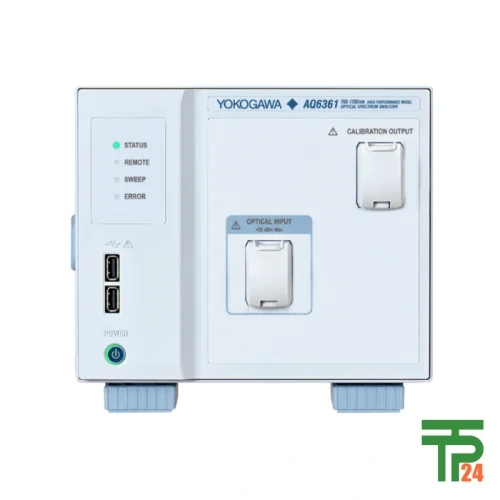
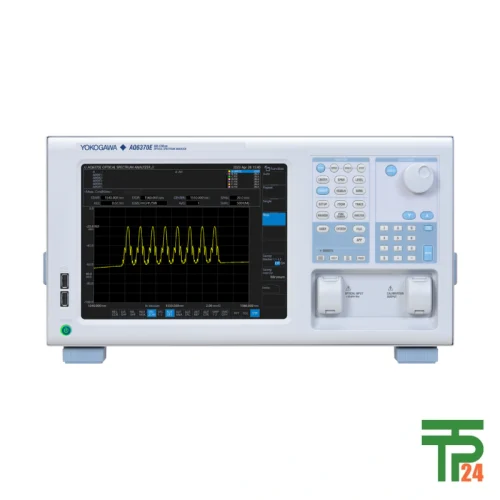
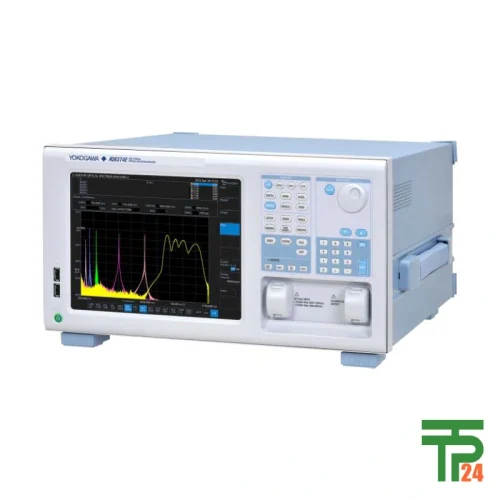
Yokogawa AQ6377E Five Micron
Recently Viewed Products

Fair Pricing, Guarantee of Authenticity and Quality, Fast Delivery, and Provision of Technical Support to Customers.
Copyright 2025 © TPT24 Company. All right reserved. Powered by TPT24.
