

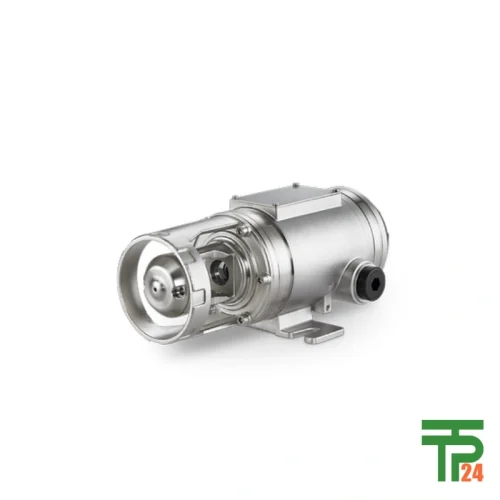
Rosemount™ 975HR Multi-Spectrum Infrared Hydrogen Flame Detector
- Multi‑Spectrum Infrared Technology
- Under 20 Milliseconds Response
- 316L Stainless Steel Enclosure
- HART® and Modbus® Communication
Did you like this product? Add to favorites now and follow the product.

(+86) 132-6243-8118 Start Live Chat
Description
Rosemount™ 975HR Multi-Spectrum Infrared Hydrogen Flame Detector
Multi‑Spectrum Technology Detects Hydrogen and Hydrocarbon Flames
The Rosemount 975HR Multi‑Spectrum Infrared Hydrogen Flame Detector represents Emerson’s most refined optical detection solution for combustible gas and fuel fires. Incorporating highly sensitive multi‑band infrared (IR) sensors, this detector identifies radiant energy emitted from hydrocarbon‑based fuels and pure hydrogen combustion events with exceptional speed and precision. The wide‑range spectral analysis detects energy across multiple IR wavelengths, calculating frequency and intensity correlates to separate true flame signatures from non‑flame radiation. Unlike conventional single‑band devices, the 975HR’s multi‑spectrum logic eliminates false alarms commonly caused by sunlight, hot mechanical surfaces, or reflections. Its design provides reliable long‑distance recognition of hydrogen flames—normally invisible to standard visual methods—while maintaining high immunity to environmental interference. This accuracy ensures prompt alarm activation during the first milliseconds of fire inception, granting emergency response teams critical reaction time. Emerson’s advanced photo‑processing algorithms make the 975HR not merely an improvement but a transformative leap, extending secure coverage into areas previously impossible to monitor with regular UV/IR flame detectors. Fast detection, extraordinary stability, and reduced maintenance form the technological heart of this model, establishing new reliability standards for optical flame sensing in hydrogen‑handling industries worldwide.
High‑Performance Construction Guarantees Enduring Field Reliability
Built to operate under the harshest industrial and marine conditions, the Rosemount 975HR pairs precision detection electronics with ruggedized mechanical protection. The housing, formed from electropolished 316L stainless steel, provides full resistance to acids, salts, hydrocarbons, and mechanical strain. For installations requiring lighter weight, a polyurethane‑painted copper‑free aluminum variant (< 1 % copper) delivers equal protection with reduced mass, ideal for compact platforms or mobile turbines. Both configurations meet stringent enclosure ratings of IP66/68 Type 6P, verifying submersion resistance to 2 m depth for 45 minutes. Operating and storage temperature tolerance spans –76 °F (–60 °C) to +185 °F (+85 °C), ensuring stability from arctic freeze to desert heat. Its modular form—4 × 4.6 × 6.18 inches—enables flexible mounting using stainless tilt brackets positioned for optimal optical reach. Internally, heating elements prevent condensation or icing on the optical window, securing constant clarity throughout rain, snow, or fog. This robust structure combines physical endurance with electronic resilience rated to MTBF 150,000 hours and protected under a five‑year Emerson warranty. Performance is fully certified under IEC 61508 SIL 3 (TÜV) guidelines, proving compliance with top functional‑safety metrics. By uniting proven metallurgy with advanced infrared optics, Emerson ensures that the 975HR remains operationally unyielding across multi‑year field campaigns and remote geographies demanding unwavering precision in flame detection reliability.
Advanced Signal Processing Supports Ultra‑Fast Fire Response
Time defines the boundary between containment and catastrophe, and the Rosemount 975HR is engineered explicitly for instant reaction. Delivering a detection speed under 20 milliseconds, the detector responds almost immediately to flame onset, enabling triggering of suppression systems before temperature rise or pressure escalation occurs. Its six configurable sensitivity levels adapt dynamically to differing field conditions and risk densities—from enclosed generator boxes to open hydrogen manifolds. Internally, amplified infrared photodiodes channel energy patterns to a real‑time digital signal processor analyzing multiple IR bands concurrently. Each channel’s frequency signature is cross‑validated using Emerson’s proprietary Multi‑Spectrum Algorithm to confirm flame authenticity. False‑trigger immunity surpasses conventional technologies, guaranteeing stability even under strong fluorescent or solar exposure. Three independent relay outputs (Alarm, Fault, Auxiliary) ensure reliable interface with industrial safety loops and programmable controllers. A 0–20 mA analog FSK signal communicates status continuously, while optional HART™ 7 overlay supports configuration and maintenance at the control‑room level. In automated installations, RS‑485 Modbus® connectivity allows digital data exchange for complex network mapping across dozens of flame zones. Aligned with these features, the detector’s instantaneous verification capability maximizes operational readiness by combining speed, intelligence, and immunity—all critical for high‑hazard hydrogen applications demanding real‑world performance beyond theoretical sensitivity claims.
Comprehensive Global Certifications Enable Universal Deployment
The 975HR is validated by extensive international safety and performance standards, permitting its integration in zones governed by the world’s strictest compliance frameworks. Under ATEX and IECEx, its designation Ex II 2 G D combined with Ex db eb op is IIC T4 Gb / Ex tb op is IIIC T110 °C Db signifies certified flame‑proof and increased‑safety protection in hazardous atmospheres. Temperature ranges –50 °C to +85 °C mirror severe operational environments across petrochemical plants or LNG terminals. The unit meets full FM, FMC, and CSA/US approval within Class I Div 1 Groups B, C, D and Class II Div 1 Groups E, F, G, verifying competence across both gas and dust hazards. Its TR CU (EAC) mark enables safe distribution within Eurasian customs territories. Performance compliance extends to EN 54‑10 (VdS) and FM 3260, confirming conformance to standardized flame‑response algorithms. For maritime and offshore applications, Emerson includes the distinguished MED “Wheelmark” (DNV) certification, required for European shipboard installations and offshore rigs. All models fulfill IP66/68 Type 6P sealing criteria—enduring pressurized submersion while resisting corrosion from seawater sprays. Taken together, these authorizations validate universal acceptability, enabling engineers to specify the Rosemount 975HR for any jurisdiction without recourse to redesign or local adaptation. It stands as the fully globalized hydrogen‑flame detector aligning mechanical durability with rigorous world safety statutes.
Exclusive Application Scenarios Showcase Operational Versatility
The domain where hydrogen and hydrocarbon fires appear demands purpose‑built surveillance accuracy—and this is where the Rosemount 975HR excels exclusively. In hydrogen production plants, the detector provides exceptional early warning in electrolyzer rooms, manifold racks, and purification modules, catching nearly invisible hydrogen flames undetected by visual systems. Oil and gas refineries utilize 975HRs to guard compressor stations and distillation towers handling volatile fuels subject to auto‑ignition. In aerospace manufacturing, where hydrogen‑based propulsion tests occur, it delivers rapid flame verification preventing cascade damage across sensitive propulsion chambers. Battery plants, fuel‑cell laboratories, and chemical processing lines rely on its multi‑spectrum distinction between hydrocarbon fumes and reactive hydrogen exposures, providing secure monitoring throughout energy‑conversion facilities. Marine engine rooms implement the heated‑window 975HR variant to counter condensation caused by seawater humidity, safeguarding fuel‑feed areas under MED Wheelmark approval. Outdoor gas fields or LNG loading docks exploit its long‑range flame visibility, integrating Modbus® links into plant control networks overseeing hundreds of hazard points simultaneously. In every case, this detector’s ultra‑fast optical verification, superior immunity, and adaptable configuration make it indispensable where even micro‑second reaction delays could trigger catastrophic chain reactions—affirming Emerson’s technological leadership in next‑generation hydrogen flame sensing worldwide.
Smart Communication Simplifies Maintenance and Network Integration
Contemporary industrial safety demands connectivity as much as sensing capability, and the 975HR meets this requirement with intelligent digital architecture. Maintenance engineers access configuration directly through HART™ interactive protocol on the 0–20 mA signal, enabling live sensitivity adjustment, firmware updates, and asset diagnostics remotely. In multi‑device installations, RS‑485 Modbus® communication unites all detectors into cohesive supervisory systems, providing instantaneous status visualization at centralized control stations. Emerson’s software environment offers automatic device recognition and auto‑calibration records, minimizing commissioning effort. Built‑in diagnostic cycles employ both manual and adjustable infrared Built‑In Tests (BIT) ensuring optical stability without external stimulators. Fault logs predict sensor deterioration trends so predictive maintenance schedules become data‑driven rather than reactive. The heated window and sealed connection ports simplify cleaning and extend inspection intervals, while conformal‑coated electronics resist atmospheric corrosion and airborne salts. Across complex operation frameworks—offshore rigs, hydrogen fueling terminals, or power turbines—the combination of smart sensing and digital self‑audit drastically reduces downtime. Built as a durable, intelligent node rather than isolated sensor, the 975HR embodies Emerson’s philosophy of merging detection with real‑time informational integrity to elevate flame‑safety management to predictive precision rather than mere monitoring.
Specifications
Related products




Fair Pricing, Guarantee of Authenticity and Quality, Fast Delivery, and Provision of Technical Support to Customers.
Copyright 2025 © TPT24 Company. All right reserved. Powered by TPT24.

