

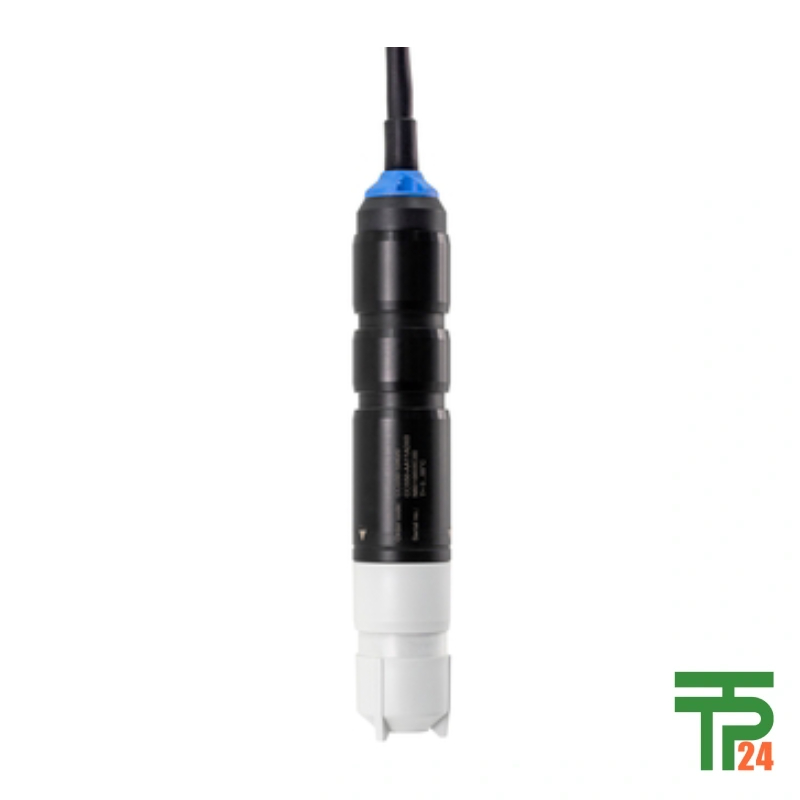
Endress+hauser CCS50 Analog chlorine dioxide sensor
- Robust, low-maintenance sensor
- Fast response time
- Precise, stable measurement
- Analog fixed cable connection
Did you like this product? Add to favorites now and follow the product.

(+86) 132-6243-8118 Start Live Chat
Description
Endress+Hauser CCS50: Chlorine Dioxide Measurement
The Endress+Hauser CCS50 is a highly robust and remarkably low-maintenance sensor meticulously designed for precise chlorine dioxide measurement. It consistently delivers stable and fast measured values across a diverse range of applications, including drinking water, process water, and various utility systems. This sensor plays a critical role in ensuring efficient disinfection, even when dealing with minimal water volumes, thereby helping to achieve the highest standards of water quality and safety. Furthermore, the CCS50 is instrumental in preventing the overdosing of chlorine dioxide or, conversely, ensuring its complete absence in sensitive environments like beverage plants and reverse osmosis systems. It also guarantees seamless continuity for existing analog chlorine dioxide measuring points, making it an excellent choice for both new installations and system upgrades.
Reliable Monitoring for Drinking Water Disinfection
In the vital sector of drinking water treatment, the Endress+Hauser CCS50 sensor is indispensable for ensuring sufficient and reliable disinfection. Chlorine dioxide is a powerful disinfectant used to eliminate harmful pathogens, bacteria, and viruses, thereby protecting public health. The CCS50 provides accurate and stable measurements of chlorine dioxide concentration, allowing water treatment facilities to precisely control dosing. This precision ensures that drinking water is thoroughly purified to meet stringent safety standards, preventing waterborne illnesses. The sensor’s robustness and low maintenance make it a highly cost-effective and dependable solution for continuous monitoring in critical drinking water applications.
Preventing Pathogen Growth in Cooling Systems
Cooling systems and towers are highly susceptible to the growth of biofilms and pathogenic microorganisms, which can severely impair operational efficiency and pose significant health risks. The Endress+Hauser CCS50 sensor is a crucial tool in these environments, effectively preventing such growth by enabling precise chlorine dioxide measurement and control. Chlorine dioxide is an excellent biocide that not only eliminates existing pathogens but also prevents the formation of new biofilms. By ensuring optimal chlorine dioxide levels, the CCS50 helps maintain the integrity and performance of cooling systems, prolonging equipment life, reducing maintenance costs, and safeguarding against public health hazards.
Hygienic Processes for Food and Beverage Safety
In the food and beverage industry, maintaining the highest levels of hygiene is paramount for product quality and consumer safety. The Endress+Hauser CCS50 sensor is specifically applied in process water systems to ensure hygienic and safe packaging and bottling of products. By accurately monitoring chlorine dioxide levels, the sensor helps prevent microbial contamination throughout the production process. This is particularly vital in situations where water comes into direct contact with food products or packaging materials. The CCS50’s precise measurements ensure that process water is adequately disinfected, contributing to superior product quality, extended shelf life, and compliance with rigorous food safety regulations.
Ensuring Absence of Chlorine Dioxide in Beverage Plants
While chlorine dioxide is an excellent disinfectant, its presence can be undesirable or even detrimental in certain applications, particularly in beverage plants where it can affect taste, odor, or chemical reactions in the final product. The Endress+Hauser CCS50 sensor plays a critical role in these sensitive environments by securely ensuring the absence of chlorine dioxide. Through its precise and reliable measurements, operators can verify that all traces of the disinfectant have been removed after a treatment process, safeguarding the integrity and quality of beverages. This capability underscores the CCS50’s versatility, not just in applying disinfectants, but also in ensuring their complete removal when necessary.
Rapid Response for Accurate Process Control
One of the significant advantages of the Endress+Hauser CCS50 sensor is its exceptionally fast response time, boasting a t90 value of less than 15 seconds. This rapid response provides an immediate and accurate view of process conditions, enabling operators to react promptly to any changes in chlorine dioxide concentration. Such quick detection and reaction capabilities are crucial for efficient process control, allowing for real-time adjustments to disinfectant dosing. This agility not only optimizes chemical usage, preventing both under-dosing and overdosing, but also significantly enhances overall process safety by maintaining optimal disinfection levels consistently.
Enhanced Process Safety Through Precision Measurement
The Endress+Hauser CCS50 ensures increased process safety through its precise and long-term stable measurement capabilities. This stability guarantees consistent process monitoring of chlorine dioxide, which is essential for maintaining product integrity and preventing microbial contamination across various industrial applications. The accuracy of the CCS50 allows for individually adapted disinfectant dosing, meaning that chemicals are applied exactly as needed. This meticulous control contributes to higher product quality, reduces operational costs associated with chemical waste, and most importantly, fosters a safer operating environment for personnel and consumers by ensuring effective and reliable disinfection.
Flexible Installation and Reduced Maintenance
The Endress+Hauser CCS50 sensor offers flexible installation options, capable of being deployed in the CCA151 and CCA250 flow assemblies or in various immersion assemblies. This adaptability makes it suitable for diverse operational setups. Importantly, the sensor exhibits virtually flow-independent measurement at flow velocities above 5 l/h (in CCA151), 30 l/h (in CCA250), or above 15 cm/s (in immersion setups), ensuring reliable readings across varying flow conditions. Being a low-maintenance, amperometric sensor, it significantly reduces the overall cost of ownership compared to more demanding colorimetric systems. This design contributes to less downtime and lower operational expenses.
Specifications
-
Measuring principle
Chlorine dioxide
-
Application
Guarantees reliable disinfection in drinking water
Prevents the growth of biofilms and pathogens in cooling water
Ensures food quality
Ensures the absence or presence of chlorine dioxide in Utilities -
Characteristic
Amperometric measurement of dissolved chlorine dioxide
-
Measuring range
Trace: 0 to 5 mg/l ClO2
Standard: 0 to 20 mg/l ClO2 -
Measuring method
Closed, membrane covered measuring cell
Reduction of chlordioxide at the cathode -
Design
Closed amperometric 2-electrode measuring cell with PVDF membrane
-
Material
Sensor shaft: POM
Membrane: PVDF
Membrane cap: PVDF
Sealing ring: FKM -
Dimension
Diameter: 25 mm (0.98 inch)
Length: 126 mm (4.96 inch) -
Process temperature
0 to 55 °C (32 to 130°F), non-freezing
-
Process pressure
Max.1 bar (max. 14.5 psi)
-
Temperature sensor
10k NTC
-
Connection
Analog with fixed cable
Related products


Recently Viewed Products
KYORITSU LAN CABLE TESTER KEW 8550

Fair Pricing, Guarantee of Authenticity and Quality, Fast Delivery, and Provision of Technical Support to Customers.
Copyright 2025 © TPT24 Company. All right reserved. Powered by TPT24.
