

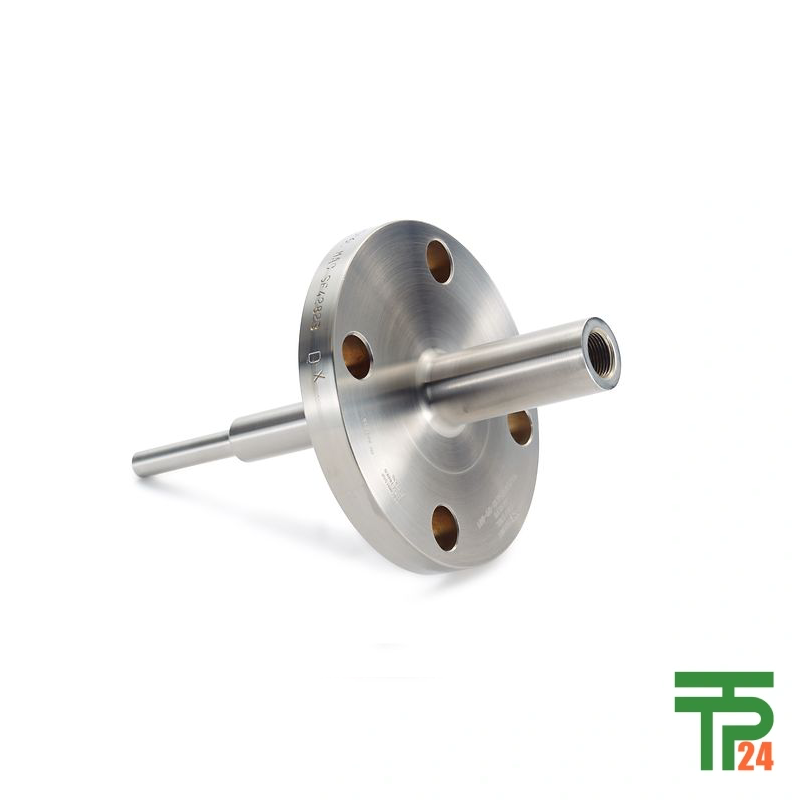
Rosemount™ 114C Thermowell
- Material: Stainless or Exotic Alloys
- Mounting: Threaded, Flanged, Welded Options
- Testing: Pressure and PMI Certified
- Customization: Root/Bore/Tip Design
Did you like this product? Add to favorites now and follow the product.

(+86) 132-6243-8118 Start Live Chat
Description
Rosemount™ 114C Thermowell
The Emerson Rosemount 114C Thermowell exemplifies mechanical durability and engineering precision derived from a single solid barstock construction. This design guarantees maximum strength, corrosion resistance, and thermal uniformity during continuous process exposure. Developed to protect temperature sensors—such as RTD, thermocouple, and resistance elements—from aggressive process streams, it delivers consistent readings while insulating measurement components from direct pressure and fluid impact. Every 114C is meticulously machined for high‑pressure resistance, vibration stability, and fatigue tolerance, enabling secure deployment within demanding industrial piping or vessel systems. Emerson engineers choose the finest alloys to prevent mechanical deformation during thermal cycling, assuring long‑term calibration stability. Manufacturing procedures include rigorous external and internal pressure tests, X‑ray inspection, dye penetration testing, and PMI verification to confirm metallurgical integrity. The solid barstock foundation distinguishes the 114C as the preferred thermowell for laboratories, refineries, and power generation facilities requiring precise, tamper‑proof protection of critical temperature instrumentation. With its combination of strength and adaptability, the Rosemount 114C represents industrial best practice for safeguarding reliable process temperature measurement under even the most extreme service conditions.
Versatile Mounting Styles Deliver Installation Flexibility Worldwide
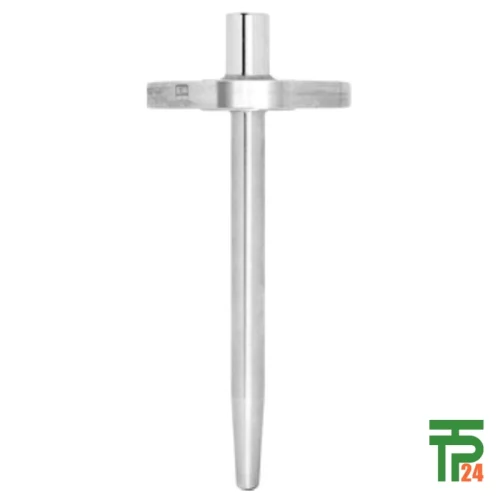
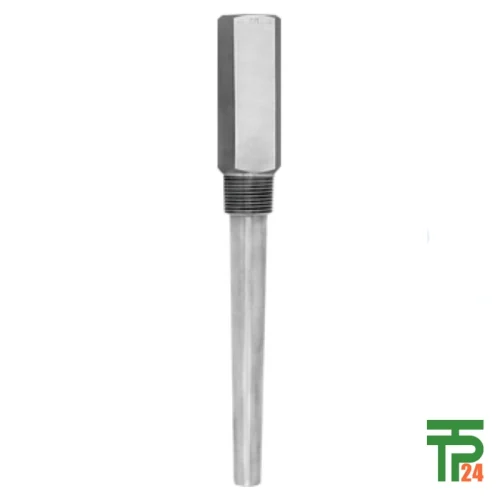
Emerson’s Rosemount 114C accommodates **multiple mounting options—threaded, flanged, welded, and Van Stone configurations—**ensuring unprecedented versatility across global industry applications. The threaded design simplifies installation in compact pipelines or laboratory manifolds, allowing quick removal for maintenance without disrupting flow. Flanged models provide secure sealing against high‑pressure lines found in chemical reactors and oil pipelines. The weld‑in version offers permanent structural integration where leakage and vibration resistance are priority. Meanwhile, Van Stone designs enable dissimilar flange material selection from the stem for cost efficiency and corrosion mitigation in aggressive media. Each mounting style supports stem profiles such as straight, tapered, or stepped, optimized for specific flow dynamics and mechanical stresses. By combining a full range of mounting geometries with tailored stem types, the 114C fits seamlessly into virtually every industrial framework—from refineries handling superheated hydrocarbons to sanitary systems controlling pasteurization cycles. Emerson’s design flexibility ensures easy installation and secure measurement reliability for engineers operating under diverse global standards. This adaptability defines the Rosemount 114C as one of the most configurable thermowell solutions ever created for modern instrumentation networks across continents.
Custom Root and Tip Designs Extend Application Range
The Rosemount 114C Thermowell offers customizable root, bore, and tip diameters allowing optimization for special process requirements. Engineers can modify these parameters to achieve proper strength‑to‑response ratio depending on insertion length, flow turbulence, and sensor type. Adjusting tip thickness enables faster response for low‑viscosity fluids, while increased root diameter provides additional rigidity for high‑pressure or viscous applications. This tailored approach ensures that the 114C maintains mechanical resonance below destructive wake frequency conditions, preserving integrity even within severe flow velocity environments. Emerson’s certified design program includes official Wake Frequency Calculation (WFC) reports—a service particularly valued in refinery and power applications where thermowell vibration can compromise safety or measurement precision. The capability to adapt mechanical dimensions and generate validated design documentation transforms the 114C from a standard protective sheath into a fully engineered, process‑specific solution. Such flexibility makes it ideal for custom assemblies within chemical reactors, offshore platforms, cryogenic systems, and heat‑exchange circuits. Emerson understands that one size never fits all—thus the Rosemount 114C emerges not merely as hardware, but as a precisely engineered bridge between sensor measurement reliability and process‑specific structural safety.
Material Diversity Guarantees Compatibility for Extreme Conditions
A hallmark of the Rosemount 114C is its immense material selection range supporting global process compatibility. Available alloys include 316 and 304 stainless steel, Hastelloy C, Inconel, Titanium, and other specialized metals adapting perfectly to varied chemical, thermal, and mechanical environments. Emerson’s metallurgical flexibility ensures resistance against corrosion, erosion, and high‑temperature oxidation spanning applications from mild water service to aggressive acid or hydrocarbon streams. For cryogenic duty, stainless‑steel variants deliver exceptional thermal shock resistance, while exotic metals address environments where chloride stress or sulfur attack prevail. Each thermowell passes NACE, CRN, and material certification audits verifying compliance for use with corrosive or hazardous media. Operators responsible for chemical processing plants, marine terminals, and high‑pressure steam boilers rely on the 114C’s compatibility assurance to maintain measurement integrity regardless of process composition. Furthermore, the Van Stone version’s capacity for differing flange‑to‑stem materials supports mixed‑metal installations, minimizing total system cost without sacrificing reliability. Emerson’s meticulous attention to alloy performance ensures that wherever fluid composition is unpredictable or extreme, the Rosemount 114C Thermowell provides enduring stability, full traceability, and standardized compliance validated under international mechanical and chemical codes worldwide.
Dedicated Applications Across Oil, Chemical, and Energy Industries
The practical deployment of the Rosemount 114C spans a multitude of industry‑specific applications where precise, resilient temperature measurement protection is vital. In oil and gas production, these thermowells guard embedded RTDs tracking combustion efficiency within fired heaters and heat‑recovering exchangers. In chemical plants, they integrate with reaction vessels or distillation columns to shield temperature probes from high‑velocity vapor streams. Power generation stations adopt the 114C for monitoring turbine exhaust, boiler tube superheat zones, and condenser return circuits, where strength and thermal consistency underpin runtime efficiency. Within food and pharmaceutical operations, hygienic variants sustain clean conditions during CIP and SIP cycles, preventing direct contamination while maintaining rapid thermal response. For marine and offshore platforms, the thermowell withstands salt‑laden air and cyclic pressure waves that affect exposed instrumentation. Even metallurgical laboratories and research centrals employ the 114C for uniform calibration processes within controlled furnaces. Across each sector, Emerson’s risk‑managed mechanical design ensures sensors remain secure and accurate, delivering process reliability equal to economic efficiency. Versatile, dependable, and globally certified, the Rosemount 114C thermowell establishes the foundational interface between harsh industrial reality and refined engineering precision demanded by twenty‑first‑century production environments.
Comprehensive Testing Confirms Safety and Operational Reliability
Emerson subjects every Rosemount 114C to a battery of stringent mechanical and metallurgical tests confirming total structural integrity before shipment. These procedures include external hydrostatic pressure measurement, internal pressure tests, dye penetration examination, X‑ray evaluation, and Positive Material Identification (PMI). Together, they ensure absolute homogeneity of weld structures and eliminate potential stress‑induced defects before field assembly. Certified engineers perform wake frequency calculations guaranteeing vibration resistance under specified process conditions. The results, issued through formal engineering R21 reports, represent compliance documentation required by many refinery and power operators prior to installation. Beyond analytical assurance, Emerson conducts sample destructive evaluations to validate pressure rating compliance. By integrating testing within production instead of post‑fabrication, Emerson delivers thermowells that meet or exceed ANSI, ASME, and IEC performance guidelines. Each 114C is serialized for traceability through manufacturing records, linking chemical composition data to mechanical certification codes. This multilayer verification enhances safety for operators maintaining pipeline networks and high‑energy vessels worldwide. The outcome is not only component dependability but confidence during temperature measurement—proving the Rosemount 114C is structurally guaranteed through every operational phase.
Specifications
Data Sheet
Download Data Sheet Of:Rosemount™ 114C Thermowell
Related products

Fair Pricing, Guarantee of Authenticity and Quality, Fast Delivery, and Provision of Technical Support to Customers.
Copyright 2025 © TPT24 Company. All right reserved. Powered by TPT24.
